AI Meets HR: Redefining Work and Value
The Human Element in the Age of AI
Artificial Intelligence (AI) is rapidly reshaping the modern workplace, but its impact extends far beyond automation. It is redefining what it means to be human in professional settings, challenging organizations to balance technological advancement with the preservation of core human values.
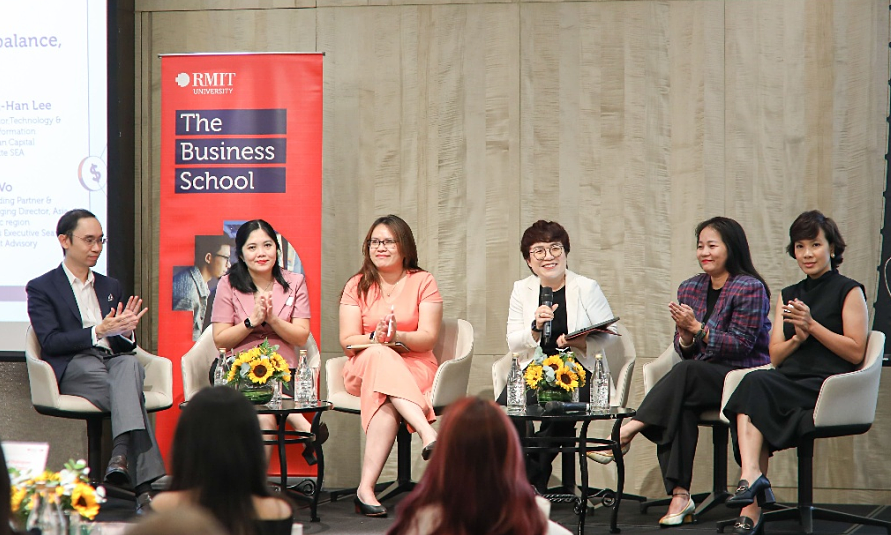
At a recent roundtable event organized by RMIT Vietnam and Deloitte, business leaders, HR professionals, and academics came together to explore how companies can maintain resilience while ensuring that people remain central to AI-driven transformations. The theme of the discussion was "Human value & AI—Navigating hidden impacts & fostering growth & resilience." It highlighted the growing need for a renewed focus on human-centric strategies as AI becomes more integrated into daily operations.
Promise and Pressure
The keynote speech delivered by Yun-Han Lee, Director of Technology and Transformation, Human Capital at Deloitte SEA, set the tone for the conversation. He emphasized that AI is revolutionizing work, but without a strong human value proposition, organizations risk losing sight of what truly drives performance and engagement.
Lee referenced Deloitte’s 2024 State of Generative AI in the Enterprise report, which outlined six key themes shaping the current AI landscape. These included the speed of adoption, evolving barriers, uneven maturity across industries, a focus on core business value, shifting C-suite perspectives, and the rise of agentic AI—autonomous systems that act as collaborators rather than tools.
One of the most significant points raised was the gap between technological potential and organizational readiness. Lee noted that many firms are moving at the pace of their internal structures, not the speed of technological innovation. This creates challenges in scaling AI effectively and realizing its full value.
He also addressed the "silent impacts" of AI—unintended consequences such as burnout, loneliness, and the erosion of human judgment. While AI can enhance productivity, it may also increase workload and complexity. Lee stressed the importance of intentional design in human-AI collaboration, citing his own experience of shifting from a performance-based approach to a more collaborative one.
Human Skills Matter
Following the keynote, a panel discussion brought together industry experts from various sectors, including Masan Consumer Holdings, STADA Pymerphaco, Janus Executive Search & Talent Advisory, and Deloitte. Despite the increasing demand for AI fluency, panelists agreed that human competencies like empathy, critical thinking, and analytical skills remain irreplaceable.
Vo Thi Minh An, Founding Partner and Managing Director, Asia Pacific region, Janus Executive Search & Talent Advisory, shared insights on the current state of AI in hiring. She noted that while there is a lot of excitement around AI, businesses have not yet shown the same level of enthusiasm in implementing it. In Vietnam, only two out of ten jobs require AI-related skills, she said.
An emphasized that empathy is the number one skill required across all levels, as it is difficult for AI to replicate. She also highlighted the importance of critical thinking in an environment where AI tools often fail to acknowledge uncertainty.
Pham Thi Quy Hien, Director of Human Resources at Masan Consumer Holdings, discussed the company's strategy for integrating AI while preserving human values. Their approach includes deploying internal Copilots for over 5,000 employees, empowering leaders as champions, and conducting change management workshops. She stressed the importance of psychological safety and the idea that AI will not replace jobs—it will only do so if individuals are not equipped to use it effectively.
Ho Thi Bach Quyen, Head of Culture and People at STADA Pymepharco Vietnam, described the evolution of her role from managing operational HR matters to focusing on culture and talent development. She introduced initiatives aimed at fostering a growth culture, encouraging idea generation, and promoting reverse mentoring. She emphasized the need for leadership behaviors that build trust and openness during AI-driven transformations.
Vo Kim Thoa, Senior Manager of Organization Transformation, Technology & Transformation at Deloitte SEA, reiterated that while AI is changing the nature of work, it cannot replace humans. She pointed out that tasks such as curating content and validating accuracy still require human judgment. People remain essential in the loop.
Navigating the Future
Breakout sessions explored practical ways to make AI a time-saver rather than a stressor. Participants discussed redesigning workflows for human-in-the-loop collaboration, building trust, and rethinking job design. They examined which roles AI might replace and which tasks within those roles could be automated or augmented.
Dr. Luong Thanh Thao, Interim Senior Program Manager of the Human Resource Management program, summarized the key takeaways. She emphasized that AI should be guided by human needs to support safer operations, better service, inclusion, and growth. Its use must be transparent, responsible, and include privacy protection and human oversight in key decisions.
As the roundtable concluded, participants reaffirmed their commitment to keeping the human element at the center of AI adoption. The challenge ahead is not just technological—it is deeply human.


Comments
Post a Comment