Musk's Megarocket Confronts Key New Test After Setbacks
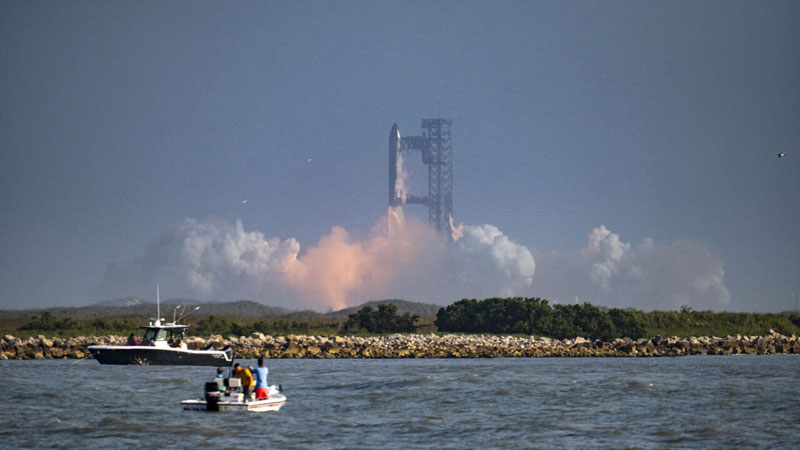
Upcoming Starship Test: A Crucial Step for SpaceX
Elon Musk's SpaceX is preparing for the tenth test flight of its Starship megarocket, marking a significant moment in the company’s ambitious space exploration journey. This upcoming mission comes after several recent setbacks that have sparked questions about the project’s future.
Scheduled to launch from the company’s Starbase facility in southern Texas at 6:30 pm local time (2330 GMT), the test aims to push the upper stage of the rocket through a series of rigorous trials. The upper stage will travel halfway around the world before splashing down in the Indian Ocean. Notably, this time, SpaceX will not attempt to catch the booster stage using the launch tower’s giant "chopstick" arms, a departure from previous attempts.
Starship plays a pivotal role in Musk’s vision of colonizing Mars. Additionally, NASA has plans to use a modified version of the rocket as the Artemis lunar lander, aiming to return Americans to the Moon. However, the past three test flights in 2025 have all ended in explosions of the upper stage—twice over Caribbean islands and once after reaching space. In June, another upper stage exploded during a "static fire" test on the ground.
SpaceX has long been known for its "fail fast, learn fast" approach, which has contributed to its success with the Falcon rocket family. However, the repeated failures with Starship have raised concerns about whether the company can achieve similar success with the most powerful rocket ever built.
Dallas Kasaboski, a space analyst at consulting firm Analysys Mason, noted that the recent failures are beginning to tarnish SpaceX’s reputation. He stated, “There is a lot of pressure on this mission. We've had so many tests, and it hasn't proven itself reliable—the successes have not exceeded the failures.”
Will Lockett, a former engineer turned commentator, expressed stronger criticism, suggesting that the lack of heavy payload tests indicates a fundamental flaw in the Starship concept. He argued that SpaceX is building lighter Starships to increase payload capacity, but this makes them weaker, leading to structural failures observed in recent tests.
Media outlets have also scrutinized the project, with headlines like “Is Elon Musk's Starship Doomed?” appearing in publications such as New York Magazine. Musk has placed the company’s future on Starship, planning to eventually phase out its current rockets and spacecraft in favor of the new system.
Even if the tenth test is successful, significant technical challenges remain. These include making the system fully reusable at low cost and proving it can refuel super-cooled propellant in orbit—a crucial requirement for deep-space missions.
Despite the challenges, SpaceX continues to push forward, increasing the frequency of launches. The company faces criticism from environmental groups regarding ecological impacts and is expanding its infrastructure, including new facilities in Florida such as launch and landing pads at Kennedy Space Center.
As the countdown begins for the next Starship test, the world watches closely, hoping to see progress in one of the most ambitious projects in the history of space exploration.


Comments
Post a Comment