Pakistan and China Seal $8.5B Deals Under CPEC 2.0
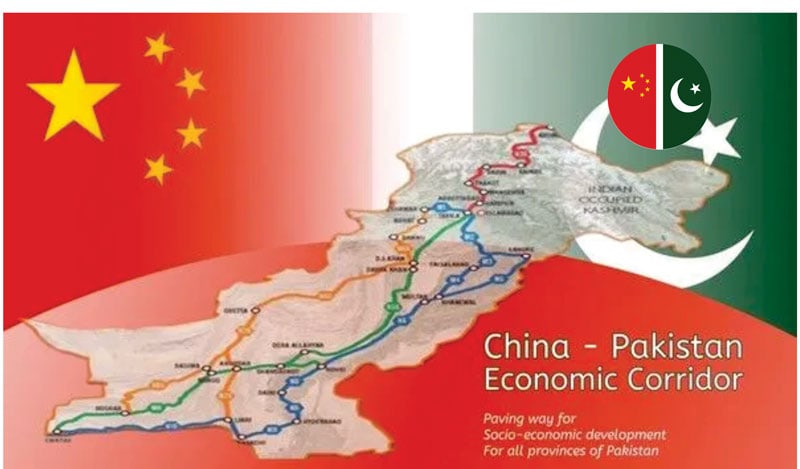
Pakistan and China Sign $8.5 Billion in Bilateral Agreements
Pakistan and China have signed a series of bilateral agreements worth $8.5 billion during the Second Pakistan-China B2B Investment Conference held in Beijing. These agreements span multiple sectors, including agriculture, electric vehicles, solar energy, health, chemicals, petrochemicals, and iron and steel. The deals include $7 billion in Memoranda of Understanding (MoUs) and $1.54 billion in Joint Ventures.
Prime Minister Shehbaz Sharif described the development as a "long march of economic growth" and emphasized that this collaboration would unlock significant investment opportunities and create jobs. He highlighted the importance of these partnerships in fostering economic development and strengthening the relationship between the two nations.
Launch of CPEC 2.0
A key highlight of the conference was the formal launch of 'CPEC 2.0,' which marks a shift in focus toward business-to-business (B2B) investments. This new phase of the China-Pakistan Economic Corridor (CPEC) will prioritize sectors such as agriculture, information technology, artificial intelligence, minerals, and industrial relocation. The prime minister noted that the agricultural sector in Pakistan employs 60% of the population, and he called for Chinese expertise to modernize farming practices and boost exports.
He also spoke about the role of Special Economic Zones (SEZs) in attracting foreign investment, offering benefits like cheaper skilled labor and joint ventures to produce high-quality export goods. These zones are expected to play a crucial role in driving economic growth and creating employment opportunities.
Commitment to Investor Facilitation
Addressing concerns about bureaucratic delays, Prime Minister Shehbaz Sharif assured Chinese investors that all red tape would be removed. He emphasized his commitment by stating, "We will not tolerate a second's delay." He cited an example where a Chinese entrepreneur was facilitated within 24 hours, underscoring the government’s dedication to supporting investors.
The prime minister also reaffirmed Pakistan's commitment to the safety of Chinese nationals in the country, calling it a top priority. He described the Pakistan-China relationship as "unmatched, higher than the Himalayas, deeper than the deepest oceans, sweeter than honey, and stronger than steel."
Historical Context and Vision
Referring to the original CPEC agreement signed in 2015 during President Xi Jinping's visit to Pakistan, Prime Minister Shehbaz Sharif credited the first phase with transforming the country's energy and infrastructure landscape. He recalled that Pakistan once faced up to 20 hours of daily power outages, but thanks to the initiative, the nation has become energy self-sufficient.
In an emotional moment, the prime minister recounted his first visit to China in 1982, when he remarked that China was "suffering from success, not failure." He praised China's transformation into the world's second-largest economy and its efforts to lift over 700 million people out of poverty, expressing his desire to replicate this model in Pakistan.
Strengthening Strategic Partnership
During a meeting with Chinese Premier Li Qiang, Prime Minister Shehbaz Sharif reiterated the countries' shared resolve to strengthen their iron-clad, all-weather strategic partnership. Both leaders expressed satisfaction with the positive trajectory of bilateral relations and highlighted the importance of continued cooperation.
The prime minister thanked the Chinese leadership for their support in safeguarding Pakistan's territorial integrity and socio-economic development. He also mentioned Pakistan's intention to float Panda Bonds in the Chinese capital market, further deepening economic ties.
Future Collaborations
Both nations agreed to continue working closely on the next phase of upgraded CPEC 2.0, focusing on five new corridors. The prime minister briefed the Chinese Premier on the B2B Investment Conference, where over 300 Pakistani and 500 Chinese companies participated. He identified key areas for collaboration, including agriculture, mining, textiles, industry, and IT.
As part of their ongoing efforts, Pakistan and China will celebrate the 75th anniversary of their diplomatic ties next year. Both leaders attended the ceremony marking the signing of MoUs and agreements related to CPEC 2.0, science and technology, IT, media, and agriculture.
Conclusion
Prime Minister Shehbaz Sharif concluded his six-day official visit to China, departing for Pakistan after attending several high-profile events, including the 25th Summit of the Shanghai Cooperation Organization Heads of State and the celebrations of the 80th anniversary of the World War Against Fascism. His visit underscored the strong and enduring relationship between Pakistan and China, paving the way for future economic and strategic collaborations.


Comments
Post a Comment