Solar Storms Threaten Earth: Blackouts Loom as NASA Warns Sun Is 'Waking Up'
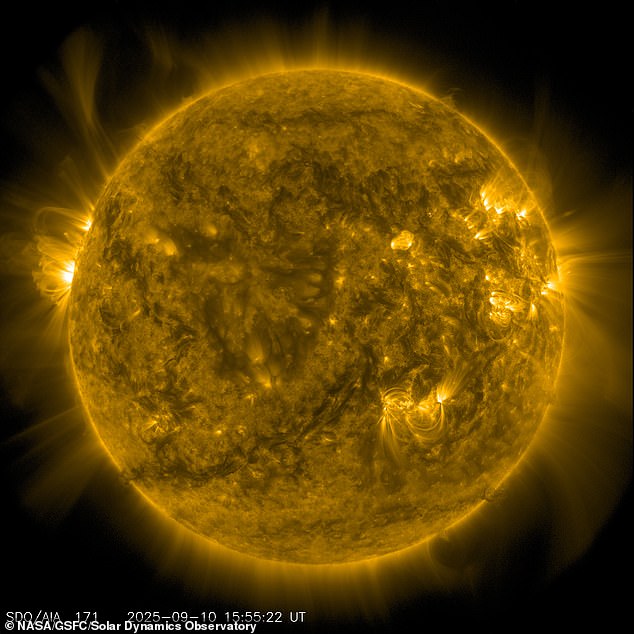
The Sun's Unexpected Surge in Activity
The sun, our solar system's home star, has recently shown a surprising increase in activity that could lead to more severe solar storms. These storms have the potential to cause blackouts and disrupt global communications. For about 20 years, the sun had been getting quieter and weaker, but this trend changed in 2008, leaving scientists puzzled about the reason.
Since 2008, the sun's solar wind—streams of charged particles—has grown stronger. This increase is seen in higher speeds, greater density, increased temperature, and stronger magnetic fields. Such heightened solar activity could result in more powerful solar storms that regularly hit Earth and cause disruptions.
Geomagnetic storms can damage power grids, leading to blackouts, interfere with satellites, and disrupt communication systems like GPS. Stronger storms might also make the Northern Lights visible in more southern regions, but the risks to technology and infrastructure require close monitoring.
Predicting the exact timing and strength of these storms remains challenging. However, they could become more frequent as the sun's current 11-year cycle peaks between 2025 and 2026. Jamie Jasinski, the lead study author from NASA's Jet Propulsion Laboratory, noted, "All signs were pointing to the sun going into a prolonged phase of low activity. So it was a surprise to see that trend reversed. The sun is slowly waking up."
More activity means an increase in sunspots, solar flares, and potentially hazardous ejections of material from the sun. This could cause the sun’s outer atmosphere, known as the heliosphere, to expand due to increased pressure from the solar wind. On Earth, this might shrink our magnetosphere, the protective magnetic bubble around our planet, exposing us to more solar particles.
Increased solar particle exposure poses a risk for astronauts, who could face higher radiation levels during space missions, potentially leading to health issues. It could also damage satellites and spacecraft, disrupting critical communication and navigation systems. Elon Musk's Starlink satellite internet service experienced widespread issues during the peak of a strong geomagnetic storm late Sunday night, with over 50,000 reports from users.
Additionally, solar particles could interfere with Earth's upper atmosphere, affecting ozone levels and increasing ultraviolet radiation reaching people outdoors. NASA explained that the sun goes through an 11-year cycle of activity marked by changes in sunspots. After a weak cycle (number 24) from 2008 to 2019, the current cycle (number 25) is showing more activity.
A study published in the Astrophysical Journal Letters suggested this increase in solar activity might be part of a longer 22-year cycle, with the sun making up for its mysterious two-decade decline rather than entering an anticipated quiet period. Since 2008, the solar wind's speed has increased by six percent, its density rose by 26 percent, its temperature soared by 29 percent, and pressure skyrocketed by 45 percent.
This more dynamic solar environment results in increased solar storms and enhanced interactions with Earth's magnetic field. While this isn't the first time the sun has seen a mysterious quiet period before ramping back up, the causes of these declines have baffled scientists. Records show one of the quietest solar periods in recent history was a four-decade window from 1790 to 1830.
"We don't really know why the sun went through a 40-year minimum starting in 1790," Jasinski said. "The longer-term trends are a lot less predictable and are something we don't completely understand yet."


Comments
Post a Comment