Amerasian Struggle: Erasing the Past in Okinawa
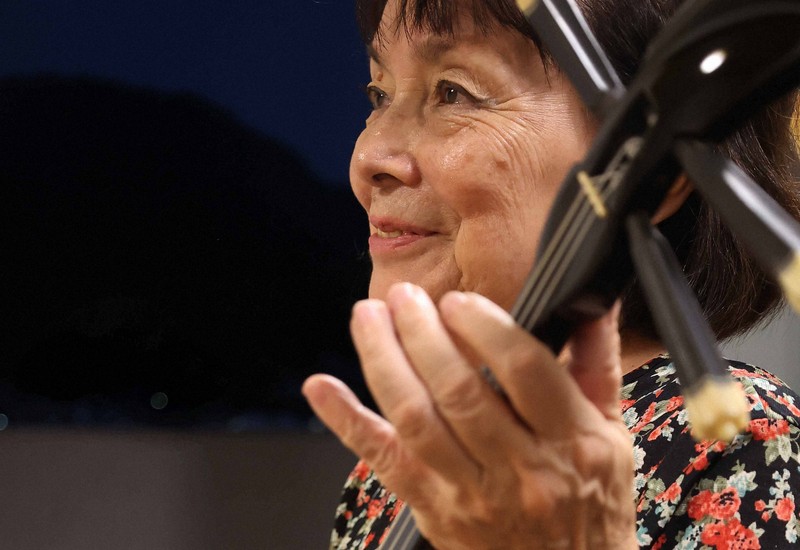
A Life of Struggle and Resilience
In the heart of Osaka, a 76-year-old woman named Kazue Nakamura reflects on her life, marked by both hardship and resilience. Born to an Okinawan mother and a U.S. serviceman who left Japan before she was born, her story is one of identity, prejudice, and eventual self-acceptance.
Nakamura’s early life was deeply rooted in Okinawa, where she spent her childhood surrounded by the culture and traditions of the southernmost prefecture. She often sipped "sanpin-cha," a jasmine tea common in Okinawa, and played with a sanshin, a traditional stringed instrument. These small gestures reminded her of her heritage, even as she struggled with the challenges of her mixed background.
Born in 1949 in Yomitan, Okinawa, Nakamura's life took an unexpected turn when her mother, Teruko, met an American man while working at Kadena Air Base after World War II. The man became her father, though it is unclear whether he knew about her pregnancy. This made Nakamura an Amerasian—children born to U.S. military personnel and local residents in countries like Japan, South Korea, and the Philippines.
During the aftermath of the Battle of Okinawa in 1945, which claimed the lives of one in four Okinawans, Amerasians faced significant discrimination. They were often seen as "children of enemy soldiers" and their families endured cold stares and social exclusion. Nakamura’s grandparents fled to the northern mountains during the war, eventually returning to Yomitan only to find their home destroyed. Life was difficult, and her mother worked at a U.S. military facility to support the family.
As a child, Nakamura noticed that her appearance was different from her classmates. Her fair skin, light brown eyes, and slightly reddish hair set her apart. She often faced harsh words from other children, leaving her in tears. Despite this, there was little she could do to change how others saw her.
Early Experiences with Foreigners
Nakamura’s experiences with Americans began early. In first grade, she spent a week with an American couple, experiencing a world far removed from her own. She had her own room shoes, dresses, and a comfortable bed, along with a refrigerator full of ice cream. It felt like a dream, but when her grandmother visited, she broke free from the American woman’s arms and ran into her grandmother’s embrace, overwhelmed with emotion.
Later, another American couple placed her in the front seat of their car, where a white puppy greeted her. However, she soon felt the urge to return home and ran away. Although toys were sent later, these experiences were temporary, likely intended for adoption. Nakamura only understood the situation much later, realizing that these were attempts to give her a better life.
Her grandmother, who had been advised by others to entrust her granddaughter to others, often sat on the dirt floor peeling beans, sobbing over the decision. She would ask, “Why are our family called Americans?”
A New Beginning
Nakamura wanted to erase her past. As high school graduation approached, she decided to leave Okinawa and join a program for group employment in mainland Japan. She found a company that allowed her to attend vocational school while working, setting a goal of becoming a child care worker. Her grandmother opposed the idea, warning that she wouldn’t find happiness if she left Okinawa. But Nakamura was determined.
She saved money by working as a babysitter in gaijin residences and obtained a passport. In 1970, she boarded a ship from Naha Port, leaving behind the place she had always called home. That same year, Japan was abuzz with the Osaka Expo, and Nakamura traveled to Tokyo for a job interview as a child care provider.
Revealing Her Origins
During the interview, Nakamura revealed her background for the first time. She explained that her father was an American who worked at Kadena Air Base and returned home before she was born. She didn’t know his name or whereabouts, and her mother died when she was three. When asked who raised her, she replied that she lived with her maternal grandmother, aunt, and uncle, who also sent her to high school.
Her grandmother passed away in 1974 at the age of 81. It wasn’t until the 1990s that Nakamura’s desire to escape her hometown began to shift. Her journey from Okinawa to Osaka was not just a physical move, but a step toward embracing her identity and finding peace with her past.


Comments
Post a Comment