China Launches 'Golden Dome' Missile Defense Prototype
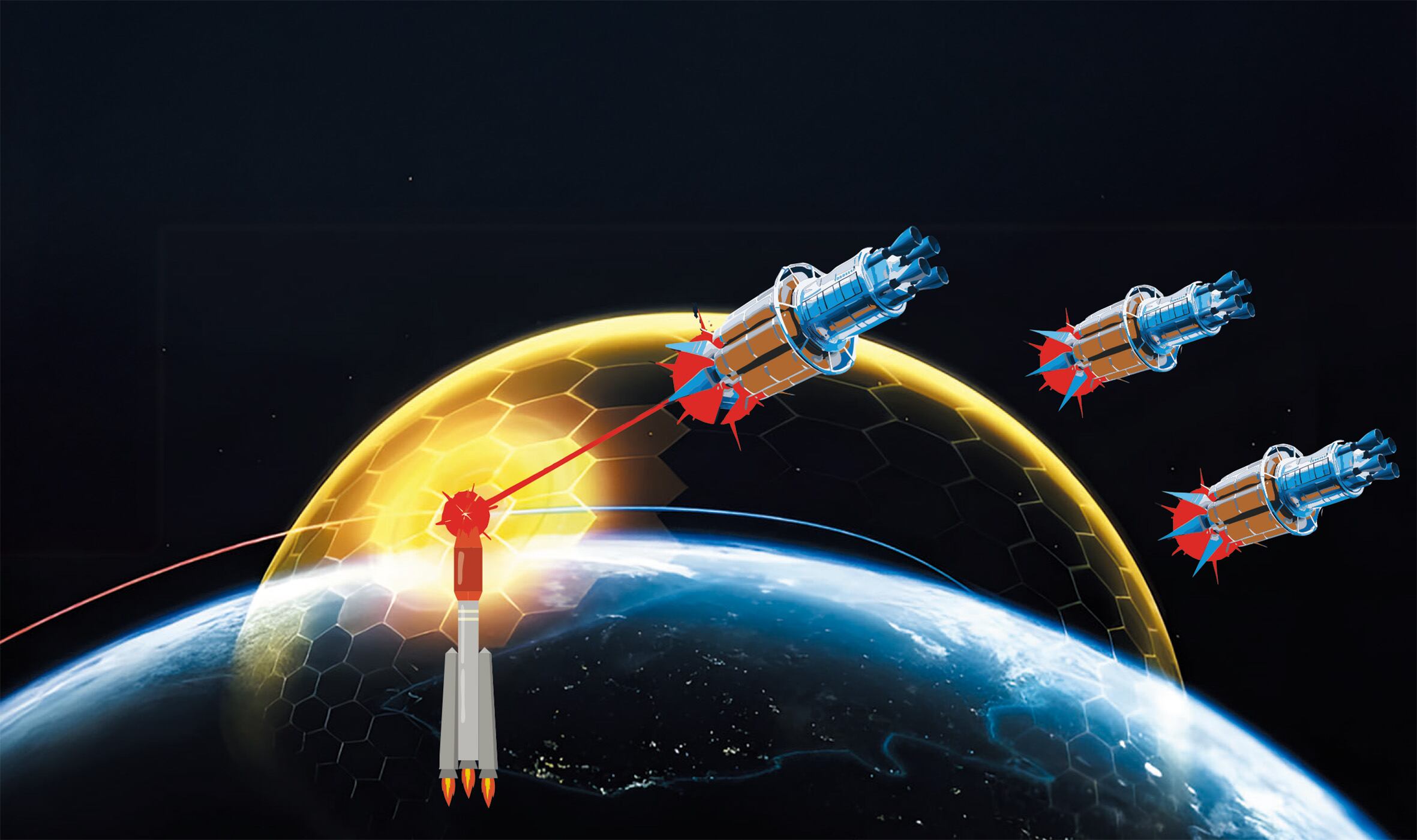
Development of a Global Missile Defense System
China has introduced a prototype for a global missile defense system that mirrors the U.S. "Golden Dome" concept, according to reports from Hong Kong's South China Morning Post (SCMP). The Golden Dome, proposed by former U.S. President Donald Trump in May of last year, is a missile defense system designed to detect missiles launched worldwide using satellites and intercept them in space before they reach their targets.
While China initially criticized the Golden Dome plan, referring to it as an effort to "turn space into a battlefield," it has been quietly working on a similar system domestically. This development highlights the growing competition between the two nations in the realm of missile defense technology.
Key Features of the Chinese Prototype
According to SCMP, a research team led by Li Xudong, chief engineer at the Nanjing Electromagnetic Technology Research Institute, has developed a "distributed early-warning big data platform." This platform has been deployed to the People’s Liberation Army and can detect and track up to 1,000 missiles launched toward China in real time from anywhere in the world. It utilizes various sensors, including satellites, radars, optical, and electronic reconnaissance equipment.
When integrated with China’s satellite and missile interception systems, this platform could serve as a "Chinese version of the Golden Dome." However, the SCMP noted that Li’s team’s platform is still in the early stages of development.
Technological Advancements
The Chinese version of the Golden Dome reportedly relies on advanced data integration technology. It must process large amounts of data simultaneously to quickly determine the flight trajectory, type, and whether actual warheads are mounted on weapons heading toward China. Li’s team has applied next-generation communication technology that enables stable data transmission even in congested or disconnected network conditions. The collected data is used to enhance platform performance through artificial intelligence (AI) learning.
U.S. Golden Dome: A Promising but Unrealized Concept
During the announcement of the Golden Dome plan, Trump pledged to "deploy it operationally within his term." The system aims to block hostile nations’ nuclear and missile attacks in space by combining over 1,000 low-orbit satellites and interception systems. He also expressed his ambition to complete the "Star Wars Project," which was pursued by President Reagan in 1983 but halted due to technological limitations and the end of the Cold War.
However, the U.S. Golden Dome has reportedly not even reached the detailed design phase. A June report by the U.S. Arms Control and Non-Proliferation Center stated, "Given the U.S. Department of Defense’s implementation speed, it will only reach a demonstrable level by the end of 2028." The development cost is also controversial. While Trump announced an investment of approximately 175 billion dollars, the U.S. Congressional Budget Office estimates the actual required budget at 831 billion dollars (approximately 1,167 trillion Korean won).
Critics point out that numerous technical challenges remain for the Golden Dome to function, including data communication, satellite connectivity, interception system response speed, and countermeasures against external interference.
Strategic Implications
The SCMP stated, "The U.S. has only presented a concept, while China is actually implementing it first," adding, "As the U.S.’s weakened industrial base slows new weapon development, China is gaining the upper hand."
Amid the U.S.-China rivalry, Taiwan has also joined the competition by planning to build a "Taiwanese version of the Golden Dome," further complicating the East Asian security landscape. Wang Dingyu, a legislator from Taiwan’s ruling Democratic Progressive Party, revealed on the 13th that the island plans to integrate its air defense systems into a command center to establish an independent missile defense network.
Conclusion
The development of missile defense systems by both China and the U.S. underscores the evolving nature of global military strategies. As these technologies advance, the implications for international security and geopolitical dynamics will continue to grow. The race for superior missile defense capabilities is not just about technological superiority but also about strategic influence and national security.


Comments
Post a Comment