China Threatens U.S. with Retaliation Over Tariff Moves
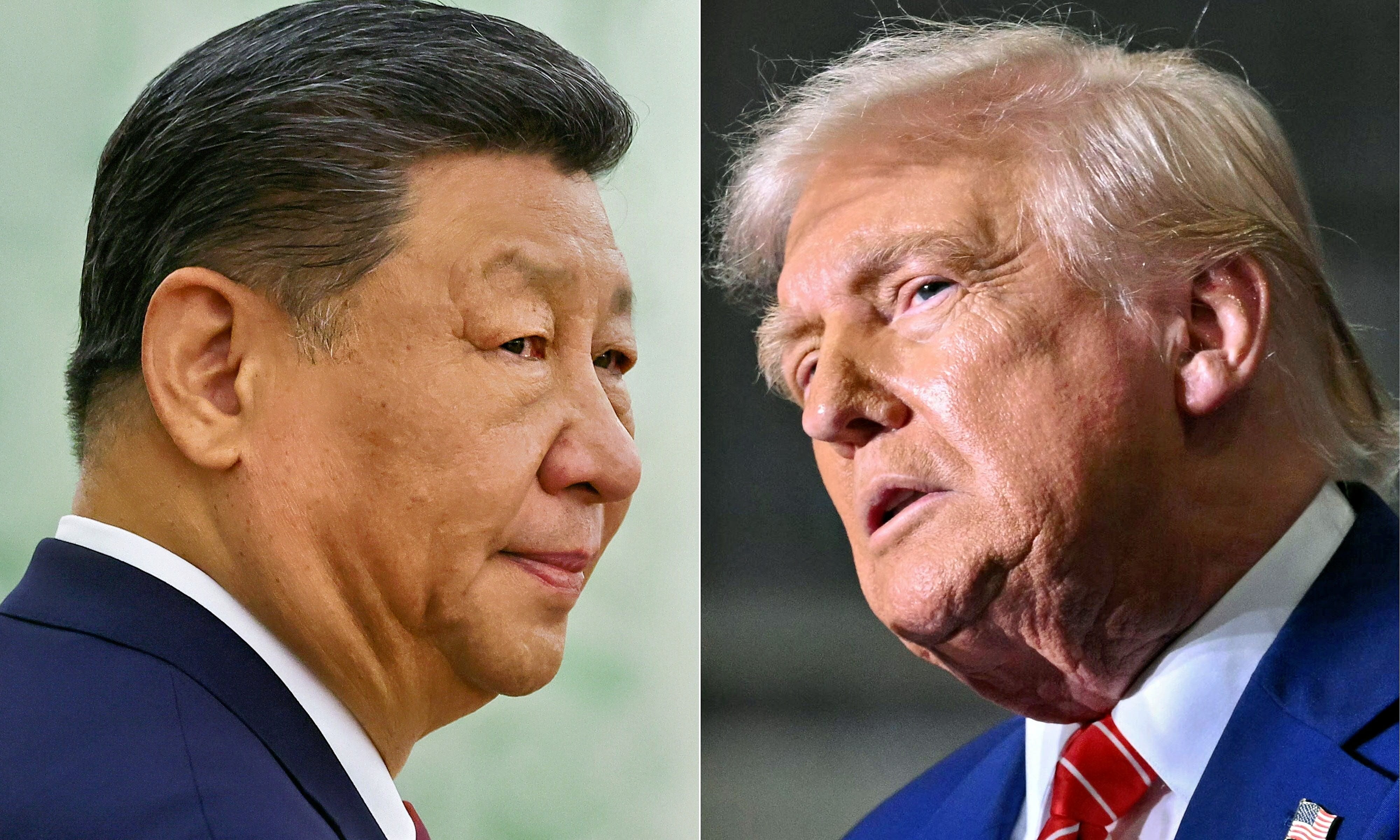
Escalating Tensions Between the U.S. and China
The Chinese government has made it clear that while it does not seek conflict, it is prepared to defend its interests. In response to U.S. threats of retaliatory measures, including 100% additional tariffs and a software export blockade, Beijing has emphasized its commitment to safeguarding its legitimate rights. On the 12th, the Chinese Ministry of Commerce issued a statement asserting that if the U.S. persists in its approach, China will take resolute countermeasures.
China argues that the U.S. has initiated an offensive, prompting its defensive actions. The ministry highlighted that over the past 20 days since the Sino-U.S. Madrid talks in September, the U.S. has introduced a series of restrictive measures against China. These include adding numerous Chinese companies to export control lists and special sanctions designations, which have arbitrarily expanded the scope of controlled entities and impacted thousands of firms.
The ministry further criticized the U.S. for its double standard in applying export controls. It pointed out that while the U.S. has over 3,000 items on its control list, China only controls around 900. Additionally, the U.S. has unilaterally extended its jurisdiction over various products, including semiconductor equipment and chips, targeting Chinese companies.
Strategic Moves Ahead of APEC Summit
Analysts believe that as the U.S. and China prepare for the upcoming APEC summit in Gyeongju later this month, both sides are intensifying their pressure to gain leverage in negotiations. The Chinese government announced on the 9th that it would strengthen export controls on rare earth elements and add U.S. drone and defense companies to its blacklist. On the 10th, it notified that a “special port service fee” would be imposed on U.S. vessels starting on the 14th. It also launched an antitrust investigation into Qualcomm’s acquisition of automotive semiconductor designer AutoX.
In this second tariff war, unlike its defensive stance during Trump’s first term, China is now targeting vulnerabilities in the U.S. defense and semiconductor supply chains using rare earth elements and non-tariff barriers. The additional rare earth controls are seen as China’s application of the U.S. Foreign Direct Product Rule (FDPR) to its rare earth sector. This rule allows the U.S. to control exports to third countries if products are made using American technology or software.
China’s new measures regulate rare earth products produced overseas if they contain even trace amounts of domestically sourced rare earths or utilize Chinese mining, refining, or other technologies. It announced that rare earth elements used in advanced semiconductor chips below 14 nanometers, memory semiconductor manufacturing and testing equipment with 256 layers or more, and AI research and development that could be applied for military purposes would undergo individual reviews as dual-use items.
U.S. Countermeasures and Concerns
The U.S. immediately responded to China’s actions. President Donald Trump warned on the 10th, “We cannot allow the world to be held hostage,” and announced 100% additional tariffs on all Chinese imports in response to Beijing’s rare earth export controls. He also stated that core software export controls would take effect from the first of next month. Regarding the face-to-face meeting with Chinese President Xi Jinping, expected to coincide with the APEC summit—the first in six years—Trump said, “There now seems to be no reason for it.”
According to a Reuters report on the 10th, Federal Communications Commission (FCC) Chairman Brendan Carr stated, “Major U.S. online retail websites have removed millions of banned Chinese electronic products from their sales listings.” Some worry that if the U.S.-China summit is canceled due to unresolved tensions until just before the APEC summit, the Lee Jae-myung government’s plan to use APEC as a platform to ease global trade conflicts and create positive momentum for Northeast Asian security could face setbacks.
However, China has also sent messages to avoid escalating tensions with the U.S. The Ministry of Commerce stated in its announcement, “China hopes the U.S. will promptly correct its wrongful actions, adhere to the agreements made during the leaders’ communications, and preserve the hard-won outcomes of negotiations. We urge the continued role of the Sino-U.S. economic and trade negotiation mechanism.”


Comments
Post a Comment