How Laptops Bridge the Digital Gap for Rwandan TVET Educators
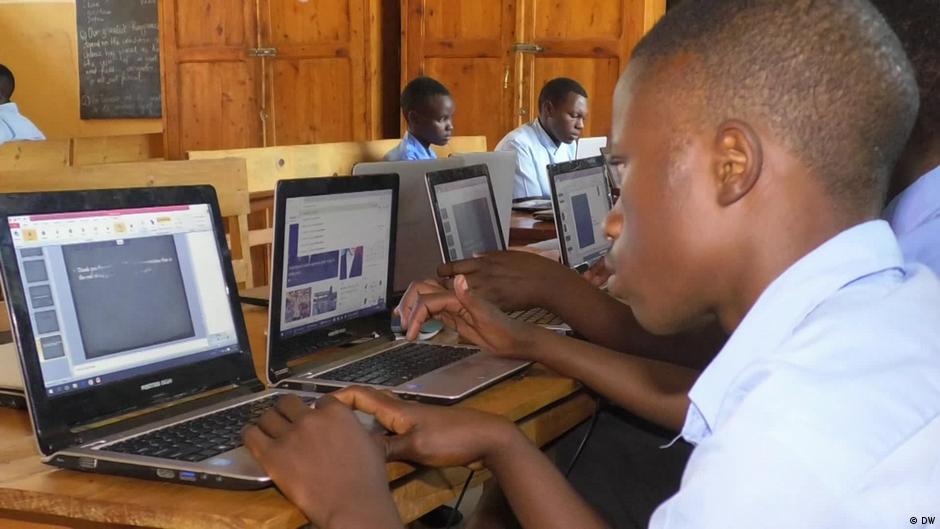
Laptops Transforming Technical and Vocational Education in Rwanda
Laptops are playing a pivotal role in reshaping Technical and Vocational Education and Training (TVET) across Rwanda. Instructors who once relied on traditional methods such as chalkboards are now incorporating digital teaching materials into their daily lessons, ensuring that students are better prepared for a rapidly evolving job market that increasingly values digital skills.
Elyse Tumushime, an ICT instructor at Groupe Scolaire Batima Technical Secondary School in Bugesera District, highlights the importance of laptops in her daily work. She emphasizes that the devices are essential for preparing lesson plans and schemes of work, which significantly enhance classroom delivery. “When teachers have access to the right tools, learners receive structured content that is easier to understand,” she explains.
To support this transformation, approximately 5,200 laptops have been distributed to teachers in public and government-aided TVET schools. This initiative is part of a broader effort to equip educators with the necessary tools to modernize their teaching methods.
Paul Umukunzi, Director General of the Rwanda TVET Board (RTB), underscores the importance of integrating technology into education. He mentions that the program includes not only laptop distribution but also digital skills training, video tutorials, and capacity-building programs. These initiatives focus on integrating Information and Communication Technology (ICT) into lesson planning, using educational software, and accessing online resources.
“By providing teachers with modern tools, we are narrowing the digital divide and enabling them to create and use digital teaching materials,” Umukunzi states. He adds that this approach exposes students to technology, preparing them for a tech-driven workforce. The integration of technology is seen as crucial for modernizing TVET education and aligning it with industry demands.
The RTB’s vision extends beyond improving teaching methods; it aims to align Rwanda’s vocational training with global technological advancements. This ensures that graduates are more competitive in the job market. Additionally, the board is rolling out measures to accelerate the use of ICT in schools through continuous professional development for teachers. This includes e-pedagogy and an upcoming ePortfolio platform designed to support teachers’ daily work.
Internet Connectivity and Digital Infrastructure
Currently, 348 TVET schools are connected to 4G and fiber internet under government initiatives like the Smart Education Project (SEP) and Operation Green Network (OGN). Approximately 103 public TVET schools enjoy fiber connectivity at 25 Mbps, although reliability remains a challenge.
Emmanuel Dusengimana, a computer architecture trainer at Cyanika Technical Secondary School in Burera District, shares how laptops have enhanced his research and teaching. “I can teach the content I have researched myself. With internet access, I store my documents online, so I don’t lose them if the computer crashes. My students are all benefiting from the way laptops have strengthened my teaching,” he says.
Patricie Uwitonze, an administrator at Groupe Scolaire Huma in Gakenke District, notes that the combination of one laptop per trainer and expanded internet access has already had a positive impact on the quality of education.
Future Goals and Initiatives
Rwanda’s ICT Sector Strategic Plan outlines ambitious goals for 2029. The government aims to achieve nationwide 4G coverage, expand high-speed internet to schools and public institutions, and modernize digital infrastructure. Alongside these efforts, at least 1.5 million citizens will be trained in coding and advanced ICT skills, with 50,000 digital jobs created to serve both local and global markets.
Beyond internet connectivity, the government is developing offline content for eLearning and digital libraries. These resources include caching and synchronization features to ensure accessibility even during unstable connections. Partnerships with telecom companies are exploring affordable solutions, including zero-rating educational platforms, to further support the growth of digital education in Rwanda.


Comments
Post a Comment