How NEC's Support for NASENI's Solar Pumps Will Revolutionize Dry-Season Farming
A Major Step Toward Sustainable Agriculture and Energy Independence
The decision by the National Economic Council (NEC) at its 152nd meeting, chaired by Vice President Kashim Shettima at the Presidential Villa in Abuja, to endorse the Solar Irrigation Pumps developed by the National Agency for Science and Engineering Infrastructure (NASENI) for a nationwide rollout ahead of the 2025 dry-season farming has been recognized as a significant milestone in Nigeria’s journey toward food security, sustainable energy, and technological self-reliance.
This move is not just a policy announcement but a clear signal that the government is committed to supporting local innovations with practical implementation. It connects science and engineering directly to the daily challenges faced by farmers across the country.
With the dry season approaching, the NEC members agreed that the deployment of solar irrigation technology was urgent and necessary. NASENI had already presented ready-made pumps, which are not just prototypes but functional systems designed with the realities of Nigerian agriculture in mind.
The Council directed the Minister of Budget and Economic Planning, Senator Abubakar Atiku Bagudu, to work out modalities to fund the mass production and distribution of the pumps to farmers nationwide.
For decades, irrigation in Nigeria has relied heavily on fuel-powered pumping systems. While they have supported dry-season farming, especially in the northern states, their long-term impact on farmers has been substantial. Rising fuel prices, erratic supply, mechanical breakdowns, and environmental consequences have made these systems increasingly unsustainable.
For many smallholder farmers, fuel costs alone eroded their profits. With rural communities often far from reliable fuel stations, the challenge of getting and storing fuel added another layer of difficulty. Over time, this dependence on fuel-based pumps locked farmers into cycles of high cost, low returns, and uncertainty.
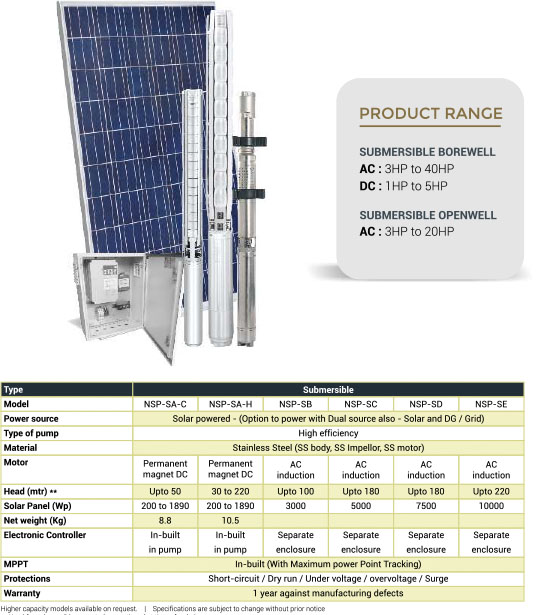
The solar-powered irrigation pumps developed by NASENI aim to break this cycle. They run on clean, renewable energy, eliminating the need for constant fuel purchases and reducing operational costs to near zero after installation.
For farmers, this means a tangible opportunity to expand cultivation without worrying about fuel costs eating up their profits. For the country, it represents a chance to increase agricultural productivity, reduce food imports, and strengthen rural economies. And for the environment, it marks a step away from fossil fuels toward a greener, more sustainable farming system.
The endorsement by NEC is also a milestone for NASENI itself. Established to drive technological innovation in Nigeria, the agency operates under the framework of Creation, Collaboration, and Commercialization (3Cs). The NASENI Solar Irrigation Pump embodies this vision—created locally, in collaboration with partners, and designed for mass commercial use.
Vice President Shettima emphasized the importance of the pumps during the NEC meeting, noting that they were fully developed systems ready for rollout. He described them as a critical intervention that would replace expensive fuel pumps, reduce costs for farmers, expand dry-season cultivation, and even serve as a source of backup electricity for households.
He also highlighted the potential for Nigeria to benefit from international carbon credit schemes through the adoption of clean energy for irrigation, providing additional income streams for both government and farmers.
The Executive Vice Chairman of NASENI, Mr. Khalil Suleiman Halilu, expressed delight at the Council's resolution, calling it a vote of confidence in local innovation. He praised President Bola Ahmed Tinubu for consistently supporting NASENI’s initiatives and ensuring the agency remains at the forefront of advancing industrialization, technology transfer, and food security.
Beyond harnessing solar power, NASENI incorporates digital innovations that allow for modern farming practices. Reports indicate that the pumps are fitted with GPS tracking, mobile app dashboards, and usage monitoring tools, giving farmers greater control over how they use the systems.
These features also make it possible to design flexible financing schemes, such as pay-as-you-go models, allowing farmers to spread out payments over time instead of bearing the heavy upfront cost. In a country where many smallholders operate on tight margins, this level of financial flexibility could be crucial for adoption.
The endorsement aligns with President Bola Ahmed Tinubu's Renewed Hope Agenda, which emphasizes food security, industrialization, and self-reliance. The President has repeatedly stressed the need to boost local production, reduce dependence on imports, and empower Nigeria's farmers to feed the nation.
Farmers in states like Bauchi, Kano, Jigawa, Kebbi, Sokoto, Benue, and Nasarawa, where dry-season farming is common, have welcomed the development with optimism. Many recall how fuel shortages or price hikes left their fields parched and yields diminished. The ability to irrigate crops without worrying about daily fuel expenses could open up opportunities for larger-scale farming and more stable incomes.
Observers have pointed out the symbolic value of the NEC decision. In a country where reliance on imported technologies has often been the norm, the backing of a locally developed innovation marks a turning point. It shows that Nigerian scientists and engineers can create tools that meet the country's unique needs, and that government is willing to trust and support such homegrown solutions.
Reducing the use of fossil fuel-powered irrigation pumps would help cut greenhouse gas emissions and align Nigeria more closely with global climate goals. The possibility of earning carbon credits through clean energy adoption in agriculture further adds to the attractiveness of the initiative, potentially unlocking international funding and support.
Beyond the immediate benefits, the rollout of NASENI Solar Irrigation Pumps also promises to stimulate new industries around production, installation, and maintenance. Young Nigerians with skills in engineering, solar technology, and digital systems could find new employment opportunities.
Local businesses involved in manufacturing components, batteries, and software applications could also grow, creating an ecosystem around the pumps that extends beyond farming into technology and industry.
The NEC endorsement thus represents more than a new irrigation system; it is a multi-layered intervention that touches on food security, energy policy, climate change, job creation, and industrial growth. It is about linking the farmer's field in Sokoto or Benue to the engineer's workshop in Abuja, the policymaker's desk in the Villa, and the broader global movement toward sustainability.
As preparations begin for the mass production and distribution of the NASENI Solar Irrigation pumps, the focus will shift to execution. Government agencies, private partners, and farmer cooperatives will need to work together to ensure that the systems reach those who need them most and that their potential is fully realized.
What is at stake is not just the success of a technological innovation but the livelihoods of millions of Nigerians and the broader goal of national food security. For now, though, there is renewed hope in the air. The endorsement of NASENI's Solar Irrigation Pumps has planted a seed that could grow into a harvest of abundance.


Comments
Post a Comment