If science had been a priority, we might match the UAE's progress
A Reflection on Growth and Decline
As we age, it's easy to forget the carefree days of our youth. However, nature often reminds us of the lessons we once overlooked. These lessons are embedded in age-old sayings such as "harvesting what you plant," "a stitch in time saves nine," and "spare the rod and spoil the child." These phrases reflect truths that become more apparent as we grow older.
When I was 12 or 13 and joined secondary school, I found many scientific concepts confusing and uninteresting. My Physics teacher, a Catholic Reverend Brother, struggled to explain the gravitational pull on a falling object that accelerated at an "increasingly increasing rate" of 9.8 metres "per second per second." My mind would drift away, imagining how long I had left before I could abandon these "crazy" sciences.
To avoid dozing off during the class, I tried to create nicknames for the kind-hearted priest and sketch cartoons of him. I prayed for the bell to ring so we could move on to more interesting subjects like History and languages.
Half a century later, those scientific concepts came back to haunt me when I followed Uganda’s Presidential CEO Forum, where the nation’s top managers discussed the future of the tourism sector. A Uganda Wildlife Authority official presented data showing that in 1974, there were over 1,000 lions in the country. By 2014, this number had dropped to 400, and by 2024, only 291 remained. While it took four decades to halve the population, it has taken just one decade to reduce it by a quarter. The decline is indeed "increasing at an increasing rate."
It is troubling when the boy who once avoided understanding complex scientific concepts becomes an elder concerned about the future of his country, humanity, and the planet, witnessing the degradation of the environment at an alarming pace. This concern deepens when he realizes that another country, which took physics seriously, is creating conditions they naturally lacked and is seeing their lion population increase at an increasing rate, while Uganda's faces a different fate unless drastic measures are taken.
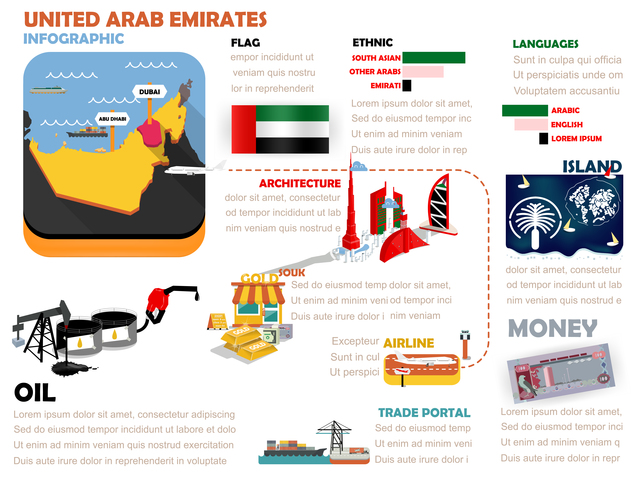
This tormented old man is referring to the desert country known as the United Arab Emirates (UAE). At the time I was refusing to learn physics, the UAE was worse off than Uganda in many human development indicators. As a child, I marveled at the generosity of our maverick president, Idi Amin, who announced donations to help our unlucky brothers in a difficult place we only knew as Dubai. The grateful leader, His Highness Sheikh Zayed bin Sultan Al Nahyan, even visited Kampala.
Fifty years later, the UAE has become a global economic power, providing aid to Uganda and generously supplying food to feed many people during the pandemic lockdowns.
In terms of things increasing at an increasing rate, the UAE has developed several game reserves, including the Sharjah Safari Park, which opened three years ago after seven years of preparation. Located on just eight square kilometers, it offers almost everything you'd find in Africa, but without the hassle or risks associated with the region.
After, of all names, calling it a "safari" park, they have replicated the Serengeti in a manageable size. In Sharjah Safari Park, you can see lions, giraffes, black rhinos, elephants, and there is an area called Predators Kingdom where cheetahs and leopards also roam. Whatever you want to see in Africa’s wilds, you can experience up close in comfort and luxury in "natural" conditions in the UAE.
That is what societies that take science seriously can achieve in a few years.


Comments
Post a Comment