INEC Under Yakubu: A Decade of Electoral Leadership Revealed
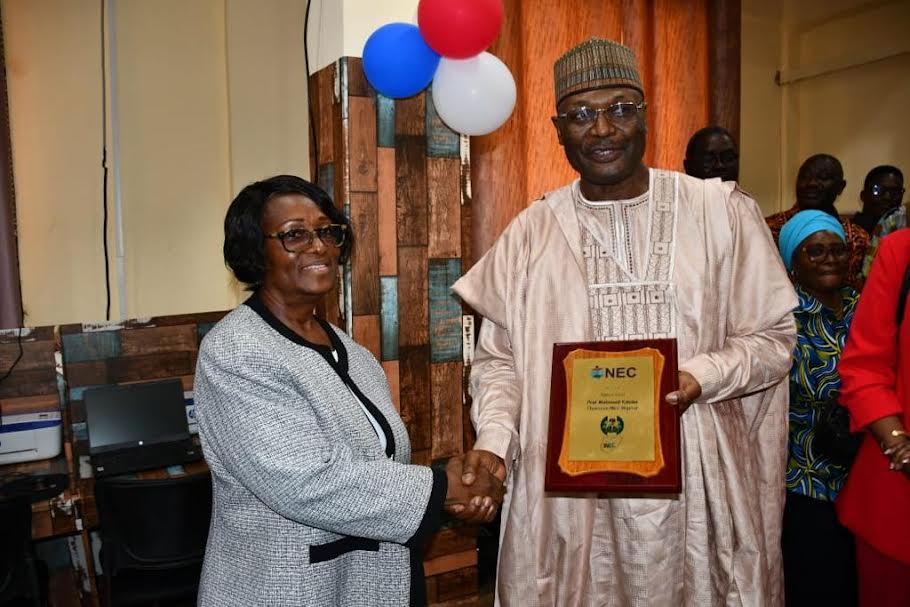
The Tenure of Professor Mahmood Yakubu as INEC Chairman
Professor Mahmood Yakubu, who is set to leave his position in November, has been the longest-serving Chairman of the Independent National Electoral Commission (INEC) in Nigeria. His tenure, spanning over a decade, has seen significant developments and challenges in the country's electoral management. This analysis explores his contributions, the evolution of election processes in Nigeria, and the ongoing issues that continue to affect the integrity of elections.
Elections are a cornerstone of democratic governance. In Nigeria, since the return of democracy, ensuring transparent and credible elections has been a central focus of political discourse. Periodic and fair elections are essential for reinforcing government legitimacy and strengthening the relationship between the state and its citizens.
Historically, early elections such as those in 1999, 2003, and 2007 faced criticism due to widespread irregularities, including violence, over-voting, ballot snatching, and the use of underage voters. These issues were compounded by the lack of real-time technology during the voting process. The 2007 presidential election, which resulted in the victory of late President Umaru Musa Yar'Adua, was widely regarded as flawed and prompted calls for reform.
Despite these challenges, stakeholders believe that since 2011, there have been notable improvements in the quality and integrity of Nigerian elections. These advancements can be attributed to progressive reforms introduced by previous INEC chairmen, notably Professor Attahiru Jega, and further expanded under Professor Mahmood Yakubu.
A Decade of Leadership and Oversight
Since his appointment by President Muhammadu Buhari in November 2015, Professor Yakubu has overseen a remarkable number of elections. He has led two general presidential elections, numerous gubernatorial contests, and national and state assembly elections in 2019 and 2023. Additionally, he has managed over 15 off-cycle gubernatorial elections across eight states and three sets of FCT area council elections in 2016, 2019, and 2022.
His leadership has also included numerous bye-elections for national and state assembly legislators, with the latest held on August 16, 2025. In total, Yakubu has supervised more than 24 major election days, covering both nationwide and state-specific events.
During his tenure, Yakubu has overseen the election of 242 elections, including two presidents—late President Muhammadu Buhari and current President Bola Ahmed Tinubu. Over 57 governors have been elected, with 29 in 2019 and 28 in 2023. Additionally, 938 federal lawmakers and 1,984 state lawmakers have been elected, with 991 in 2019 and 993 in 2023. In the Federal Capital Territory, 18 area council chairmen and 186 councillors have been elected.
Reforms and Innovations
Professor Yakubu’s tenure has been marked by several key reforms aimed at improving the efficiency and credibility of elections. These include structural and administrative changes within INEC, the assertion of its independence as an impartial election umpire, and the integration of technology into various aspects of the electoral process.
One of his most notable achievements was strengthening INEC's autonomy through the Electoral Act 2022. This legislation aimed to ensure operational independence and professionalism within the commission. The introduction of the Bimodal Voter Accreditation System (BVAS), which replaced the controversial Smart Card Readers, allowed for secure voter authentication using fingerprint and facial recognition. Although technical limitations persisted, this innovation represented a significant step forward.
The INEC Results Viewing Portal (IReV) was another important development, enabling real-time uploading of polling unit results. These technological advancements were designed to reduce reliance on politicians and their agents, thereby curbing fraud and increasing transparency.
Expert Opinions and Challenges
Experts have acknowledged the positive impact of Yakubu's reforms. Auwal Musa Rafsanjani, Executive Director at the Civil Society Legislative Advocacy Centre (CISLAC), highlighted the introduction of innovations such as technology and improved electoral laws as key contributions. Similarly, public affairs analyst Jide Ojo noted that Yakubu was the first chairman to serve two terms and had made meaningful reforms to INEC.
However, challenges remain. Ojo pointed out that logistical issues, such as delays in election timing and inadequate coordination with transport operators, continue to hinder the process. Rafsanjani also emphasized the need for better management of technology and improved logistics to ensure that electoral materials reach polling units on time.
A critical issue remains the lack of public trust in INEC, with many accusing the commission of conducting flawed elections while overlooking the role of political actors in disrupting the process.
Background of Professor Mahmood Yakubu
Born in May 1962 in Bauchi, Professor Yakubu attended Teachers' College in Toro, Bauchi State, from 1975 to 1980. He earned his Grade II Teachers’ Certificate and was recognized as the top student in his class. He later obtained a bachelor’s degree in history from the University of Sokoto (now Usmanu Danfodiyo University), where he received a federal government merit award and graduated with first-class honors. He also became the first student from Northern Nigeria to achieve a first-class degree in history.


Comments
Post a Comment