Senior Scholars Leave for Global Institutions Post 65 Retirement
Rising Trend of Senior Scholars Leaving for Overseas Opportunities
Domestic universities are witnessing a growing trend where senior engineering and science scholars choose to move abroad after reaching retirement age. This phenomenon, often referred to as "senior brain drain," is becoming increasingly common as established scholars seek opportunities overseas. One such example is Song Ik-ho, a renowned communications scholar who became the youngest KAIST associate professor at 28 in 1988. He recently moved to the University of Electronic Science and Technology of China (UESTC) in Chengdu following his retirement in February.
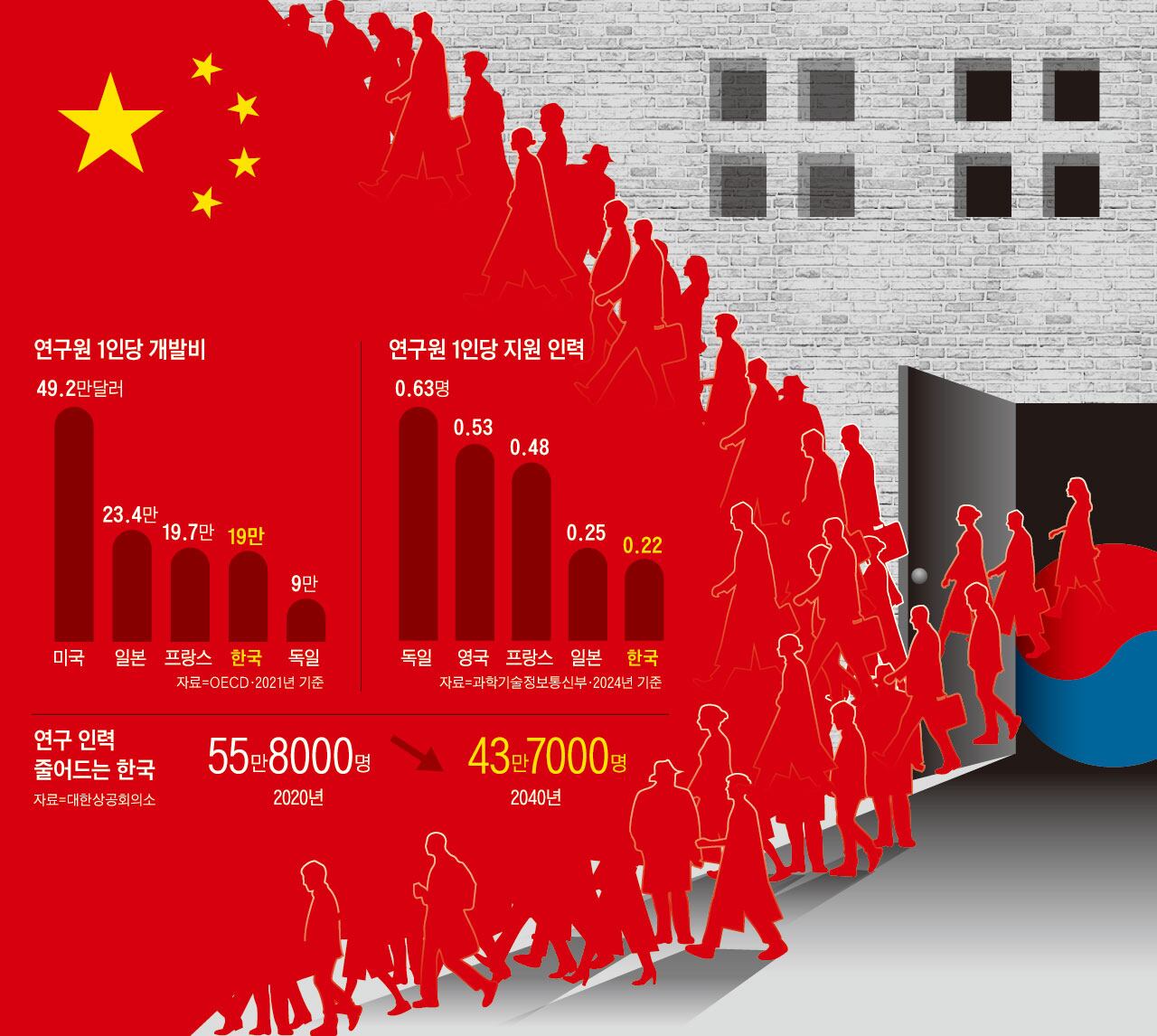
Critics believe that this exodus is driven by several factors, including rigid 65-year retirement rules, a lack of social respect and stable support for science and technology, and fears of research disruption. These losses not only erode decades of accumulated expertise but also deprive younger generations of mentorship, weaken domestic research capabilities, and potentially compromise national security through sensitive technology leaks.
Global Talent Competition and Policy Challenges
As global talent competition intensifies, South Korea must urgently address policies to retain young returnees, attract foreign talent, and enable senior scholars to continue their research domestically. Dr. Kim In-ja of the Korea Institute of Science & Technology Evaluation and Planning (KISTEP), who studies high-career scientist utilization, noted, “Major countries extend or abolish retirement ages to let outstanding scholars research indefinitely. It’s time to diversify post-retirement research pathways.”
Professor Ahn Joon-mo of Korea University’s Department of Public Administration suggested, “Matching senior scientists with mid-to-large enterprises could sustain their research and resource utilization.” This approach could help bridge the gap between academic research and industry needs, ensuring that experienced scholars continue to contribute meaningfully.
Personal Experiences of Senior Scholars
Lee Young-baek, former Hanyang University Department of Physics honorary professor and a first-generation domestic engineering scholar, shared an anecdote from a recent interview. He mentioned that while teaching physics at Fudan University in Shanghai, he was approached by students who asked if he was a basic science scholar and requested an autograph. Lee was scouted by the Chinese government as an academician of the Chinese Academy of Sciences and Chinese Academy of Engineering, receiving research space, five-star hotel housing, research funds, and unlimited round-trip flights to Korea. His contract remains valid if he stays in Shanghai for four months annually.
Kim Soo-am, a marine biology authority known as “Dr. Pollock” and former Pohang University of Science and Technology honorary professor, has lectured at China Ocean University in Qingdao since 2019, a year after retirement. Before retiring, he received an offer from the Chinese university. An acquaintance noted, “He was impressed by the students’ dedication, lecture enthusiasm, and the institution’s proactive recruitment of overseas scholars.”
Other notable scholars who have relocated to China include Lee Young-hee, former Sungkyunkwan University distinguished professor and the first “national scholar” in 2005, former Korea Institute for Advanced Study Vice Director Lee Ki-myoung, and former Seoul National University Professor Kim Soo-bong.
Attractive Offers and Institutional Support
Vice President Kim Yoon-young of the Korean Academy of Science and Technology, a former Seoul National University distinguished professor, received offers from U.S. and Chinese institutions near retirement. U.S. universities offered tenure and double the salary, while some Chinese institutions proposed even higher pay. Kim remarked, “Retiring professors often discuss the extraordinary offers they received from China.”
Senior scholars leave not for personal fame or money but to continue lifelong research amid domestic barriers. Government R&D support focuses on active researchers, making it hard for retirees to secure projects. A pre-retirement engineering professor in the capital area recalled, “When a Chinese university asked about short-term results, they said, ‘Basic science takes time—don’t worry.’ That’s unheard of in Korea.”
Institutional Culture and Disillusionment
The culture of sidelining senior scientists as “retired elders” rather than valuing their experience exacerbates disillusionment. A retired Seoul National University scholar stated, “Becoming a distinguished professor immediately pressures you to find external roles. Some schools even ask if you’d donate your salary, calling it an honorary position.” A national research institute researcher added, “Many scientists left after the previous administration slashed R&D budgets.”
The government lacks basic data on retired scholars moving abroad, often learning through media reports. The “ReSeat Senior Scholar” program aims to collect data on pre- or post-retirement researchers, but voluntary participation remains low. A Ministry of Science and ICT source said, “We can’t force scholars to input personal data before retirement, and post-retirement contact is even harder.” Kim Yoon-young emphasized, “The nation must treat post-retirement scholars with the same respect as National Intangible Cultural Heritage holders.”


Comments
Post a Comment