Space Startups Chase Moon and Asteroid Gold for Billion-Dollar Profits
The Future of Space Mining: A New Era of Resource Extraction
Space mining is no longer a concept confined to science fiction. With the development of advanced technologies and the growing demand for rare resources, companies around the world are stepping up to explore the vast potential of the Moon and asteroids. This emerging industry promises to reshape global economies and supply chains, offering new opportunities for innovation and sustainability.
Economic Value of Space Resources
One of the primary reasons behind the surge in space mining efforts is the immense economic value of extraterrestrial resources. The Moon, for instance, is rich in helium-3, a rare isotope that could revolutionize energy production through nuclear fusion. Helium-3 is considered a "dream fuel" due to its ability to generate significant energy without producing radioactive waste. NASA estimates that the Moon contains 1 million tons of helium-3, which could be worth as much as 20 quadrillion dollars—far exceeding the U.S. GDP.
In addition to helium-3, the Moon is also abundant in rare earth elements used in electronics, semiconductors, and displays. These materials are crucial for modern technology, yet their supply on Earth is limited and often concentrated in specific regions. For example, China controls over 60% of global rare earth mining, making it a strategic point of concern for many nations.
Asteroids, too, hold enormous potential. The asteroid 16 Psyche, for instance, is estimated to contain metals worth 10 quintillion dollars. Companies like AstroForge are developing low-cost spacecraft to mine these asteroids and extract valuable platinum-group metals (PGMs) such as platinum, palladium, and rhodium. These metals are essential for industries ranging from automotive to electronics, and their scarcity on Earth has driven interest in space-based alternatives.
Challenges and Opportunities
Despite the promise of space mining, several challenges must be addressed. One of the main obstacles is the difficulty of obtaining resources that are scarce or unavailable on Earth. Helium-3, for example, is extremely rare on our planet, with only one-millionth of the amount found in helium-4. The Moon, however, has accumulated helium-3 over billions of years due to its thin atmosphere, making it an ideal source.
Another challenge is the high cost of space exploration. Historically, launching payloads into space has been prohibitively expensive. However, recent advancements in rocket technology have significantly reduced costs. SpaceX, for example, has made space travel more affordable by using reusable rocket boosters. This reduction in cost has opened the door for commercial ventures, enabling startups to pursue ambitious projects.
Technological Advancements
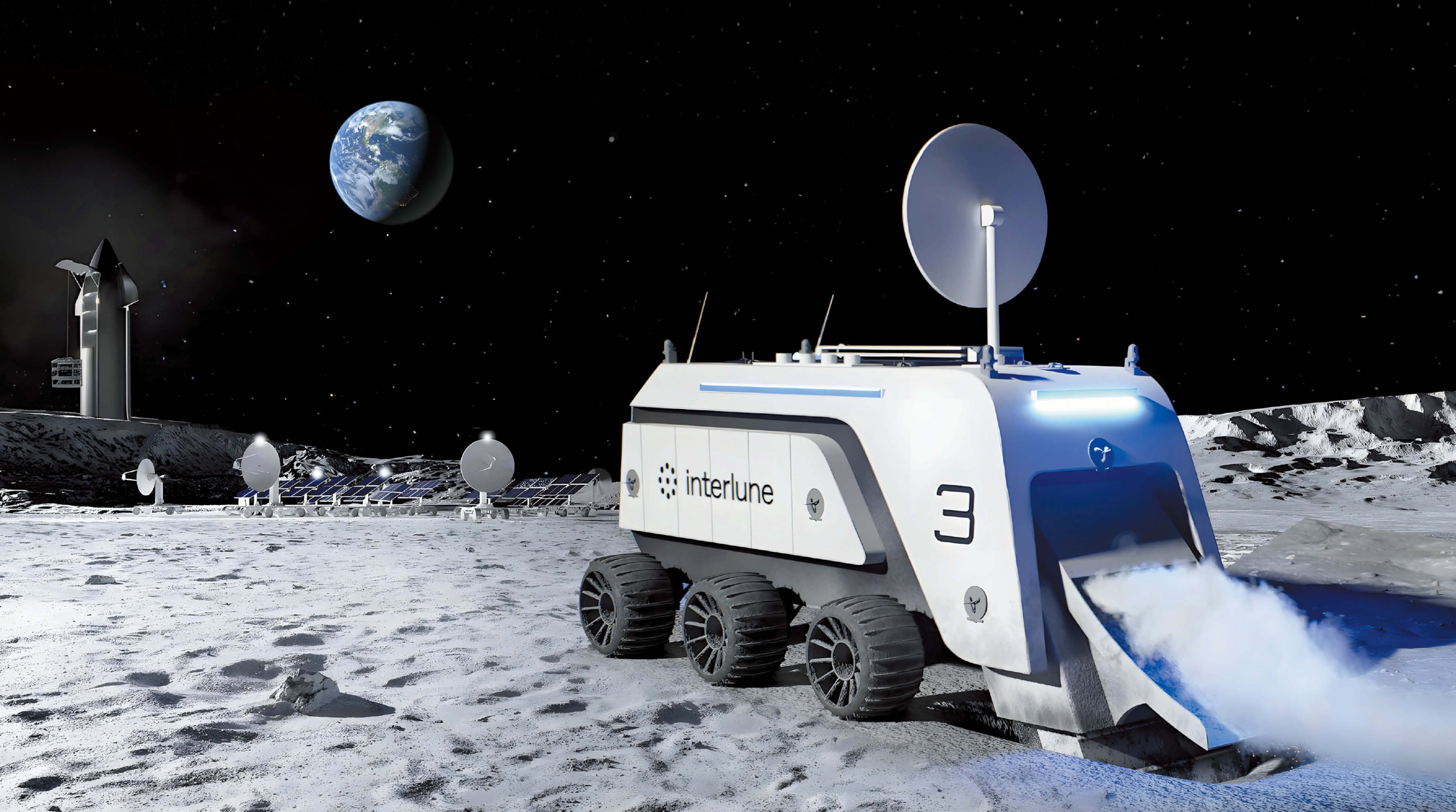
The maturation of space technology is another key factor driving the growth of the space mining industry. Companies are developing autonomous systems capable of operating in extreme environments, such as the Moon’s harsh temperature fluctuations and the vacuum of space. Interlune, for instance, has created the Harvester, a robotic system designed to extract and process lunar regolith. This technology is expected to play a critical role in future mining operations.
Similarly, OffWorld has developed “smart swarm” technology, allowing robots to work collaboratively in environments with limited communication. These innovations are essential for ensuring the success of long-term missions, where human intervention may not be feasible.
South Korea's Role in the Space Mining Race
While many countries are actively pursuing space mining, South Korea still has a long way to go. Currently, there are no private companies in the country focused on lunar or asteroid resource extraction. State-led initiatives are also lagging behind those of major space powers like the United States and China.
South Korea’s space budget in 2023 was just 700 million dollars, compared to 74 billion dollars for the U.S. and 16 billion dollars for China. This disparity highlights the need for increased investment in space research and development. However, efforts are underway to catch up. The Korea Institute of Geoscience and Mineral Resources (KIGAM) is developing key technologies for lunar resource analysis, while Unmanned Exploration Laboratory (UEL) plans to send a small rover to the Moon in 2027.
Looking ahead, South Korea aims to establish itself as a player in the space mining industry. With continued investment and collaboration with international partners, the country could soon contribute to the next chapter of space exploration.


Comments
Post a Comment