Trump's 'Golden Fleet' Confronts Chinese Naval Growth
The Emergence of the 'Golden Fleet'
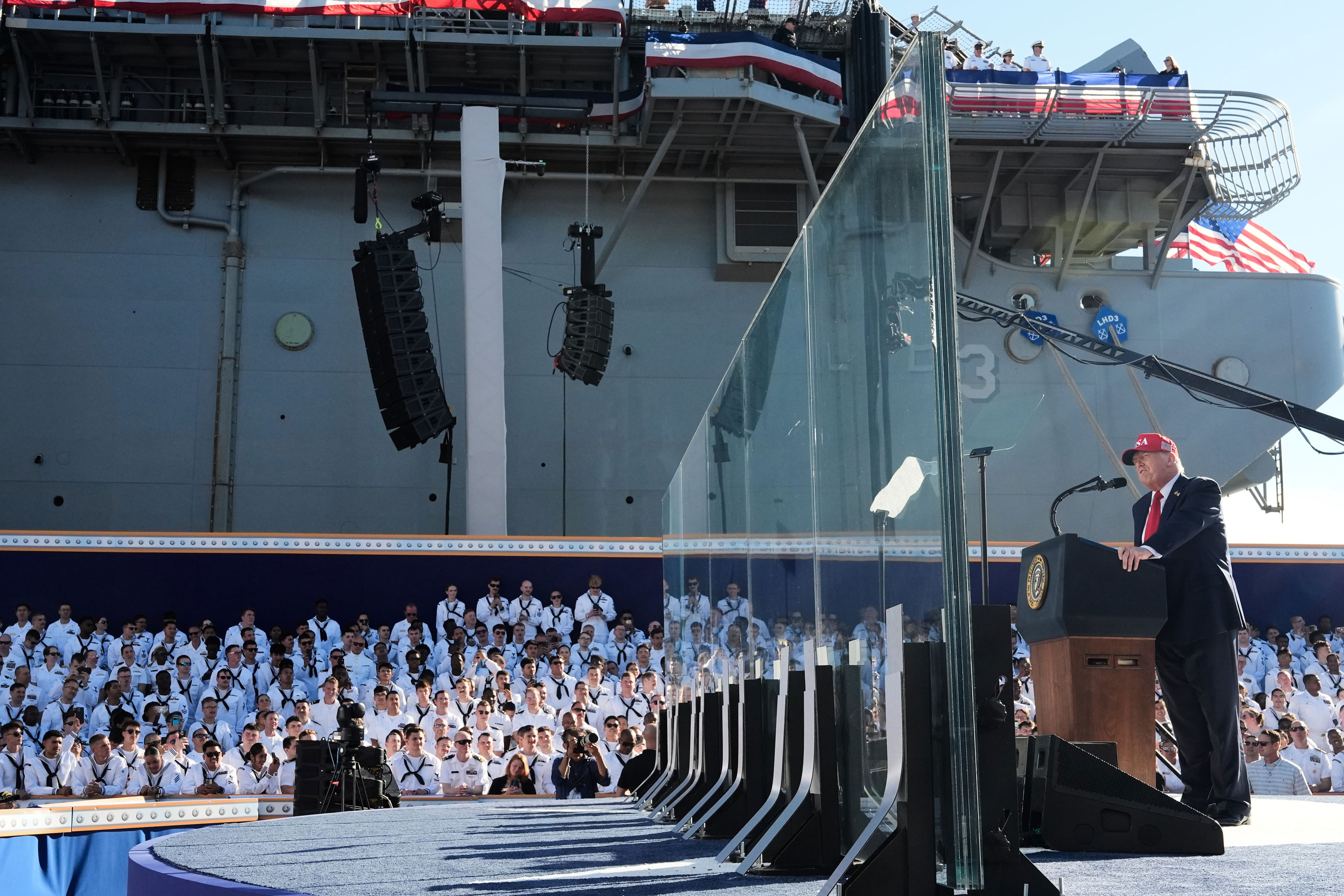
The Trump U.S. administration is pushing forward with the development of a new naval force known as the ‘Golden Fleet,’ aimed at countering the growing influence of China. This initiative has been highlighted in recent reports, revealing that the White House and senior U.S. Navy officials are engaged in early discussions about creating a new fleet to replace the current naval structure. The name 'Golden Fleet' is believed to reflect President Trump’s affinity for the color gold, which he has previously associated with various policies such as the missile defense system 'Golden Dome' and the immigration program 'Golden Card.'
Strategic Vision and Naval Power Enhancement
The Golden Fleet project is part of the Trump administration's broader strategy to enhance naval power. According to reports, this initiative is directly led by President Trump, who has consistently criticized the appearance of modern warships and called for a “completely new fleet.” His deep involvement in the planning process includes multiple discussions with Navy officials regarding the design of new vessels.
The new fleet is expected to consist of large combat ships equipped with powerful long-range missiles and smaller escort vessels. Notably, the White House and the U.S. Department of Defense are reportedly considering the construction of next-generation heavily armored warships weighing between 15,000–20,000 tons and capable of carrying hypersonic missiles. Brian Clark, a senior researcher at the Hudson Institute, noted that the reason battleships were built during World War II was to secure long-range firepower. He added that future battleships will be equipped with powerful ultra-long-range missiles.
Countering Chinese Influence
The Trump administration's push to bolster naval power is seen as a response to China's rapid expansion of its naval capabilities. As Beijing continues to build new warships and modernize existing ones, the U.S. views long-range missile capabilities as essential to penetrating Chinese air defenses. While experts remain divided on whether super-sized combat ships are necessary to counter China, there is broad agreement that securing long-range missiles is key to maintaining superiority in the Pacific.
The Role of Unmanned Vessels
The Golden Fleet is planned to include 280–300 crewed vessels, along with a significant number of unmanned ships utilizing autonomous and robotic technologies. These unmanned vessels are envisioned as 'reserve forces, hedge forces' that will operate in various maritime zones to fill the power gap between peacetime and wartime responses. Earlier, Samuel Paparo, commander of the U.S. Indo-Pacific Command, proposed a strategy to deploy thousands of unmanned submarines, surface ships, and aerial drones in the 100-mile sea area between the two sides in the event of a Chinese invasion of Taiwan, to secure initial response time.
Challenges and Timeline
However, the core of the Golden Fleet—large combat ships—will likely take years to design and build. Clark predicted that super-sized combat ships will probably only be seen in physical form after President Trump’s term. This timeline underscores the complexity and challenges involved in developing such a sophisticated naval force.
Conclusion
The development of the Golden Fleet represents a significant shift in U.S. naval strategy, emphasizing the need for advanced technology and long-range capabilities to maintain a strategic edge against China. While the project faces numerous challenges, it highlights the administration's commitment to enhancing naval power and ensuring continued dominance in the Pacific region.


Comments
Post a Comment