UK Emissions Drop 43.3% Since 1990, Study Shows
Significant Reduction in Greenhouse Gas Emissions
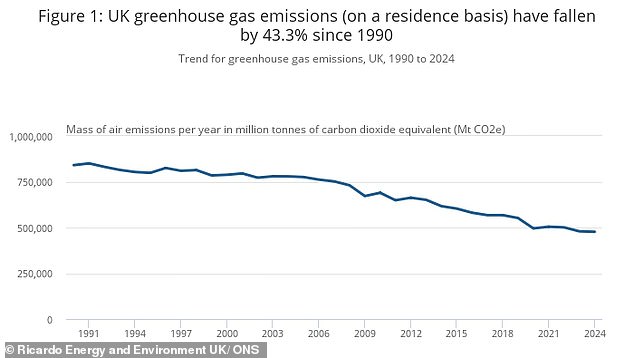
Official data reveals that Britain has nearly halved its greenhouse gas emissions since 1990. Provisional figures for 2024 indicate a 43.3 per cent reduction over the past 35 years, reflecting a substantial decrease in harmful emissions released into the atmosphere.
This decline includes carbon dioxide (CO₂), which is emitted through the burning of fossil fuels and contributes to global warming by trapping heat from sunlight. The reduction also covers methane, a potent greenhouse gas primarily produced by the fossil fuel industry and livestock, as well as nitrous oxide, which is released through the use of synthetic fertilizers.
Other gases with high global warming potential, such as hydrofluorocarbons used mainly in refrigeration and air conditioning, have also seen significant decreases. These reductions are attributed to a shift away from coal and the increased adoption of renewable energy sources like wind and solar power.
Sector-Specific Trends in Emissions
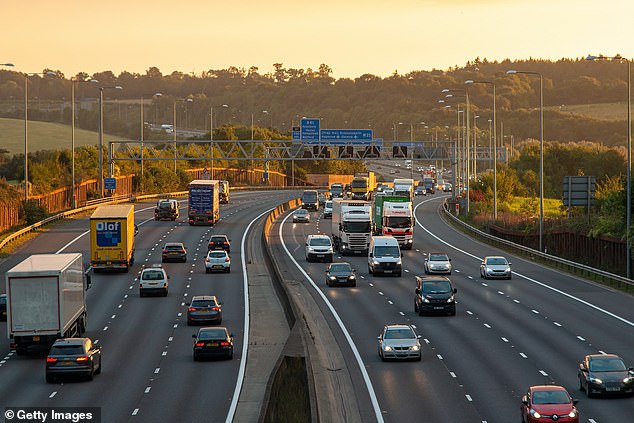
The manufacturing sector experienced the largest drop in emissions compared to 2023, with a reduction of 7.4 per cent. However, transport emissions rose by 4.5 per cent, continuing a long-term upward trend largely driven by the widespread use of personal vehicles.
Household emissions increased for the first time since 2021, primarily due to the use of gas-fired boilers, water heaters, and stoves. Other sectors that saw an increase in greenhouse gas emissions include construction, accommodation and food services, financial and insurance activities, and education.
Expert Insights on Emission Trends
Diane Crowe, Group Sustainability Director at Reconomy, highlighted the progress made in reducing business emissions, particularly in the manufacturing sector. However, she noted that the rise in household emissions underscores the ongoing challenge of consumption patterns.
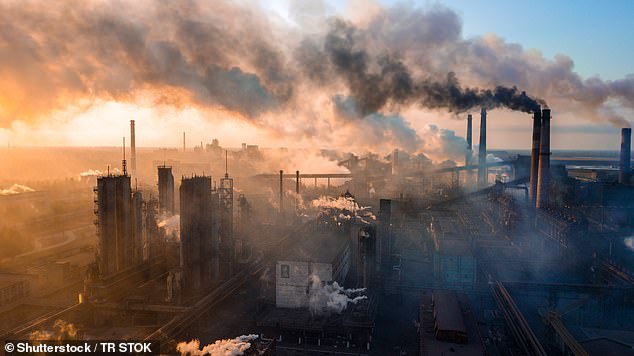
"The UK economy continues to operate in a largely linear way – extracting new materials to meet demand, with too little emphasis on reuse, recycling, and resource efficiency," Crowe said. "This circularity gap is placing unsustainable pressure on the earth's ecosystems, with the extraction and processing of materials alone responsible for around half of global greenhouse gas emissions."
She emphasized the importance of closing this gap and reducing material consumption to address climate change, nature loss, and pollution.
Global Context of Greenhouse Gas Emissions
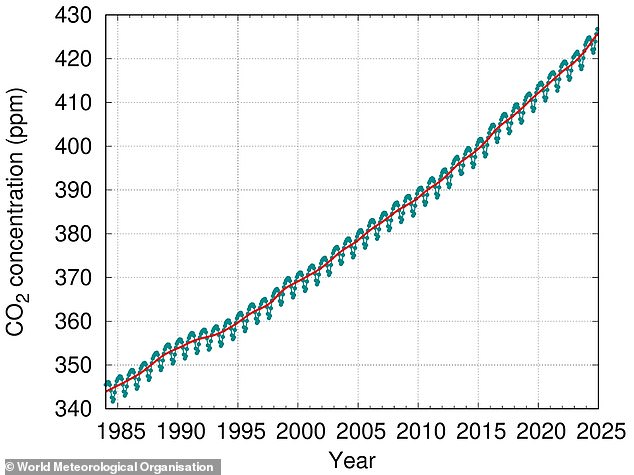
Despite these improvements in the UK, global greenhouse gas emissions continue to rise. In 2023, a new record was set, with major contributors including China, the United States, and India.
The World Meteorological Organization (WMO) has warned that carbon dioxide levels in the atmosphere are increasing faster than at any point in human history. From 1990 to 2023, radiative forcing – the warming effect caused by long-lived greenhouse gases – increased by 51.5 per cent, with CO₂ accounting for the majority of this rise.
"As long as emissions continue, greenhouse gases will continue accumulating in the atmosphere leading to global temperature rise," the WMO stated. "Given the extremely long life of CO₂ in the atmosphere, the temperature level already observed will persist for several decades even if emissions are rapidly reduced to net zero."
The last time the Earth experienced a comparable concentration of CO₂ was 3–5 million years ago, when temperatures were 2–3°C warmer and sea levels were 10–20 meters higher than today.
Ongoing Challenges and Future Outlook
While the UK has made significant strides in reducing emissions, the challenges remain substantial. The question of whether Britain is on the brink of extreme weather conditions, such as record-breaking summers by 2050, remains a pressing concern.
Recent records show that greenhouse gas emissions continue to rise, raising concerns about the long-term impact on the planet's climate. With global CO₂ levels projected to reach alarming heights in 2024, the need for sustained and effective action becomes increasingly urgent.
As the UK moves forward with ambitious targets, such as an 81% emissions cut by 2035, it faces the challenge of balancing economic growth with environmental sustainability. The path ahead requires continued innovation, policy reform, and public engagement to ensure a resilient and sustainable future.


Comments
Post a Comment