48 Arrested in $4.5 Billion Rectal Drug Ring
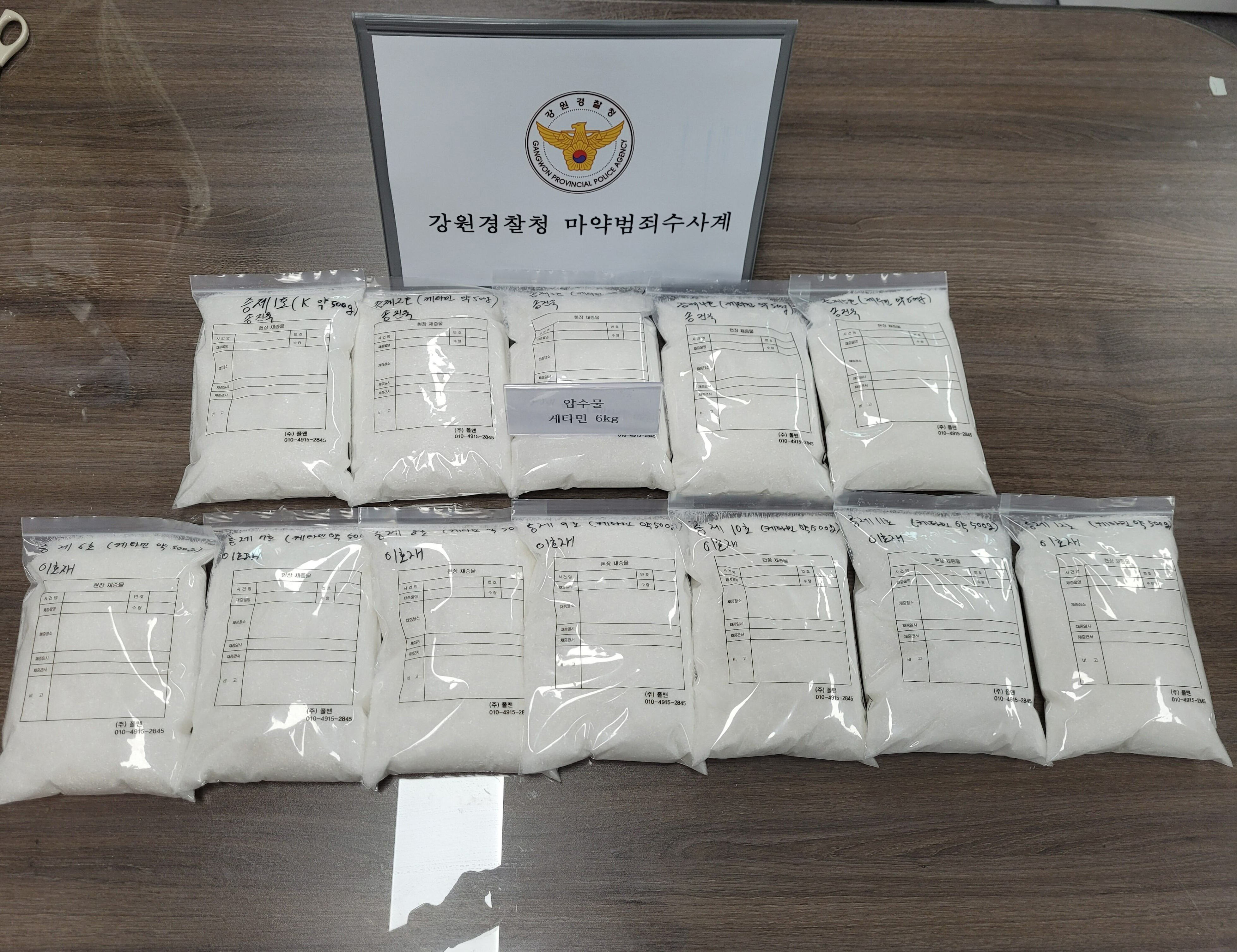
A major drug trafficking operation has been dismantled by law enforcement authorities, revealing a complex network that smuggled narcotics worth 4.5 billion Korean won into the country. The operation involved ketamine and other illicit substances, which were transported from Europe, including the UK and France, and distributed to entertainment venues in the capital region. The suspects used highly sophisticated methods to evade detection, such as disguising ketamine as human feces and concealing it in their rectums.
The Gangwon Provincial Police Agency's Criminal Investigation Unit announced on the 12th that they had arrested 48 individuals, including a domestic smuggler identified as A (27 years old), for violating the Narcotics Control Act. Of these, 18 were detained for further investigation.
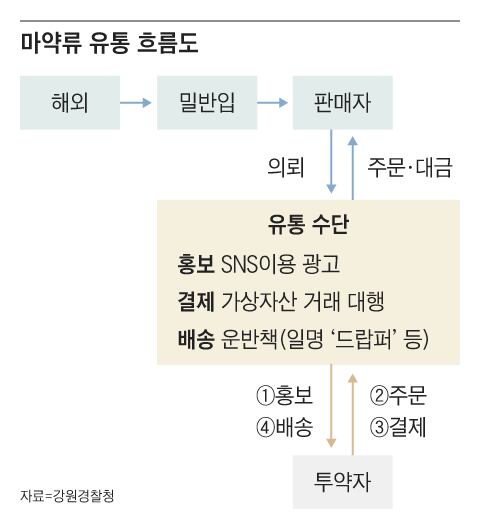
According to the police, A and others are suspected of smuggling ketamine, a new type of narcotic, along with ecstasy, valued at 4.5 billion Korean won. They allegedly carried out four separate operations between September of last year and September of this year, transporting the drugs from the UK and France into the country. These narcotics were then distributed to entertainment establishments in the capital region.
During the investigation, law enforcement seized a large quantity of narcotics, including 8.8 kg of ketamine, approximately 100 g of methamphetamine, around 500 ecstasy tablets, and 330 ml of synthetic cannabis. The total value of the seized items was approximately 4 billion Korean won. This amount is sufficient to supply 300,000 people simultaneously. Among the confiscated items was also 'ketamine raw material (a phencyclidine analog),' which was designated as a new type of narcotic by the National Forensic Service.
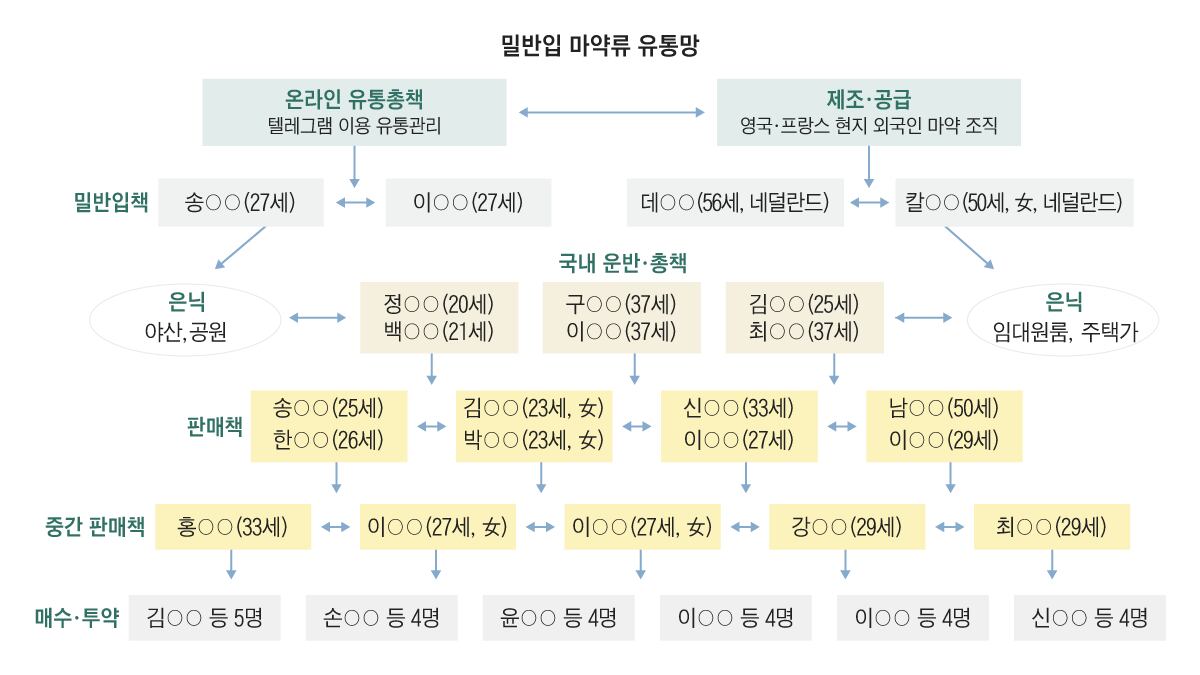
According to the police investigation, four smugglers—two South Koreans and two Dutch nationals—received narcotics directly from local operatives under the direction of an online distribution leader. They then transported the drugs into the country.
Notably, the two Dutch nationals smuggled approximately 2.4 kg of ketamine and ecstasy by packaging them to resemble human feces and hiding them in their rectums. A police official noted that this method made it extremely difficult to detect through visual inspection or X-ray screening.
The domestic organization operated in a cellular structure, with the smuggled narcotics being scattered via a “drop-off” method in single-room apartments or mountainsides in Seoul and Gyeonggi Province. Couriers would then collect, repackage, and hide the drugs in other locations. Sellers would photograph the coordinates and transmit them to users for non-face-to-face sales.
Police were able to track the group’s movements through disguised online transactions and conducted a year-long investigation before making the arrests.
A source from the Gangwon Provincial Police Agency stated, “This case highlights that narcotics routes into the country are expanding from Southeast Asia to Europe. We will strengthen joint investigations with airports and customs and expand international cooperation to block overseas supply chains.”


Comments
Post a Comment