7 Airports Close, Hundreds of Flights Cancelled as Typhoon Fung Wong Strikes Philippines
Impact of Typhoon Fung Wong on Air Travel
Typhoon Fung Wong, locally referred to as Uwan, has significantly disrupted air travel in the Philippines. On Sunday, seven airports in the Bicol Region were closed, and a total of 171 domestic and 19 international flights were canceled. The typhoon made landfall in northern Luzon with sustained winds reaching 185 kph, prompting authorities to take precautionary measures.
The Civil Aviation Authority of the Philippines confirmed that the following airports were closed starting at 4 a.m. on Sunday: Bicol International Airport, Naga Airport, Virac Airport, Masbate Airport, Daet Airport, Bulan Airport, Sorsogon Airport, and Bacon Airport. These closures were implemented to ensure the safety of passengers and staff during the storm's peak activity.
Airlines have indicated that flight cancellations may continue until Wednesday, depending on the evolving weather conditions and the status of airport operations. This uncertainty has created challenges for travelers, particularly those planning to return to their destinations or visit the region.
Stranded Individuals Across Ports
In addition to the disruptions in air travel, the Philippine Coast Guard reported that 6,607 individuals, including passengers, crew members, and cargo staff, were stranded across 86 ports nationwide on Monday morning. This figure highlights the widespread impact of the typhoon on maritime transportation and the need for coordinated efforts to assist those affected.
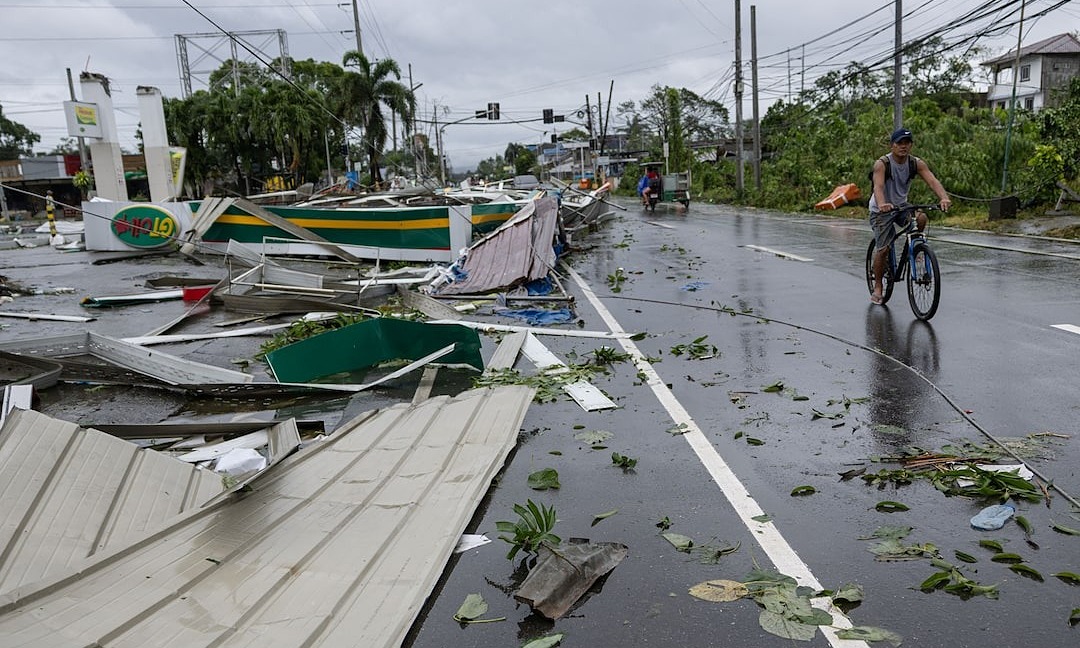
Typhoon Fung Wong moved out of the northwestern Philippines on Monday, leaving behind a trail of destruction. The storm caused floods and landslides, knocked out power to entire provinces, and resulted in at least two fatalities. Over 1.4 million people have been displaced due to the typhoon's effects.
Typhoon’s Path and Forecast
After moving through the northern Philippines, the typhoon entered the East Sea on Monday morning, marking it as the 14th storm in the region this year. Meteorological forecasts suggest that Fung Wong will head northwest toward Taiwan, raising concerns about potential impacts on the island nation.
This development comes as the Philippines continues to recover from the devastation caused by Typhoon Kalmaegi, which left at least 224 people dead. The back-to-back typhoons have placed additional strain on emergency response systems and highlighted the vulnerability of the region to extreme weather events.
Ongoing Challenges and Recovery Efforts
The combined effects of these storms have underscored the importance of preparedness and resilience in the face of natural disasters. Local authorities are working to assess the damage and provide aid to affected communities. However, the ongoing challenges posed by Fung Wong and the lingering effects of Kalmaegi continue to test the capacity of relief efforts.
As the situation evolves, it is crucial for residents and visitors alike to stay informed about weather updates and follow safety guidelines. The government and various organizations are likely to play a key role in coordinating recovery efforts and supporting those impacted by the recent storms.


Comments
Post a Comment