Breast Implant Exchange Under Laryngeal Mask Anesthesia Minimizes Complications
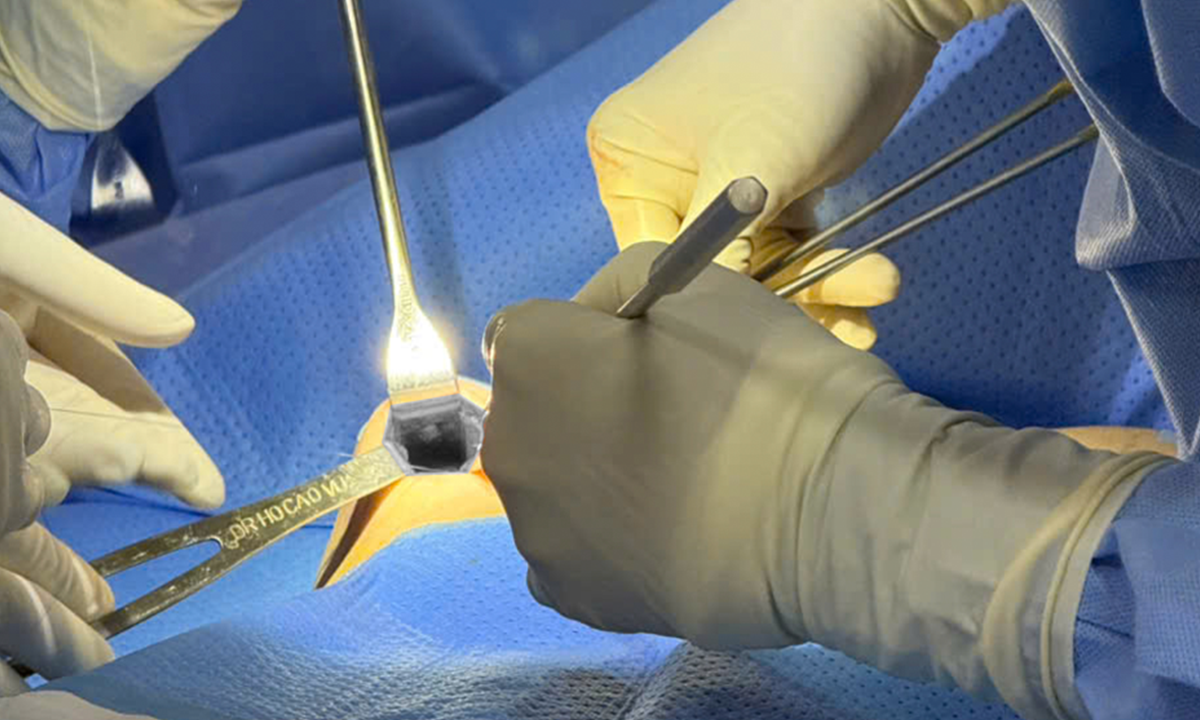
Breast implant explantation under laryngeal mask anesthesia is a technique that offers several advantages over traditional methods. This form of light anesthesia allows for quick awakening, reduces the likelihood of postoperative nausea, minimizes injury to the larynx, and lowers the risk of complications. It involves the use of anesthetic agents delivered through a specialized device known as a laryngeal mask airway.
This method is particularly beneficial for procedures that are minimally invasive, low in trauma, and short in duration. It does not require the use of muscle relaxants, which is a significant advantage. The absence of muscle relaxants reduces the risk of complications such as postoperative respiratory depression, allergic or anaphylactic reactions, and prolonged muscle weakness—especially in elderly patients or those with neuromuscular conditions.
Dr. Ho Cao Vu, MD, MSc, has shared his experience using laryngeal mask anesthesia for breast implant explantation and replacement. For many years, he relied on endotracheal intubation or local anesthesia combined with sedation. However, after observing the drawbacks of these approaches, he transitioned to using laryngeal mask anesthesia for 100% of his breast implant explantation and replacement surgeries, excluding cases involving complex abnormalities or extended operating times.
For the anesthesia team to agree to this shift, the surgeon must ensure that the procedure is fast, minimally traumatic, and minimally invasive. It should also involve limited manipulation of the pectoralis muscle, as laryngeal mask anesthesia typically does not use muscle relaxants.
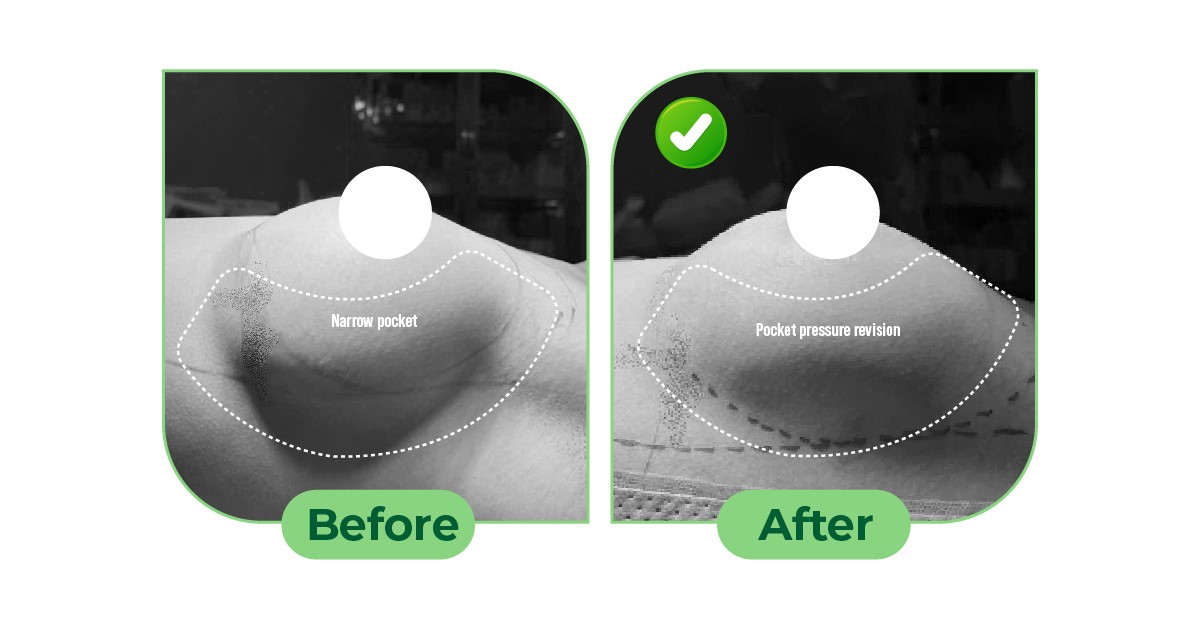
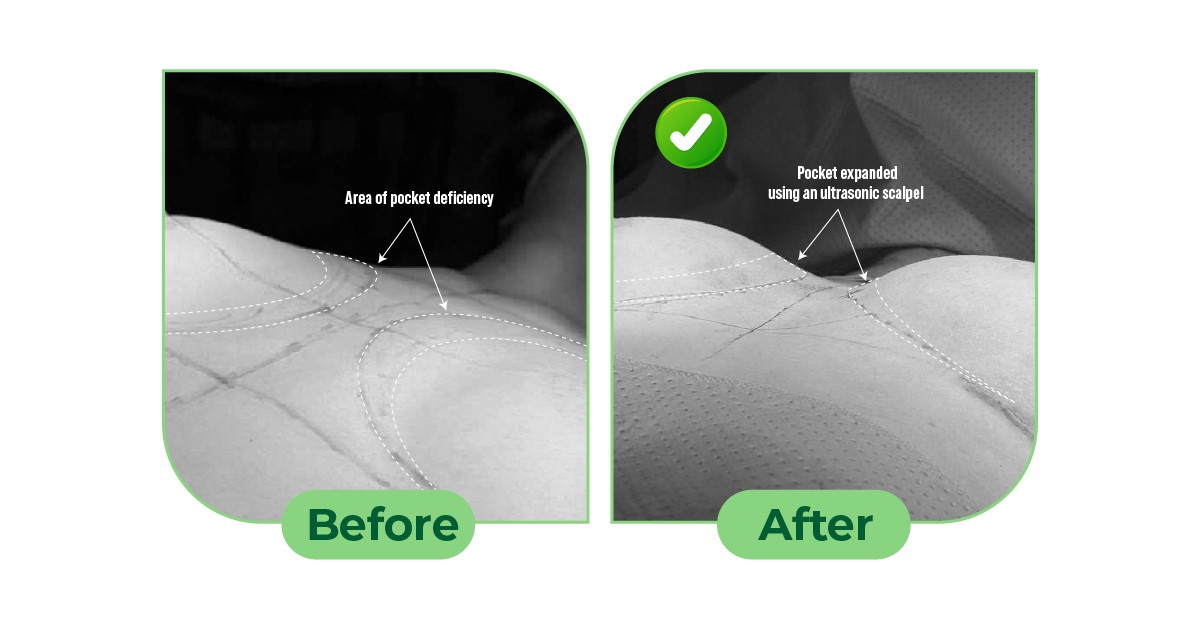
After assessing the current situation, Dr. Vu used an ultrasound scalpel to revise the pocket to fit the new breast implant. Photo courtesy of Dr. Cao Vu
Dr. Vu employs ultrasonic point dissection as a standard technique. This approach allows standard breast implant explantation procedures to be completed in 15–30 minutes (from skin incision to wound closure). Procedures that require pocket revision and implant replacement usually take 30–60 minutes, with minimal trauma, no bleeding, no seroma, no drains, and no need for postoperative analgesics or antibiotics. As a result, his standard breast implant explantation and replacement procedures are now performed under laryngeal mask anesthesia.
One key benefit of not using muscle relaxants in laryngeal mask anesthesia during breast implant explantation or implant placement is that it enables the surgeon to reassess the current implant pocket, pocket pressure, and the condition of the pectoralis muscle, including its position, degree of contraction or relaxation, and the level of fibrosis.
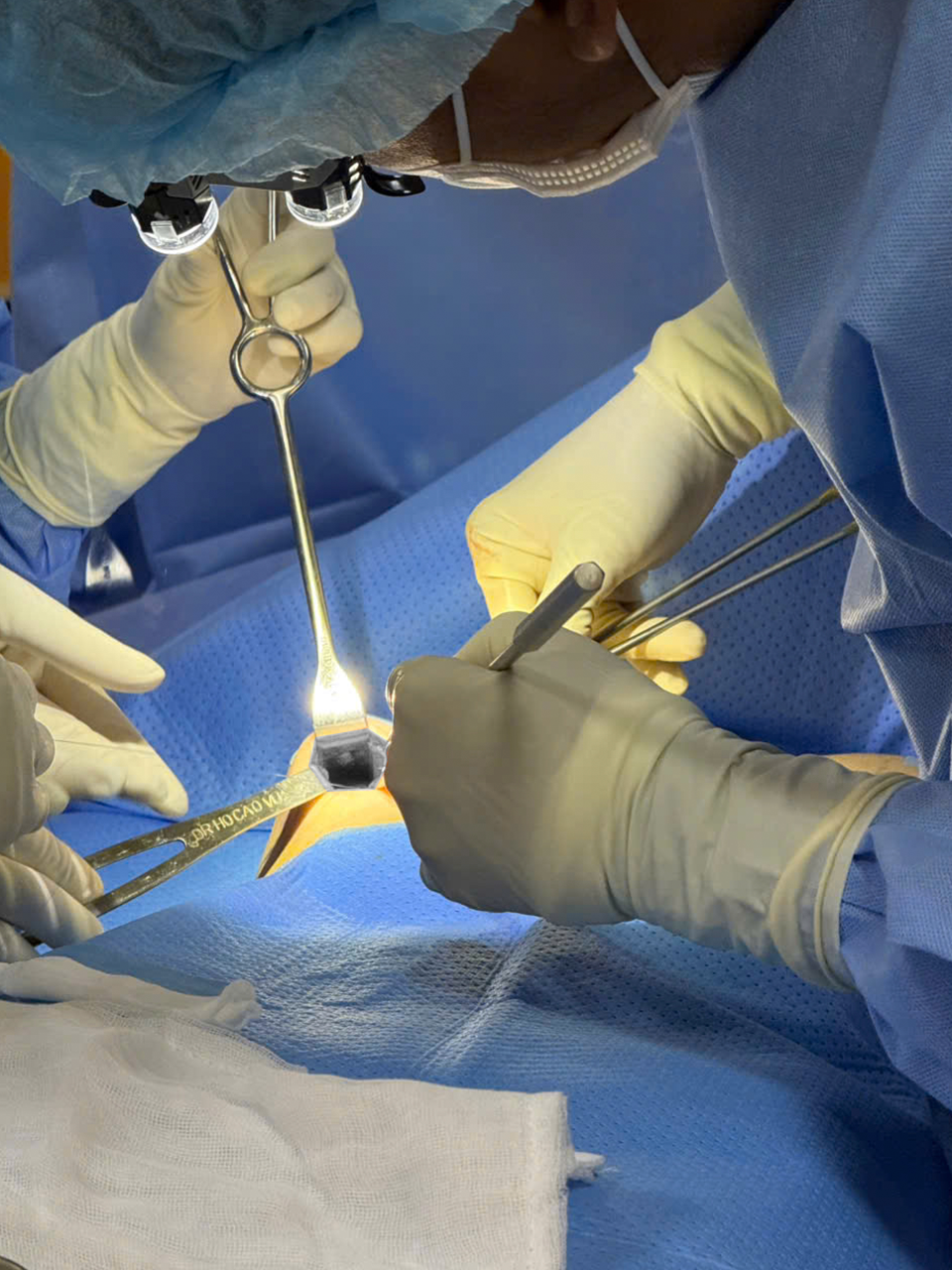
Implant pocket dissection. Photo courtesy of Dr. Ho Cao Vu
Dr. Vu, who has performed more than 200 breast implant explantation and replacement procedures, has highlighted the advantages of laryngeal mask anesthesia during ultrasonic point dissection with the new-generation ultrasonic scalpel:
- Accurate assessment of pocket pressure
The surgeon explains that the most common implant placement planes today are submuscular or dual-plane. The pectoralis muscle plays a crucial role in determining breast shape, pocket pressure, implant longevity, and, in some cases, the overall softness of the breast. Each patient has different anatomical characteristics, including variations in the pectoralis muscle. In patients with previous implants, the implant pocket has already formed around the implant. The surgeon enters the pocket and evaluates pocket pressure, areas of excess or deficiency, and the condition of the previous implant (folding, rupture, brand, diameter, projection), as well as chest wall morphology (pectus carinatum or pectus excavatum).
Based on the current condition and the patient's expectations, Dr. Vu uses the ultrasonic scalpel to revise the implant pocket to accommodate the new implant (upsizing, downsizing, maintaining the same size, increasing projection, or reducing projection).
With endotracheal anesthesia using muscle relaxants, the surgeon cannot accurately assess baseline muscle tone, as the pectoralis muscle returns to its physiologic state only after emergence. For this reason, laryngeal mask anesthesia allows the surgeon to evaluate pocket pressure precisely and perform accurate implant pocket revision, reducing late complications such as muscle tightening that causes implant folding, compression on the implant, shortened implant lifespan causing early implant rupture, and increased capsular contracture rates.
- Rapid pocket dissection and revision
Prolonged operating time can affect patient comfort, especially in older patients who previously experienced painful breast augmentation and are fearful of undergoing implant removal. Understanding these concerns and expectations, Dr. Vu continually refines his dissection technique to optimize surgical time.
The use of laryngeal mask anesthesia in breast implant explantation, combined with ultrasonic point dissection, reduces the explantation procedure to only 15–30 minutes. Cases requiring dissection and precise revision of pocket pressure can be performed accurately without muscle relaxants. Patients recover quickly, are discharged within 4–6 hours, and do not require postoperative analgesics or antibiotics. Many patients in their 50s and 60s have chosen this method because it ensures excellent safety.


Comments
Post a Comment