Cambricon Founder's Wealth Surges Amid U.S. Sanctions
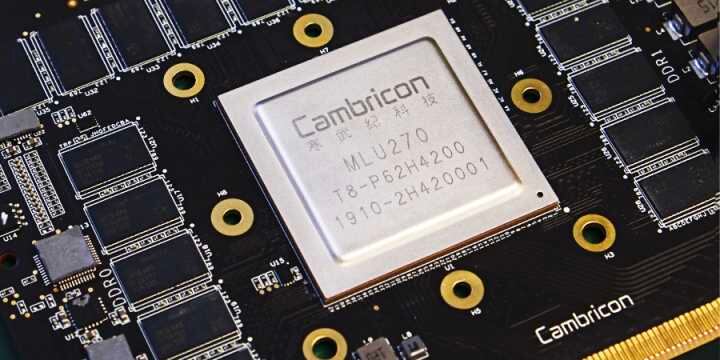
The Rise of Cambricon and the New Era of Chinese AI
A Chinese artificial intelligence (AI) chip startup, Cambricon, has recently captured global attention due to the U.S. sanctions imposed on Beijing. While the company once relied heavily on Huawei just six to seven years ago, it has experienced rapid growth, largely driven by China's national technology self-reliance policy. Chen Tianshu, the 40-year-old founder of Cambricon, has also quickly become a billionaire.
According to Bloomberg, Cambricon's stock price surged by more than 765% over the past 24 months. The Bloomberg Billionaires Index reported that Chen, who holds 28% of the company, saw his wealth more than double since the beginning of the year, reaching $22.5 billion (approximately 33 trillion Korean won). He became the world’s third-richest person under 40. Bloomberg noted, "This demonstrates how China is creating a new class of state-backed technology elites through strong support for its domestic AI industry."
Early Life and Academic Background
Born in 1985 in Nanchang, a southeastern Chinese city, Chen Tianshu grew up in a family where his father was an electrical engineer and his mother was a history teacher. Along with his brother Chen Yunji, he entered a gifted program at Hefei University of Technology and earned Ph.D.s in computer science in 2010. They worked as researchers at the Chinese Academy of Sciences’ computing institute.
The brothers gained international attention in 2014 by publishing a paper on AI accelerators. A year later, they unveiled their first brain-inspired chip. Named “Cambricon” after the Cambrian Explosion, it symbolizes AI’s early evolutionary phase. In 2016, the Cambricon project became a company with investment from the Chinese Academy of Sciences.
Growth and Challenges
Although Cambricon went public on the Shanghai Stock Exchange in 2020, the company reported losses until the fourth quarter of 2024. However, the U.S. ban on NVIDIA and AMD selling high-performance AI chips to China created an opportunity. Chinese authorities mandated domestic companies to purchase locally made chips, meaning they had to buy from Huawei or Cambricon. Cambricon’s sales surged by over 500% in the past year.
Expert Opinions and Future Prospects
Experts are divided on how long Cambricon’s stock rise will last. Some argue, "Without sustained policy support, the current valuation may be inflated." Sunny Cheung, a researcher at the Jamestown Foundation, a Washington-based think tank, said, "It’s too early to say whether Cambricon or Huawei, leading Chinese AI chip designers, will become the 'NVIDIA of China.' Replicating NVIDIA’s full stack, including the CUDA ecosystem, is extremely challenging."
Key Factors Behind Cambricon's Success
- Government Support: China's push for technological self-reliance has provided a strong foundation for companies like Cambricon.
- Market Demand: The U.S. sanctions have increased demand for domestic AI chips, benefiting companies such as Cambricon.
- Innovation: The company's focus on developing advanced AI chips has positioned it as a key player in the industry.
- Strategic Alliances: Collaborations with institutions like the Chinese Academy of Sciences have helped Cambricon grow rapidly.
Challenges Ahead
Despite its success, Cambricon faces several challenges:
- Sustaining Growth: Maintaining the current pace of growth without continued government support could be difficult.
- Competition: Companies like Huawei and other domestic players are also vying for market share.
- Global Market Access: The company must navigate international regulations and competition to expand beyond China.
Conclusion
Cambricon's journey from a research project to a publicly traded company highlights the potential of China's AI industry. With strong government backing and a growing demand for domestic technology, the company is well-positioned to continue its ascent. However, the path ahead is not without obstacles, and the long-term success of Cambricon will depend on its ability to innovate, adapt, and compete globally.


Comments
Post a Comment