Capital Region Apartment Supply to Fall 26% Next Year
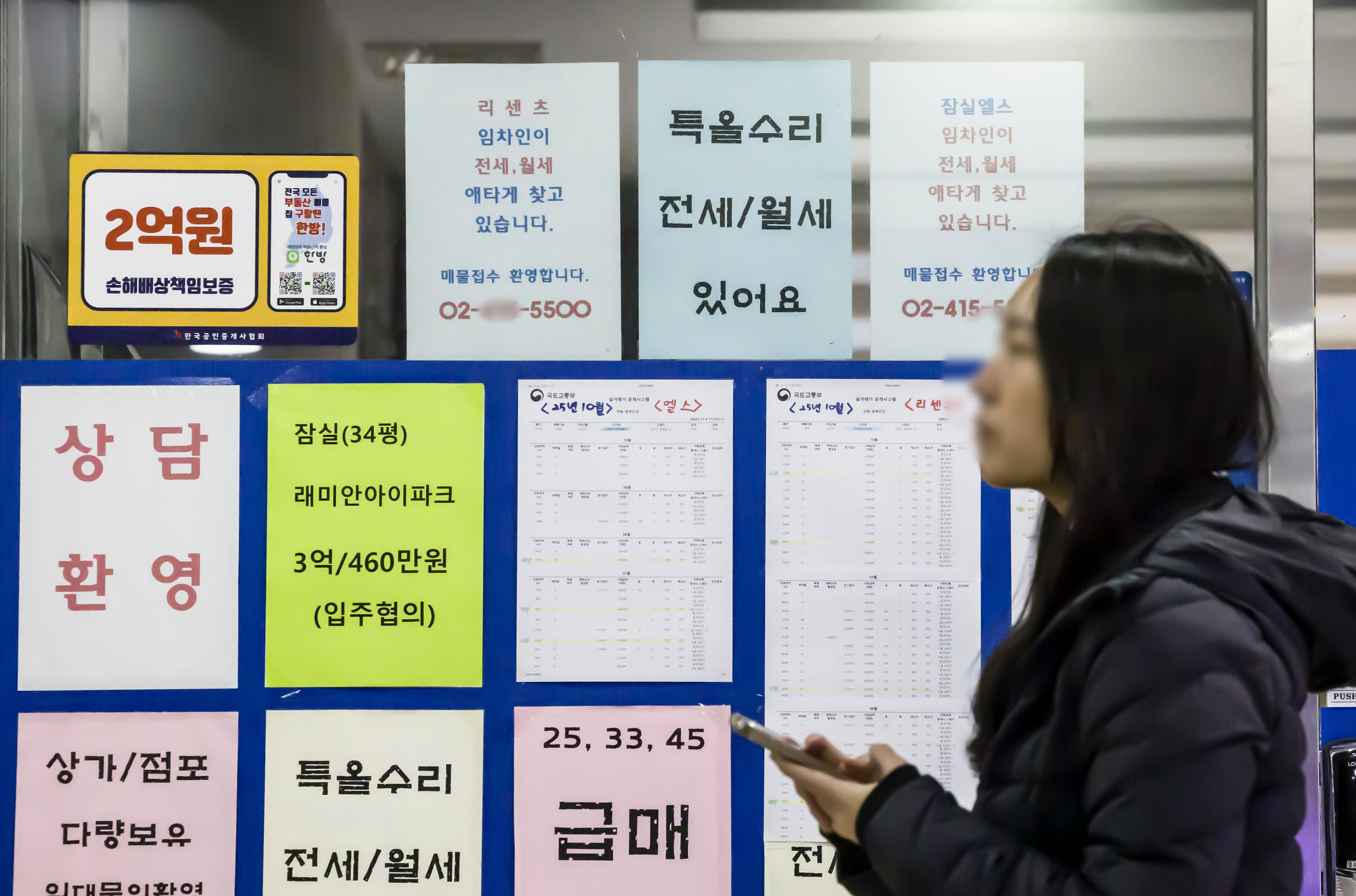
Approximately 12,467 households are expected to move into new homes in the capital region during December. With a projected 20% decrease in housing supply for next year compared to this year, the jeonse and monthly rental markets are likely to face continued instability.
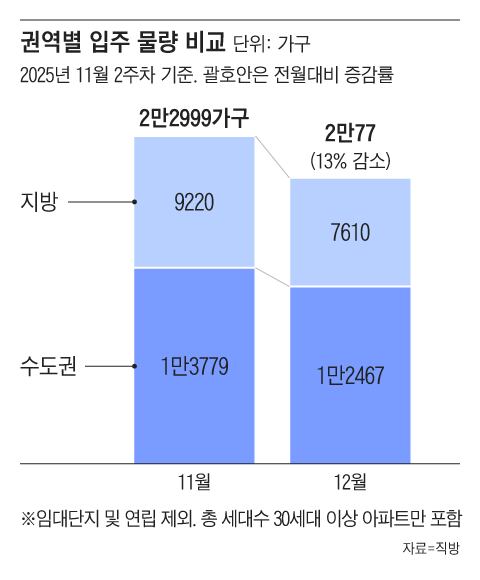
According to data from Zigbang released on the 24th, the total number of apartment move-ins nationwide for December this year is recorded at 20,077 households. This represents a 13% decline from the previous month's figure of 22,999 households. Of these, 62%—or 12,467 households—are set to be allocated in the capital region. Specifically, Gyeonggi Province will accommodate 6,448 households, while Seoul and Incheon will see 4,229 and 1,790 households respectively.
In non-capital regions, the number of households moving into new apartments is expected to decrease by 17% compared to the previous month. The total for next month stands at 7,610 households, with the Honam region accounting for a significant portion. Jeonbuk is expected to see 2,002 households, followed by 1,333 in Jeollanam. Other regions such as Gyeongnam, Gangwon, and Ulsan will have 992, 922, and 713 households respectively.
Looking ahead to 2026, the nationwide apartment move-in supply is projected to drop significantly. The estimated number of move-ins for next year is 177,407 households, which is a 26% decrease from this year’s 239,948 households. In the capital region, the supply is expected to fall from approximately 110,000 households this year to around 87,000 households in 2026.
This decline in move-in supply is anticipated to exacerbate instability in the jeonse and monthly rental markets. Typically, the start of a new move-in period leads to an increase in rental listings. However, a shortage of available housing could result in fewer listings and higher rental prices. Recent projections from the Construction and Economy Research Institute of Korea suggest that nationwide jeonse prices may rise by 4% annually next year. This would mark the highest annual increase since 2021, when jeonse prices surged by 5.1% under the Moon Jae-in administration.


Comments
Post a Comment