Celltrion Expands Facilities for Next-Gen Obesity Therapies
Expansion of U.S. and Korean Production Facilities
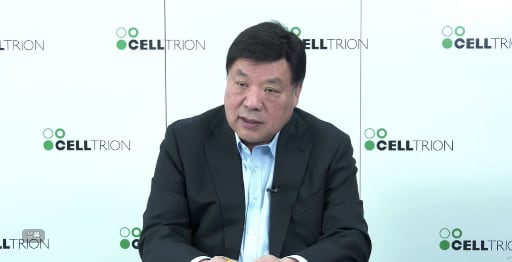
Chairman Seo Jeong-jin of Celltrion Group has unveiled ambitious plans to expand production facilities in both the United States and South Korea. This strategic move is aimed at meeting rising global demand for pharmaceuticals while mitigating potential risks associated with tariffs and supply chain challenges.
During an online press briefing, Chairman Seo highlighted that the acquisition of Eli Lilly’s biopharmaceutical production facility in Branchburg, New Jersey, will be finalized within this year. Once completed, the company intends to maximize the facility's production capacity to ensure efficiency. He emphasized that this step will eliminate tariff risks for pharmaceuticals supplied to the U.S. market, allowing Celltrion to better respond to the growing global demand.
In addition to the U.S. expansion, Celltrion is also planning significant upgrades to its domestic facilities. The company aims to add six 11,000L bioreactors in two phases, increasing total capacity by 66,000L. When fully operational, the total production capacity will reach 132,000L, with an estimated investment of up to 700 billion Korean won. Earlier in September, Celltrion signed a 460 billion Korean won agreement with Eli Lilly for the facility.
The company is also accelerating the establishment of new domestic production facilities. Alongside the liquid finished pharmaceutical (DP) plant currently under construction in Songdo Campus, Celltrion plans to build:
- A new active pharmaceutical ingredient (API) plant in Songdo, Incheon
- A new finished pharmaceutical plant in Yesan, South Chungcheong Province
- A pre-filled syringe production plant in Ochang, North Chungcheong Province
This extensive development project is expected to require an investment of approximately 4 trillion Korean won.
Developing Next-Generation Obesity Treatments
Celltrion is also making significant strides in the development of next-generation obesity treatments. Chairman Seo explained that current treatments in development focus on dual or triple agonists, including GLP-1. However, the company is advancing an oral model that targets four mechanisms simultaneously.
He noted that the non-response rate for the quadruple agonist is expected to be below 5%, with a weight loss rate of approximately 25%. The goal is to create a treatment that minimizes side effects such as muscle loss, offering a more effective and safer option for patients.
Chairman Seo projected that fourth-quarter sales would grow by 30% compared to the third quarter, with an operating profit margin exceeding 40%. He added that from the fourth quarter, Celltrion’s operating profit will enter a phase where it can compete with Samsung Biologics’ pre-split operating profit. This marks a significant milestone for the company as it continues to strengthen its position in the global pharmaceutical industry.


Comments
Post a Comment