Croatian Man Transplants Vietnam's Sidewalk Coffee Culture to the Netherlands
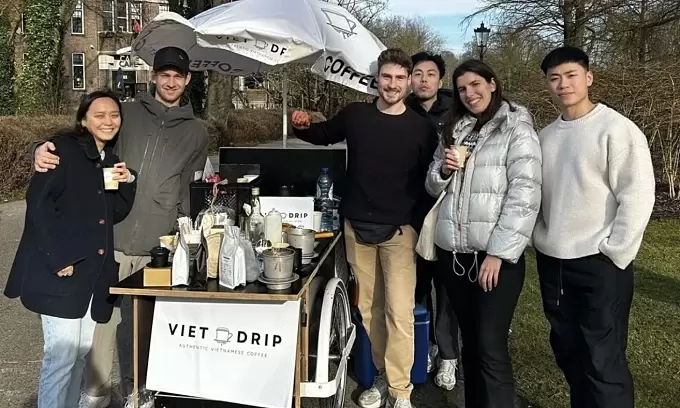
Matko Kmezic starts his day at 5 a.m. on weekends, preparing his Vietnamese coffee filter, cups, condensed milk, and ice before heading out on his tricycle to Oosterpark in Amsterdam. The 27-year-old sets up a small stall marked "Viet Drip Cafe" and offers a menu of traditional Vietnamese drinks, including iced milk coffee, bac xiu (southern white coffee), salted coffee, and egg coffee. As people gather, he carefully drips robusta coffee into the cups, adds milk, and serves it with a smile. Patrons sit on low plastic chairs around the cart, enjoying the relaxed atmosphere of the park.
Some passersby are curious about why he is selling Vietnamese coffee when he isn’t Vietnamese. Kmezic laughs and responds, “Do you have to be Italian to make an espresso or cappuccino?” His answer reflects his deep appreciation for the culture he has embraced.
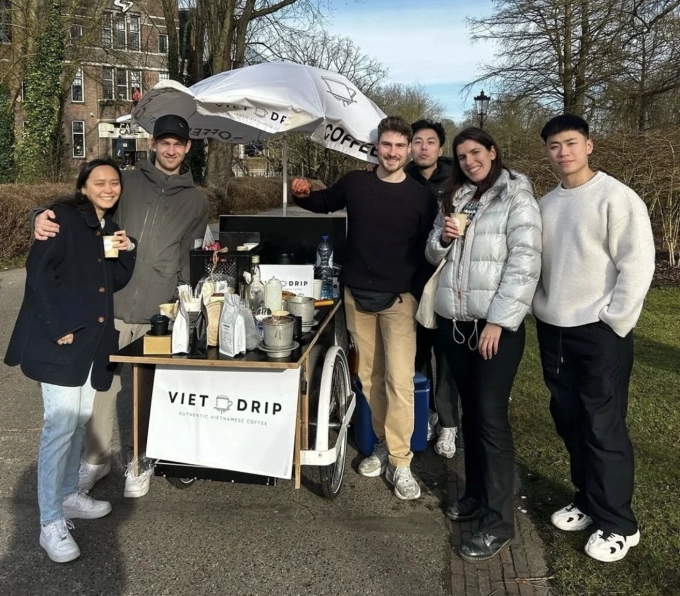
Matko Kmezic (third from L) with customers at his coffee stall in Oosterpark in the Dutch capital Amsterdam, Nov. 2025. Photo courtesy of Kmezic
Kmezic was born and raised in Zagreb, Croatia. He met his fiancée, a woman of Vietnamese descent, when they were both 15. The couple now lives in Amsterdam, where he has worked as a physiotherapist for the past five years. In 2018, when he was 20, the couple took a gap year to explore Vietnam. Kmezic spent three months in Ho Chi Minh City and seven months in Hanoi, immersing himself in local life and improving his Vietnamese language skills. He wanted to experience the culture firsthand, not just as a tourist.
That trip changed his life. Three days after arriving in Ho Chi Minh City, he tried iced milk coffee for the first time. He described it as a “flavor explosion,” with bold robusta coffee mixed with sweet condensed milk. More than the taste, he was struck by the sidewalk scene—people sitting on tiny chairs, chatting and laughing as traffic passed by.
“The sidewalk is where time slows down,” he says. He noticed how Vietnamese people often sit outdoors to relax, talk, and watch life go by. Despite the noise and bustle, there was a sense of calm that he found very different from Europe, where people rush to buy takeaway coffee.
“This philosophy changed the way I view coffee and life.”
Back in Europe, Kmezic found espresso and cappuccino “extremely bland.” He decided to brew coffee using a phin, a traditional Vietnamese filter, which he had brought from Vietnam. Mornings in Amsterdam felt too quiet and dull, and he missed the warmth and energy that Vietnamese coffee provides.
In summer 2024, Kmezic returned to Vietnam and met Ysim, a coffee roaster in Buon Ma Thuot in the Central Highlands. With their shared passion for coffee, Ysim taught him the secrets of roasting robusta beans. A few days later, while in Da Nang, Kmezic came up with a business plan: to export the Vietnamese sidewalk coffee culture to the Netherlands.
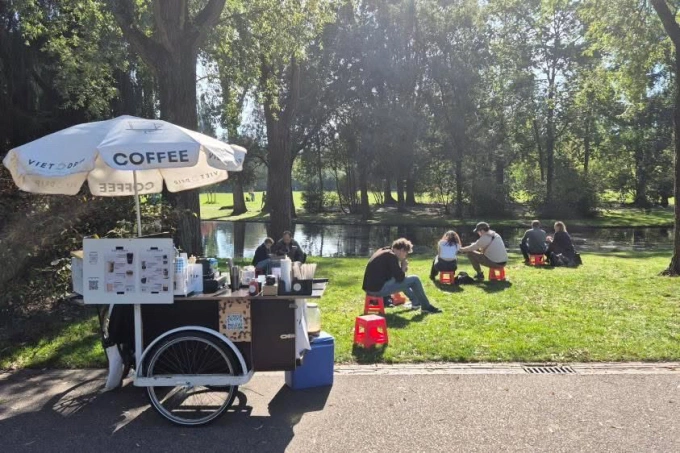
Matko Kmezic’s customers enjoying coffee at Oosterpark in the Dutch capital Amsterdam, Nov. 2025. Photo courtesy of Kmezic
After returning to Amsterdam, Kmezic designed a logo, bought a tricycle, registered his business, and applied for a license. Three days after completing the paperwork, Viet Drip Cafe opened at Oosterpark. At Viet Drip, Kmezic keeps the brewing method exactly as in Vietnam, using 100% robusta beans he roasts himself to preserve the original flavor. He sometimes adjusts the sweetness level if a customer asks but always prioritizes authenticity.
“I always want to connect with Vietnam because I miss the country like crazy,” he says. “The coffee stall is my way of bringing a piece of Vietnam to me every day.”
The early days were not easy for the business. Amsterdam’s unpredictable weather and an outdoor cart with no electricity or shelter meant customers complained. Also, since he did not serve hot drinks, the cold climate limited his sales of iced coffee to August and September.
But his fears of being forgotten after winter 2024 were dispelled in spring: When Viet Drip reopened, customers lined up. The crowds created a new challenge for Kmezic, who also works as a physiotherapist. Eventually, he decided to sell coffee only on weekends.
Another hurdle was customer perception. Many expected an espresso and were surprised when he explained he didn’t serve one. He had to teach customers about the phin brewing method. His favorite phrase is: “Vietnamese coffee should be sipped slowly to enjoy both the flavor and the moment.”
Gradually, Amsterdamers have adapted to the Vietnamese coffee style: sitting on low chairs, chatting, connecting, and sometimes even learning a few Vietnamese words from Kmezic, who wants them to experience what he had in Ho Chi Minh City. Vietnamese students studying in the Netherlands often stop by too, praising the coffee as tasting “like home,” which delights Kmezic.
Coen Van der Meijs, 25, a Dutch customer, says he is amazed by the strong flavor and boldness of Vietnamese coffee. He has tried it several times and prefers the salted variety for its unusual and unique taste.
“What I love most is sitting on the plastic chair in the park, feeling the Vietnamese culture as I did when I visited six years ago,” he says.


Comments
Post a Comment