Dollar Slumps Against Dong
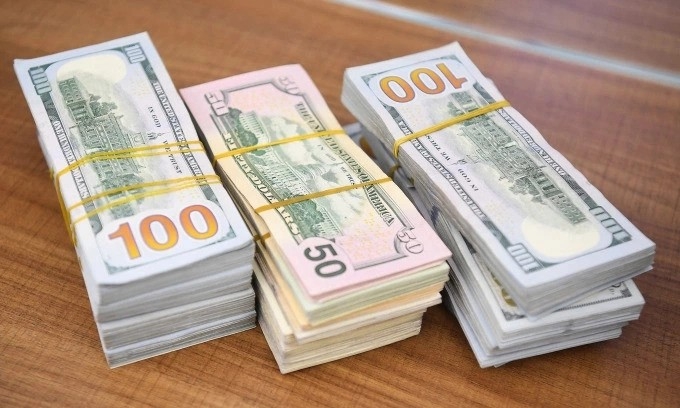
U.S. Dollar Weakens Against Vietnamese Dong Amid Global Market Shifts
On Monday morning, the U.S. dollar experienced a slight decline against the Vietnamese dong, while showing minor gains against several major currencies. This movement was observed in both official and unofficial exchange markets, reflecting broader trends in global currency dynamics.
At the State Bank of Vietnam, the greenback was sold at VND26,376, marking a 0.008% decrease from the previous weekend. Meanwhile, on the black market, the U.S. dollar saw a rise of 0.43%, reaching approximately VND27,632. The central bank also adjusted its reference rate, reducing it by 0.008% to VND25,120.
Globally, the U.S. dollar showed a modest increase on Monday as investors anticipated the release of key U.S. economic data following the conclusion of the government shutdown. This development has sparked hopes for greater clarity regarding the Federal Reserve's potential interest rate decisions in December.
Subdued Currency Movements in Asia
In early Asian trade on Monday, currency movements remained relatively subdued ahead of the upcoming economic data releases. The euro fell by 0.11% to $1.1607, while the Australian dollar reversed some of its recent gains, dropping 0.15% to $0.6527. Similarly, the New Zealand dollar declined by 0.12% to $0.5673.
The U.S. dollar index rose slightly to 99.37, indicating a modest strengthening of the dollar against a basket of other currencies. The British pound, however, traded 0.11% lower at $1.3161, showing signs of weakness amid ongoing market uncertainties.
Safe-Haven Currencies Gain Traction
The Swiss franc, often considered a safe-haven currency, hovered near a one-month high, trading at 0.7941 per dollar. This movement was driven by concerns over recent stock market volatility, which has led investors to seek safer assets.
Thierry Wizman, a global FX and rates strategist at Macquarie Group, noted that the U.S. dollar’s weakness in November could be attributed to speculative traders closing long positions in the currency ahead of increased market volatility. He highlighted that the upcoming period is expected to see a higher-than-normal volume of U.S. economic data releases, which may further influence currency movements.
Key Economic Data Releases
As the U.S. economy continues to navigate through periods of uncertainty, the release of critical economic data will play a significant role in shaping market expectations. Investors are closely watching for indicators such as employment figures, inflation reports, and GDP growth numbers, which could provide insights into the Federal Reserve's future policy decisions.
These data points will not only affect the U.S. dollar but also have ripple effects across global currency markets. As the financial landscape evolves, staying informed about these developments becomes essential for both individual and institutional investors.
Outlook for the Week Ahead
With the U.S. dollar showing mixed performance against various currencies, the week ahead is expected to be marked by heightened volatility. Market participants will be keenly observing how the release of economic data influences investor sentiment and currency valuations.
In addition to the U.S. data releases, global events such as central bank meetings and geopolitical developments could also impact currency markets. As the financial world remains on edge, the importance of staying updated with real-time market changes cannot be overstated.
Overall, the coming days will likely see continued fluctuations in currency values, driven by a combination of economic fundamentals and market psychology. Investors and analysts alike will be closely monitoring these trends to make informed decisions in an increasingly complex financial environment.


Comments
Post a Comment