Dollar Surges Against the Dong
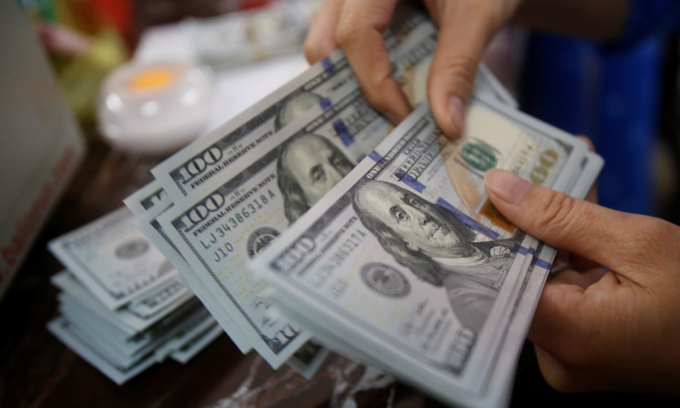
U.S. Dollar Gains Against Vietnamese Dong Amid Global Trends
The U.S. dollar saw a notable rise against the Vietnamese dong on Friday morning, setting the stage for its strongest weekly performance in over a month when compared to major global currencies. This movement reflects broader trends in the foreign exchange market, where the greenback has been gaining strength amid shifting expectations about monetary policy.
Vietcombank, one of Vietnam’s leading commercial banks, sold the U.S. dollar at VND26,392, marking a slight increase of 0.02% from the previous day. On the black market, the currency reached approximately VND27,645, reflecting a 0.38% rise. Meanwhile, the State Bank of Vietnam adjusted its reference rate upward by 0.02%, setting it at VND25,136.
Globally, the U.S. dollar was positioned for its best week in over a month, driven by investor sentiment that the Federal Reserve may not be inclined to cut interest rates in the near future. This expectation has contributed to the dollar's resilience against other major currencies.
Market Outlook and Economic Analysis
Economists at Wells Fargo highlighted the uncertainty surrounding the Federal Reserve's next steps, particularly in light of the delayed September jobs report. In a recent note, they stated that while the Fed had previously signaled a potential rate cut in December, the decision might now hinge on further economic data. "A hold would not surprise us at this point," the analysts added.
The dollar index, which measures the greenback against a basket of six major currencies, approached a 5-1/2-month high, reaching 100.20. The index was on track for a weekly gain of 0.9%, marking its strongest performance in over a month. This trend underscores the dollar's growing strength in the global market.
Performance of Other Major Currencies
Against the U.S. dollar, the euro remained near a two-week low, trading at $1.1528. It was set for a weekly decline of 0.8%. The British pound, however, saw a modest increase of 0.11%, rising to $1.3084. Despite this, the currency was still expected to lose 0.7% for the week.
The Australian dollar experienced a small gain of 0.09%, reaching $0.6446. Similarly, the New Zealand dollar rose 0.11% to $0.5588. These movements reflect the varied performances of different currencies in response to changing economic conditions.
Japanese Yen Faces Continued Pressure
The Japanese yen continued to struggle, hovering near a 10-month low. It was last valued at 157.33 per dollar, with a projected weekly loss of nearly 2%. This represents the yen's worst performance in over a month, highlighting the challenges faced by the currency in the current market environment.
Overall, the week's developments in the foreign exchange market underscore the complex interplay of economic indicators, central bank policies, and investor sentiment. As markets continue to react to these factors, the U.S. dollar's position as a dominant force remains a key focus for traders and analysts alike.


Comments
Post a Comment