Easy English News: Nepalese Man in Japan Faces Discrimination, Seeks Understanding
A Moment of Fear and Reflection
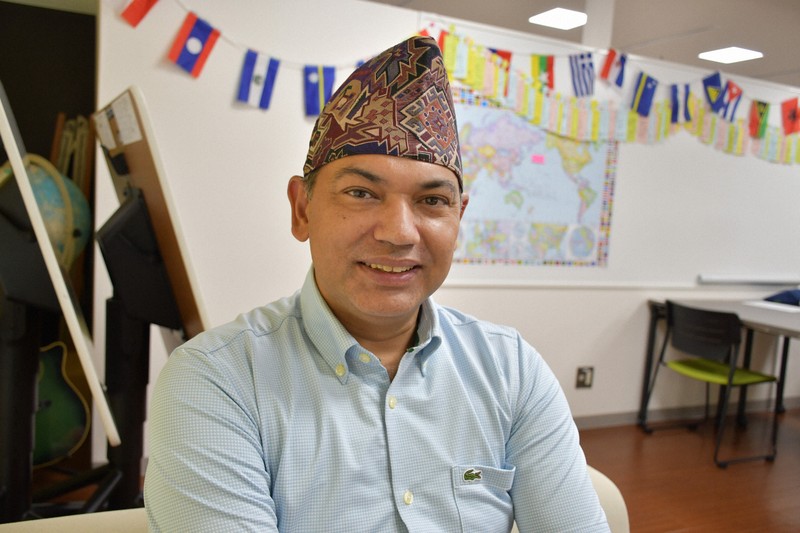
When Jigyan Kumar Thapa, a Nepalese man living in Kanagawa Prefecture, was riding a train, a stranger told him, "This is Japan, so don't bring in foreign culture -- conform to Japan." The man was looking at Thapa's topi, a traditional Nepali hat. Thapa had lived in Japan for 25 years, but this was the first time someone said something like this to him. He felt shocked and scared, and quickly got off the train.
That night, Thapa wrote about the experience on X. He said, "I've started to feel people staring when I walk around wearing a Nepali hat, as if to say (in a negative way) 'Oh, he's a foreigner.' In my 25 years living in Japan, I've never felt this kind of fear before." His post was seen over 16 million times and got more than 3,000 replies. Many replies were negative, blaming foreigners for problems in Japan. Thapa became afraid to wear his topi in public.
Growing Concerns in the Nepali Community
Other Nepalis in Japan also felt worried. Some asked, "Will I be mistaken for Thapa and hurt if I wear a topi?" Thapa's experience made many in the Nepali community feel uneasy. This incident highlighted the growing challenges faced by foreign residents in Japan, especially those from smaller communities.
Thapa came to Japan as a student in 2000, inspired by a Japanese volunteer he met as a child in Nepal. He worked hard, studied Japanese, and later helped Japanese people learn about Nepal. He also worked with children and joined local events, slowly feeling accepted by Japanese society.
The Role of Foreigners in Japanese Society
Now, Japan has more than 3.7 million foreign residents. Many work in jobs like nursing care, construction, and at shops. Thapa said, "We've come to the point where society couldn't function without foreigners doing menial labor, yet it seems they are only viewed as temporary labor rather than as members who support society."
Thapa works to help foreigners and Japanese people understand each other. He teaches Nepalis in Japan about Japanese rules and manners, and he wrote a book in Nepali about living in Japan. He says, "A journey of a thousand miles begins with a single step," and wants people to try hard and not give up.
A Message of Love and Gratitude
After his first post, Thapa wrote again on X: "I really love Japan, and I've studied, worked and lived with my family in this country. I owe what I am now to the generosity of this country, Japan. What I want to say, so that I am not misunderstood, is that I do not want to say bad things about Japan. I hold feelings of respect and gratitude." He also said, "I just hope foreigners will follow the rules too, and I want both Japanese and foreigners to live with peace of mind as members of Japanese society. I tend to choose colors that aren't too showy, so ... at least let me wear my hat ..."
But he still got many negative comments, like, "Why don't you go back to your own country?" Thapa felt sad and confused, but he also received messages of support, like "Please don't lose heart. Stay strong."
A Call for Understanding and Unity
Thapa says, "I want people to see us as fellow members supporting society." He hopes Japanese people and foreigners can talk and understand each other better. He wants leaders to explain why foreigners are needed and to help everyone live together in peace.
Key Vocabulary
- Discrimination: Treating someone unfairly because they are different.
- Conform: To act the same as others.
- Community: A group of people living in the same place.
- Temporary labor: Workers who are not seen as permanent members of society.
- Gratitude: Feeling thankful.


Comments
Post a Comment