Ex-DCID Chief Reveals Military Unprepared for Martial Law
Former DCID Commander Testifies About Kneeling Before Ex-President
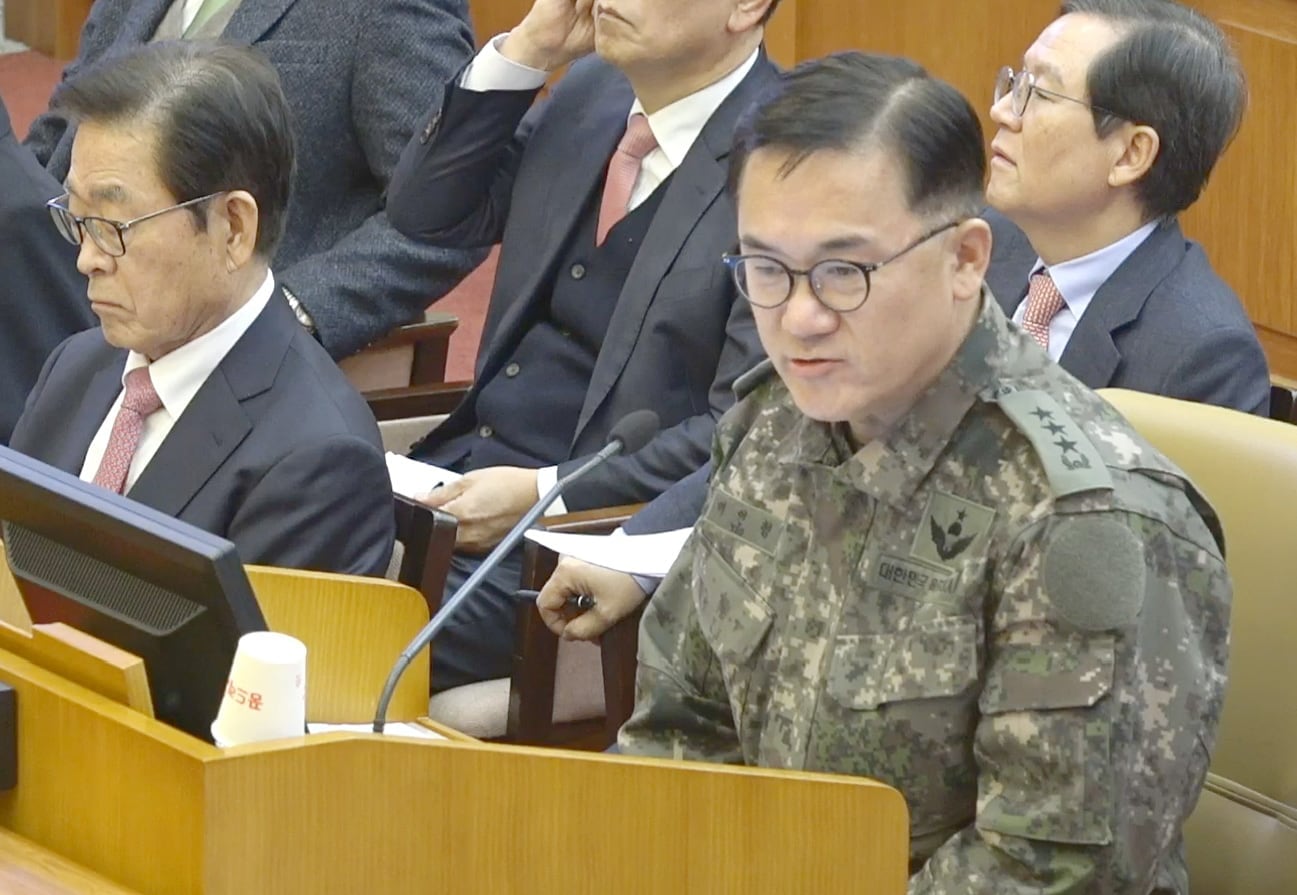
Former commander of the Defense Counterintelligence Command (DCID), Yeo In-hyung, provided testimony in court regarding his actions during a meeting with former President Yoon Suk-yeol last year. Yeo stated that he knelt before the president to explain that the military was not trained for martial law, making it impossible to implement.
The testimony took place in the Seoul Central District Court’s Criminal Division 25, where Yoon is on trial for insurrection charges. During a previous prosecution investigation, Yeo had mentioned kneeling before the president when the topic of martial law arose. At a later trial for insurrection-related charges at the Central Regional Military Court, he described the act as “a spontaneous action due to excessive alcohol.” He elaborated on the context of that day.
Belief That the Military Commander-in-Chief Was Unaware of Readiness
The meeting occurred at a private residence in Samcheong-dong, Jongno-gu, Seoul, and included former President Yoon, former Defense Minister Kim Yong-hyun, and Yeo. The special counsel claims that Yeo knelt to prevent Yoon from declaring emergency martial law.
Yeo explained that he discussed the difficulties of counter-espionage investigations, and the president expressed concerns about the nation and the current situation. He added, “The president, emotionally charged, mentioned emergency powers guaranteed by the constitution.” Yeo continued, “I thought, ‘As the military commander-in-chief, the president does not know whether the military is prepared for martial law training.’” He emphasized that the current military does not conduct training for emergency martial law declarations, so he felt compelled to explain the lack of preparedness.
Yeo stated, “The 300,000-strong army is busy fighting on the front lines during the initial stages of war,” adding, “There are no personnel to deploy for social order.” He continued, “Even in wartime, martial law is not feasible. We have never trained for it or made preparations.” He stressed that even if the constitution guarantees the president’s right to declare emergency martial law, the military cannot participate due to its unpreparedness. Regarding kneeling, Yeo said, “I considered it a disrespectful remark by a mere commander.”
Yeo clarified, “The president did not explicitly state whether martial law would be declared,” adding, “As the military commander-in-chief, the president seemed unaware of the military’s training status for martial law, so I explained the reality.” He denied attempting to dissuade Yoon from unconstitutional or illegal declarations on December 3 of last year, stating, “I did not oppose the president’s specific plans” and “I am not in a position to do so.”
Dispatching Troops to the National Assembly and NEC Was a ‘Zero-Point’ Operation
Regarding the dispatch of DCID agents to the National Assembly and the National Election Commission during the emergency martial law period, Yeo stated, “If this were a normal military operation, it would receive a ‘zero-point’ evaluation.” He added, “As far as I recall, there were no documented orders—it was communicated verbally.” He argued that the DCID, Capital Defense Command, and Special Warfare Command could not operate solely through verbal instructions without written plans or coordination documents. Yeo questioned the court, “Do you know what time DCID agents were dispatched on that day (December 3 of last year)?” He revealed, “They left after 1 a.m.,” noting that this was two hours after the martial law declaration. Yeo emphasized, “Even a low-ranking second lieutenant would not conduct an operation this way.”
Yeo’s testimony is interpreted as denying allegations that the DCID prepared for emergency martial law in advance. He stated, “On the day of the emergency martial law, DCID employees, exaggerating slightly, were all drinking except me, as it was the regular personnel rotation season.” He asked, “If the DCID had prepared and moved systematically, could employees have left work normally on the day of martial law?” Yeo briefly wiped tears with a handkerchief.
Restored Memo: ‘Heartbroken... Fabricated Story’
The court reviewed so-called “Yeo In-hyung memos” deleted from his phone between October and December of last year. The prosecution had previously restored memos containing names like Lee Jae-myung and Han Dong-hoon, arguing they indicated prior preparation for martial law.
When the special counsel presented a memo Yeo wrote on November 4 of last year stating, “Measures to ensure voluntary cooperation from mid- to high-ranking officers,” Yeo responded, “It breaks my heart to hear such forced interpretations based on a single memo.” He asked, “Are there military officers in South Korea who would agree to martial law?” and added, “Would they do it if their salaries were increased? Is that the level of South Korean soldiers?”
Yeo largely refused to answer questions from the special counsel, stating, “I will faithfully explain in my own trial,” as detailed responses could affect his insurrection trial. Regarding restored memos, he said, “Forensic analysis pieced together fragmented ideas I wrote and deleted, then selectively created a storyline.” He refused most questions related to the memos.


Comments
Post a Comment