Fact Check: Why Comparing European Rape Stats Fails
The Viral Chart and the Complex Reality of Rape Statistics in Europe
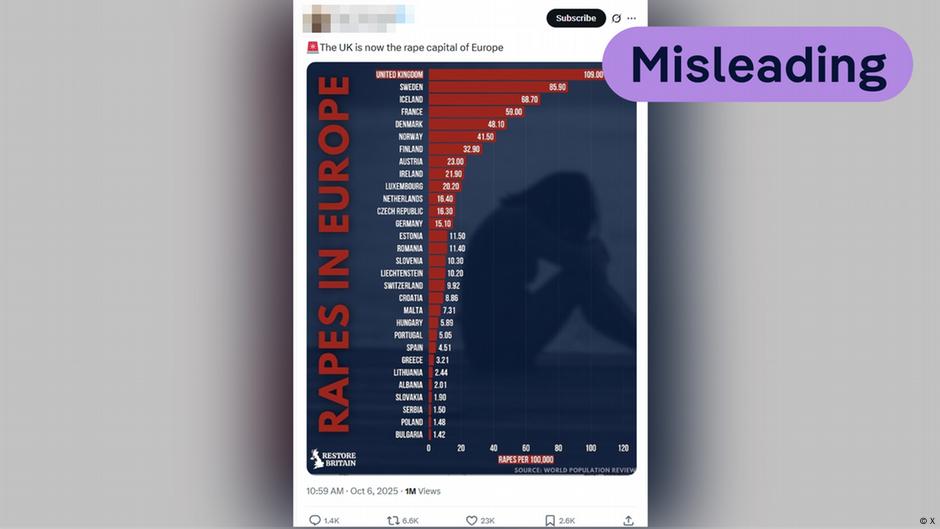
A viral bar chart circulating on social media has sparked a debate about the UK's rape rate, claiming it is the highest in Europe. However, this chart is not as straightforward as it appears. While the numbers are accurate, the way they are presented and interpreted can be misleading. Understanding the nuances behind these statistics is crucial to grasping the true situation.
The Claim and Its Context
The chart, which was shared widely on platforms like X, features a red bar labeled "United Kingdom" that extends far beyond others, accompanied by the headline "rapes in Europe." According to the graphic, the UK reported 109 rapes per 100,000 people in 2022, significantly higher than other European countries. However, this claim has been debunked as misleading.
The data comes from the World Population Review, which sources its information from the United Nations Office on Drugs and Crime (UNODC). The site itself warns that international rape statistics are often "apples-to-oranges" due to differences in legal definitions, reporting practices, and cultural factors.
Why the Numbers Are Misleading
The figures cited in the chart are accurate but can be deceptive when used out of context. The UK's rate has increased over time, rising from 25 per 100,000 in 2003 to 117 in recent years. However, comparing these rates across countries is problematic. For instance, in 2022, Grenada topped the list, followed by the UK, then Sweden, Panama, and Iceland.
Eurostat, the EU’s statistical office, cautions against focusing solely on crime offense numbers, as they may not reflect the actual prevalence of crimes. The UK's high rate is more indicative of its reporting practices and legal definitions rather than an actual increase in sexual violence.
Challenges in Cross-Country Comparisons
Several factors complicate the comparison of rape statistics across different countries:
-
Legal Definitions: Countries have varying definitions of rape. Some require proof of physical attack, while others use broader criteria. The UK reformed its sexual offenses law in 2003 to be consent-based.
-
Reporting Practices: Different countries count and report crimes in various ways. For example, a group rape might be counted as one offense or multiple offenses, depending on the country.
-
Cultural Factors: Trust in the criminal justice system, societal attitudes toward consent, and awareness of sexual violence influence whether victims report crimes.
These factors affect the accuracy of the data and make direct comparisons unreliable.
A Better Way to Measure Rape
Criminologists suggest using victim surveys instead of relying solely on police reports. These surveys ask representative samples of people about their experiences over a period, offering a more comprehensive view of crime rates.
For instance, the UK's Office for National Statistics recorded over 71,000 rapes in England and Wales in 2024, a 479% increase since 2002. However, the Crime Survey for England and Wales estimates that about 1.9 million adults experienced rape or attempted rape in 2022. The share of adults reporting such experiences has remained relatively stable, fluctuating between 0.4% and 0.7% each year.
A Europe-wide survey with standardized questions would provide a clearer picture of rape rates across the continent. Marcelo Aebi, a comparative criminologist at the University of Lausanne, emphasizes that such a survey is essential for understanding the true extent of sexual violence.
The Role of Migration
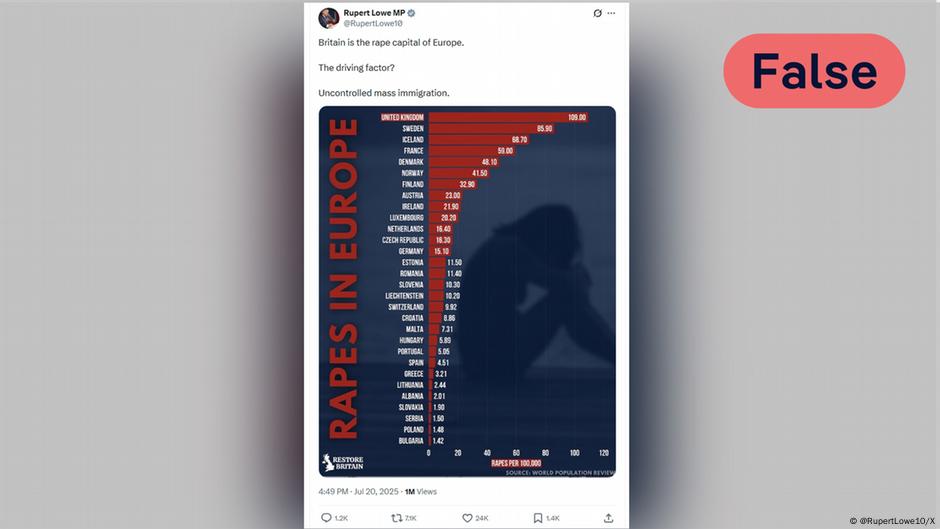
Some claims link the UK's high rape rate to uncontrolled mass immigration. British MP Rupert Lowe, leader of the anti-migration group Restore Britain, claimed that immigration was the driving factor behind the rise in sexual assaults. However, this claim is false.
The UK and the Netherlands have similar shares of foreign-born residents—around 16% as of 2022—but the Dutch rape rate is less than one-sixth that of the UK. There is no evidence to support the idea that immigration increases sexual violence. In fact, 85% of victims knew their offenders, according to a government survey conducted between 2014 and 2017.
Other factors likely contributed to the rise in reported rapes. After a Metropolitan Police whistleblower revealed in 2014 that sexual offenses were being under-recorded, the police reformed their reporting procedures. Cultural changes, such as the #MeToo movement and high-profile cases, have also encouraged more victims to come forward.
Lowe, a former member of Nigel Farage's Reform UK party, launched Restore Britain in 2025, pushing for an anti-immigration platform. He has called for the abolition of the asylum system and "mass deportations."
Conclusion
While the UK's rape statistics appear alarmingly high, the reality is more complex. Differences in legal definitions, reporting practices, and cultural factors make international comparisons misleading. Claims linking immigration to sexual violence are not supported by evidence. Understanding these nuances is essential for forming an accurate view of the issue.
If you are suffering from emotional strain, seek professional help. You can find information on where to find help, no matter where you live in the world, at this website: www.befrienders.org.


Comments
Post a Comment