Foreign Tourist's 72-Hour Ordeal Trapped by Floods in Central Vietnam
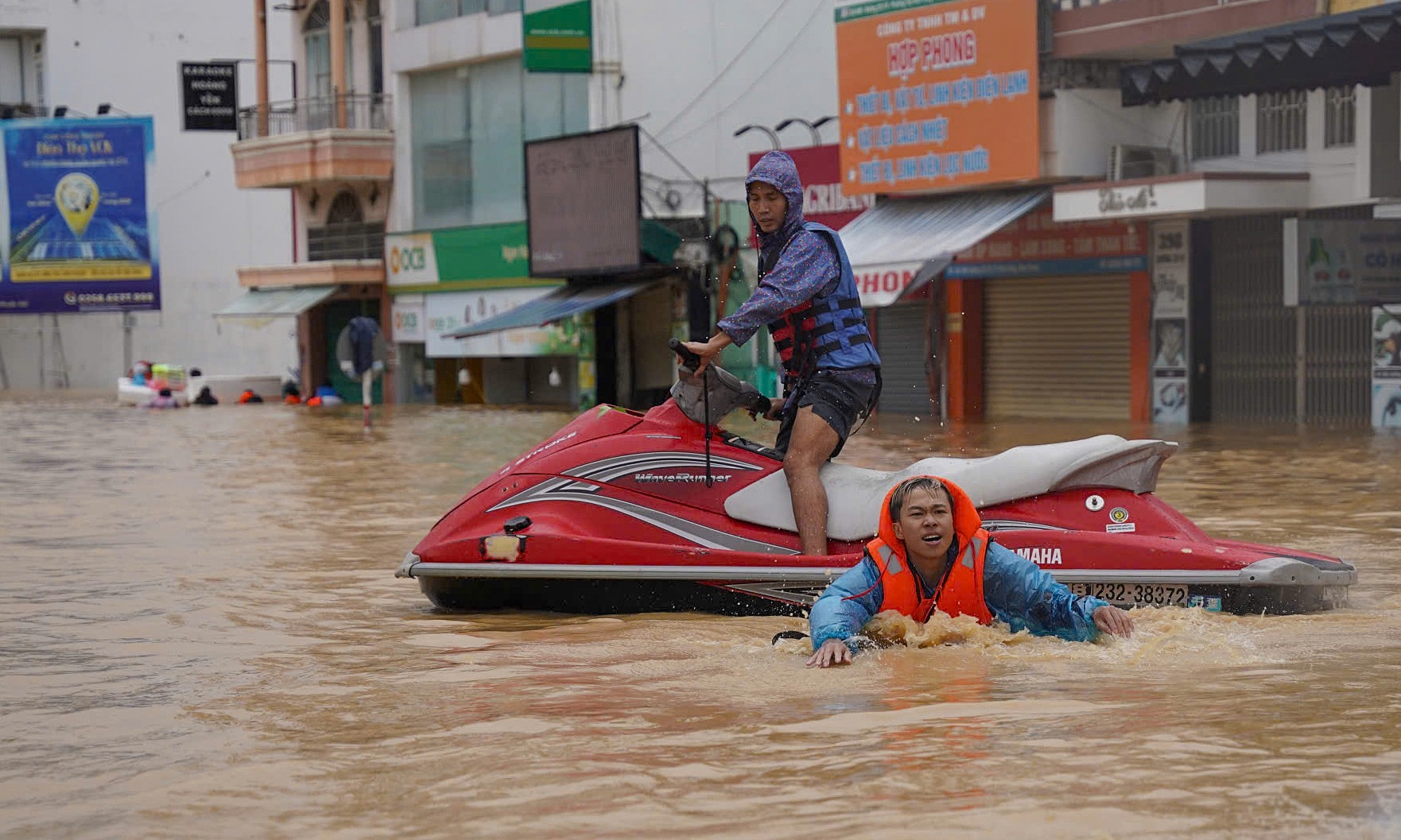
A Czech tourist has shared his harrowing experience of being stranded on a train for three days following the historic floods that disrupted travel in south-central Vietnam.
On the morning of November 18, Nicola Burianova arrived at Saigon station with high hopes, although he had been informed that his train, SE2, would be delayed until 7:25 p.m. due to bad weather. After hours of waiting, he fell asleep as soon as he boarded the train.
In the middle of the night, he was abruptly awakened by an eerie silence — the train had come to a stop. Through a rain-streaked window, Burianova could only see pitch blackness and hear the relentless downpour. The train had made an emergency stop at Tuy Hoa Station in Dak Lak, one of the most severely affected provinces after floodwaters rose, making the road ahead unsafe and posing a threat to the train's stability.
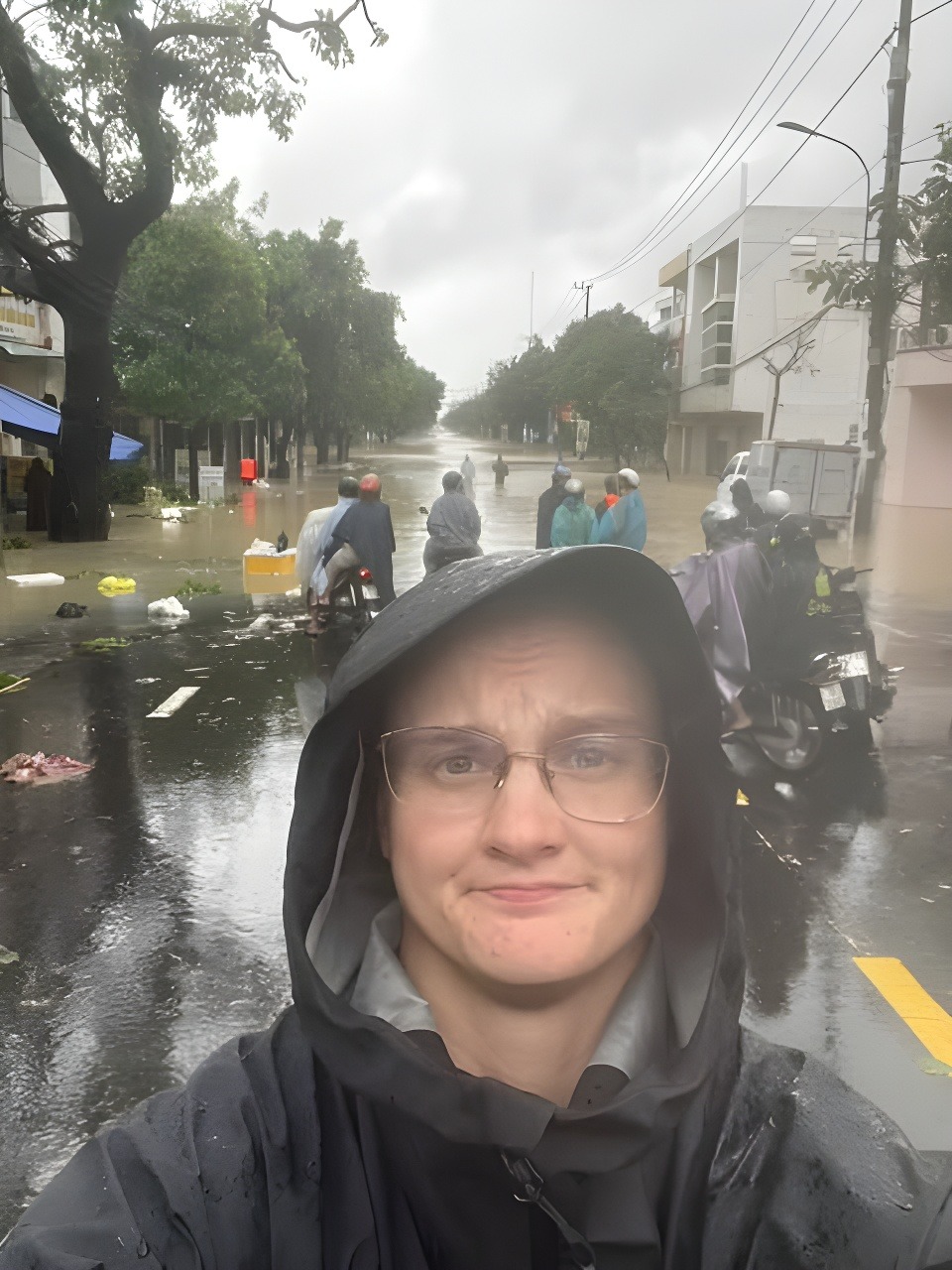
Nicola Burianova on a flooded street in Tuy Hoa, Dak Lak Province, central Vietnam, November 2025. Photo by Burianova
Burianova recalls, "The situation looked very bad. It was pouring and almost no one around spoke English." Within hours, the Nha Trang - Tuy Hoa rail line and roads were cut off. Hundreds of passengers, including many foreign tourists like him, were left stranded amidst the floodwaters.
By morning, the situation had not improved. Railway staff had to collect rainwater for toilet use, and crew members faced growing logistical challenges. Although passengers were allowed to leave the train during the day, Burianova quickly realized that staying aboard was the safest option after seeing the extent of flooding in Tuy Hoa, where main streets were submerged under 0.5–1 meter of water.
He says, "People had to wade through waist-high water. I was lucky to have a dry place to sleep and get food." With onboard food supply sufficient for only a day, the staff struggled to feed the hundreds of people on board.
A railway company spokesperson said 30 of them waded through nearly three kilometers of floodwaters to reach local markets, but getting food was another matter since they were flooded and many vendors had not opened. Each meal required around 50 kg of rice, more than 10 kg of meat, and dozens of kilograms of vegetables, forcing them to visit multiple stalls and gather whatever was available.
Burianova bought beer and snacks from a nearby grocer. By the morning of November 20, the water had risen even further. From the train, Burianova could see local people climb on to roofs to await rescue while boats and emergency crews worked non-stop.
Onboard, sanitation systems were strained, and unpleasant odors began to spread, but passengers largely refrained from complaining. "Seeing the soaked railway staff trying to pump water so that passengers could have basic supplies for daily use, I felt my discomfort was very minor," Burianova says.
When the water finally began to recede at midday on November 21, authorities organized evacuations, sending passengers by bus to Quy Nhon to continue their journey. Burianova reached Da Nang by about 11 p.m. the same day before flying to Hanoi, ending a 72-hour ordeal.
"I have experienced things that no book or tour itinerary can describe," Burianova says while sipping coffee on Hanoi's Train Street on the morning of November 22.
At least 91 people have died in the flooding, with Dak Lak Province accounting for 63. Many parts of popular tourist destinations such as Quy Nhon and Phu Yen remain submerged while the government and people from across the country are racing against time to send urgent relief supplies to flood-hit communities.


Comments
Post a Comment