HCMC Launches $370M Canal Dredging Plan to Combat Southern Floods
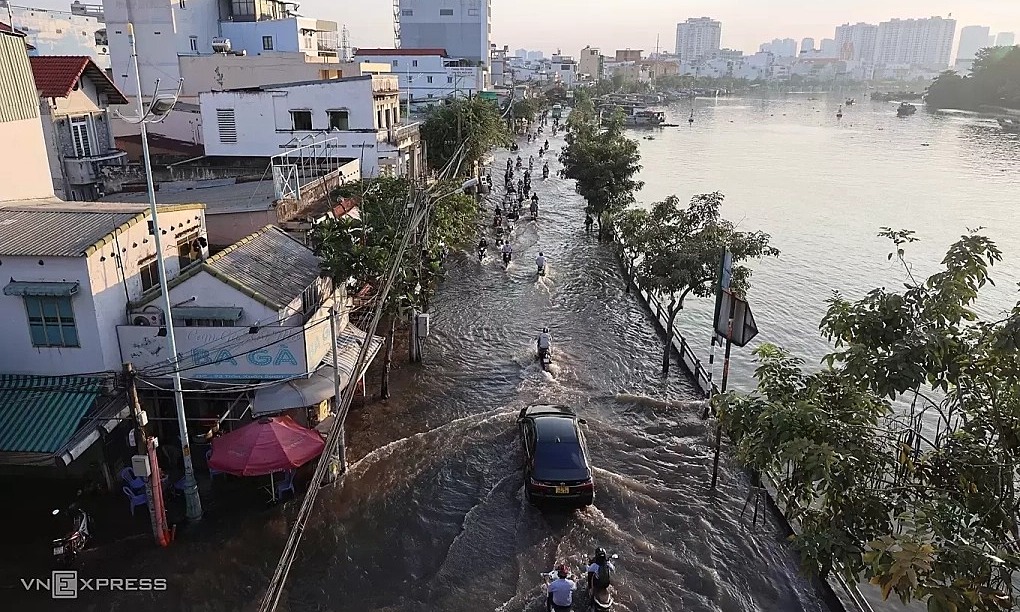
Ho Chi Minh City authorities have proposed a VND9.2 trillion (US$370 million) project to dredge and upgrade the Ba Lon Canal, one of the city's seven key drainage arteries, as flooding and pollution intensify across wards in its southern parts.
The city People's Committee has submitted the proposal to the municipal People's Council for immediate consideration, seeking approval to launch what officials describe as a critical infrastructure intervention to protect the fast-growing southern urban zone from recurring inundation.
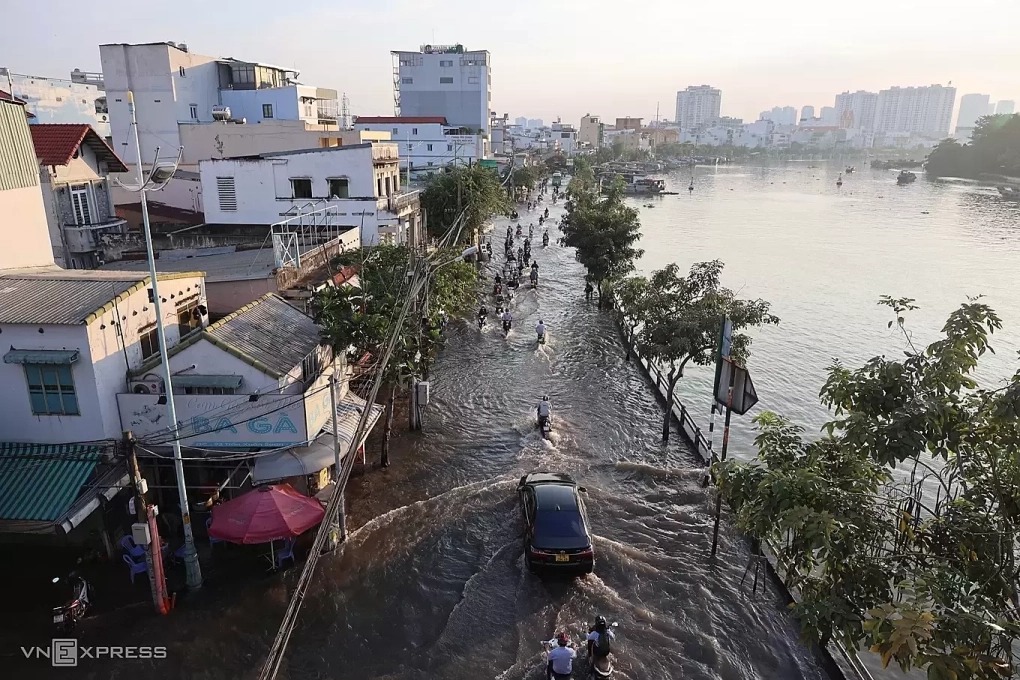
Heavy rain and rising tides caused about 2 km of Tran Xuan Soan Street in HCMC to be flooded on Oct. 17, 2025. Photo by VnExpress/Gia Minh
Stretching 7.4 km from the Doi Canal in former District 8 to the Ba Lao Canal in the former Binh Chanh district, the Ba Lon Canal will be fully dredged and reinforced with nearly 10 kilometers of embankments.
The plan also calls for a new 1km road, 12-18m wide, and the construction of the Ba Lon 2 Bridge spanning National Highway 50.
The total investment, estimated at VND9.23 trillion, allocates more than VND6.6 trillion for land clearance and resettlement, about VND2 trillion for construction, and the remainder for consulting, management, and contingency costs.
City planners say the canal plays a vital role in carrying stormwater from downtown areas toward the south via the Doi Canal under the city’s official flood-control master plan.
But years of encroachment, waste dumping, and unregulated construction have choked the waterway, especially between the Ba Tang Bridge and Binh Dong Temple, creating major drainage bottlenecks during the rainy season.
If approved, work on the project could begin soon and continue through 2030.
Once completed, it is expected to dramatically improve the city’s flood resilience, increase water retention, and operate in tandem with the nearly VND10 trillion tide-control project nearing completion.
The move marks the latest in a string of major anti-flooding and urban renewal efforts by Vietnam’s largest city, which has been struggling to manage rapid urbanization and subsidence.
Other ongoing mega-projects include:
- The Tham Luong-Ben Cat-Nuoc Len Canal (over VND9 trillion)
- The Xuyen Tam Canal (VND17 trillion)
- The northern bank of the Doi Canal (VND7.3 trillion)
Over the past decade, the city has transformed once-polluted waterways like Nhieu Loc-Thi Nghe, Tan Hoa-Lo Gom, and Hang Bang into clean, green urban corridors.
The large-scale environmental improvement project along the Tau Hu-Ben Nghe-Doi-Te canal system has also helped cut flooding and improve water quality citywide.
Key Components of the Ba Lon Canal Upgrade Project
The Ba Lon Canal project involves several key components aimed at addressing both immediate and long-term challenges related to flooding and urban development. These include:
- Dredging and Reinforcement: The entire 7.4 km length of the canal will undergo dredging to remove accumulated sediment and debris. This process will ensure that the canal can carry stormwater efficiently.
- Embankment Construction: Nearly 10 km of embankments will be built along the canal to prevent overflow and erosion, especially during heavy rainfall events.
- New Road Development: A new 1 km road, 12-18 meters wide, will be constructed alongside the canal to improve access and connectivity for residents and businesses in the area.
- Bridge Construction: The Ba Lon 2 Bridge will span National Highway 50, providing a crucial link between different parts of the city and enhancing traffic flow.
Financial Allocation and Project Timeline
The project is expected to cost VND9.23 trillion, with the following breakdown:
- Land Clearance and Resettlement: Over VND6.6 trillion will be allocated for this purpose, ensuring that affected communities are relocated and compensated appropriately.
- Construction Costs: Approximately VND2 trillion will be used for the actual construction of the canal, embankments, road, and bridge.
- Consulting, Management, and Contingency Costs: The remaining funds will cover additional expenses such as technical consulting, project management, and unexpected costs that may arise during implementation.
Work on the project is expected to commence shortly after approval and is anticipated to take several years, with completion scheduled for 2030.
Broader Implications for Flood Control and Urban Development
The Ba Lon Canal project is part of a broader strategy to enhance flood resilience in Ho Chi Minh City. By improving the capacity of the canal system, the city aims to reduce the frequency and severity of flooding, particularly in vulnerable southern districts.
This initiative also aligns with other large-scale projects currently underway, such as the Tham Luong-Ben Cat-Nuoc Len Canal and the Xuyen Tam Canal. These projects collectively aim to create a more resilient urban environment that can withstand the pressures of rapid urbanization and climate change.
In addition to flood control, these projects contribute to the overall improvement of the city’s infrastructure and quality of life. By transforming polluted waterways into clean, green corridors, the city is not only addressing environmental concerns but also enhancing the aesthetic and recreational value of its public spaces.
Conclusion
The proposed Ba Lon Canal project represents a significant step forward in Ho Chi Minh City’s efforts to combat flooding and support sustainable urban development. With a comprehensive approach that includes dredging, reinforcement, infrastructure upgrades, and community engagement, the project is poised to make a lasting impact on the city’s resilience and livability. As the city continues to grow, such initiatives will play a crucial role in ensuring that it remains a vibrant and sustainable metropolis.


Comments
Post a Comment