Hyundai Wins Texas Nuclear Reactor Deal
Strategic Partnership for Nuclear and AI Development
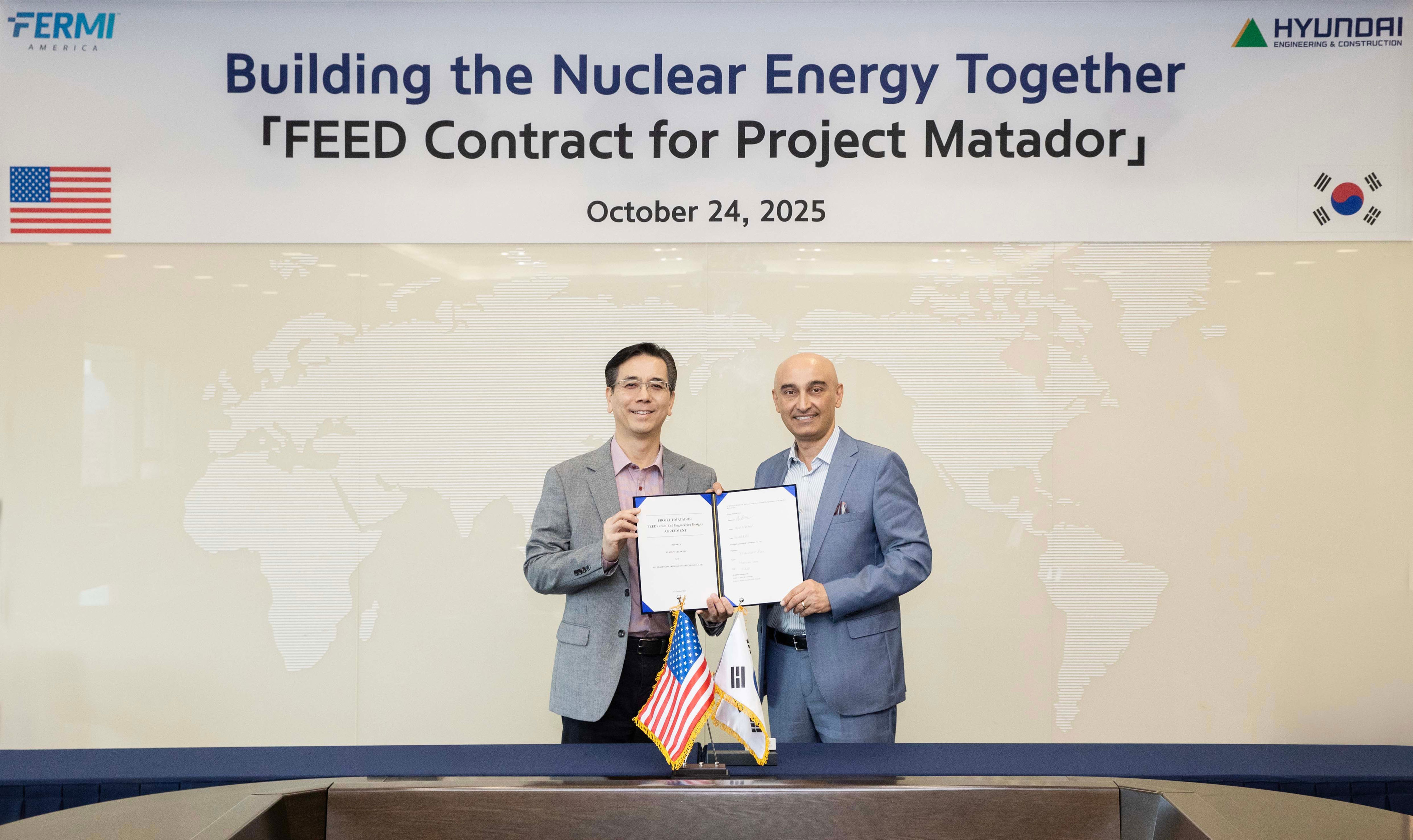
Hyundai Engineering & Construction has entered into a significant agreement with Fermi America, a U.S. energy developer, to provide basic design services for the construction of four large-scale nuclear reactors. This project is part of a broader initiative to develop a complex energy and artificial intelligence (AI) campus in Texas.
The contract involves Hyundai Engineering & Construction performing essential tasks such as site layout planning, cooling system reviews, and budget and schedule estimations. These activities mark the initial phase of constructing the four reactors. The collaboration between the two companies has been ongoing since they signed a business agreement in July, with the aim of advancing this ambitious project.
Vision for the Energy and AI Campus
The "complex energy and AI campus" is a privately owned power grid complex being developed by Fermi America on approximately 21,190,000 square meters of land outside Amarillo, Texas. The project aims to create an independent power supply infrastructure with a total capacity of 11 gigawatts (GW). This will be achieved through a combination of four AP1000 large reactors, small modular reactors (SMRs), gas-fired combined cycle power, solar energy, and battery energy storage systems (BESS).
This energy infrastructure will be connected to a hyperscale AI data center, creating a unique ecosystem that integrates advanced technology with sustainable energy solutions. The project represents a forward-thinking approach to meeting the growing demand for both energy and computational power.
Regulatory Review and Future Steps
Currently, the U.S. Nuclear Regulatory Commission (NRC) is reviewing integrated licensing applications for the project. Hyundai Engineering & Construction plans to proceed with basic design and preparation for main construction simultaneously. Discussions are ongoing to finalize an engineering, procurement, and construction (EPC) contract in the first half of next year.
A representative from Hyundai Engineering & Construction highlighted the significance of this contract, stating, "This contract is a significant achievement that proves Hyundai Engineering & Construction’s position as a trusted nuclear power partner in the global energy market. We will continue to strengthen practical cooperation based on the close energy partnership between South Korea and the U.S."
Key Components of the Project
- Site Layout Planning: Ensuring optimal placement of facilities and infrastructure to maximize efficiency and safety.
- Cooling System Reviews: Evaluating the effectiveness and reliability of cooling systems to support reactor operations.
- Budget and Schedule Estimations: Providing accurate financial and timeline projections to guide project development.
These components are crucial for the successful execution of the project and reflect Hyundai Engineering & Construction's commitment to excellence in nuclear engineering.
Broader Implications
The collaboration between Hyundai Engineering & Construction and Fermi America underscores the growing importance of international partnerships in the energy sector. As the world transitions towards more sustainable and technologically advanced energy solutions, projects like this play a vital role in shaping the future of energy production and consumption.
By integrating nuclear power with renewable energy sources and AI technologies, the project sets a new standard for innovation in the energy industry. It also highlights the potential for cross-border collaborations to drive progress and address global energy challenges.
Conclusion
The partnership between Hyundai Engineering & Construction and Fermi America marks a pivotal moment in the development of advanced energy infrastructure. With a focus on sustainability, innovation, and technological integration, this project exemplifies the future of energy production. As regulatory approvals move forward, the project is poised to become a model for similar initiatives worldwide.


Comments
Post a Comment