Korean Investors and Businesses Divided by Exchange Rate Surge
The Dual Impact of a Strong Won on Individuals and Businesses
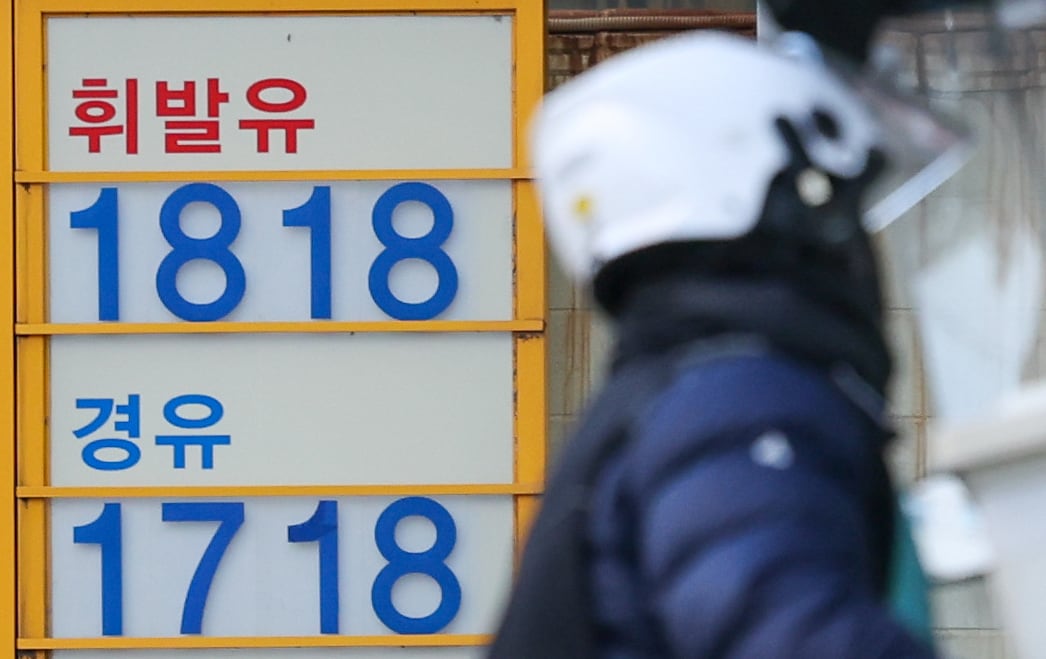
“My hands shake when refueling due to skyrocketing oil prices, but seeing my swollen U.S. stock portfolio fills me with relief,” said Mr. Son, 39, a self-proclaimed ‘Seohak ants,’ referring to Korean retail investors buying U.S. stocks. The office worker finds the current high exchange rate not so bad. Mr. Son, who began investing in U.S. stocks during the pandemic, consistently converted his savings into dollars whenever the won weakened against the dollar. With the recent surge in the won-dollar exchange rate, the value of his accumulated U.S. stocks has grown.
As the won continues its high-flying trend against the dollar, Seohak ants, Korean retail investors buying U.S. stocks, are quietly smiling. While the high exchange rate increases import prices and burdens households, the value of overseas assets held in dollars has also risen, offsetting the pain of the high exchange rate for individuals.
Conversely, industries directly hit by soaring raw material import costs—such as oil refining, aviation, and food—are in crisis. Though the high exchange rate rivals levels seen during the global financial crisis, the shift in individual investment environments over the years has created a temperature gap between how individuals and businesses perceive the high exchange rate.
Individuals with Growing Overseas Assets
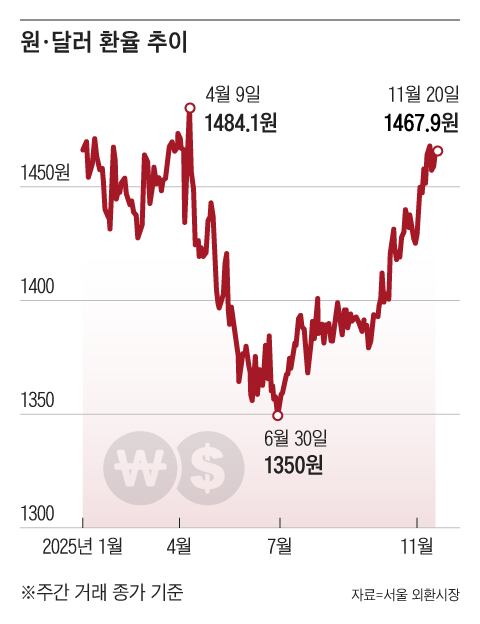
From the 1st to the 20th of this month, the average won-dollar exchange rate was 1,455.9 Korean won (as of 3:30 p.m.). Excluding January of this year (1,455.5 Korean won), this is the first time since March 2009 (1,453.35 Korean won) that the monthly average exchange rate has exceeded 1,450 won in over 16 years.
Koreans’ overseas assets have expanded significantly. According to the Bank of Korea, net external financial assets (external financial assets minus external financial liabilities) reached 1.562 trillion U.S. dollars (approximately 224 trillion Korean won) as of the end of September this year, driven by exchange rate gains. In March 2009, net external financial assets stood at -59.7 billion U.S. dollars (approximately -87.75 trillion Korean won), meaning Korea owed more to foreign countries than it was owed.
However, fueled by a surge in overseas investment, the figure first surpassed 1 trillion U.S. dollars at the end of last year. As of the 19th, domestic individual investors’ holdings of U.S. stocks alone amounted to 152.4 billion U.S. dollars (approximately 224 trillion Korean won).
The groans of parents sending children abroad for study due to the high exchange rate have also diminished compared to the past. The number of overseas students peaked at 230,000 during the early study-abroad boom in 2009 but plummeted to around 120,000 after the pandemic. Payments for study and training abroad also fell from 40 billion U.S. dollars in 2009 to 27–28 billion U.S. dollars annually since 2020.
A source from a study abroad agency said, “In the past, many ‘geese fathers’ tightened their belts to fund their children’s early study abroad even if they weren’t wealthy, but nowadays, only the affluent send their children abroad, seemingly enduring the high exchange rate’s impact.”
Businesses Hit Hard by High Exchange Rates
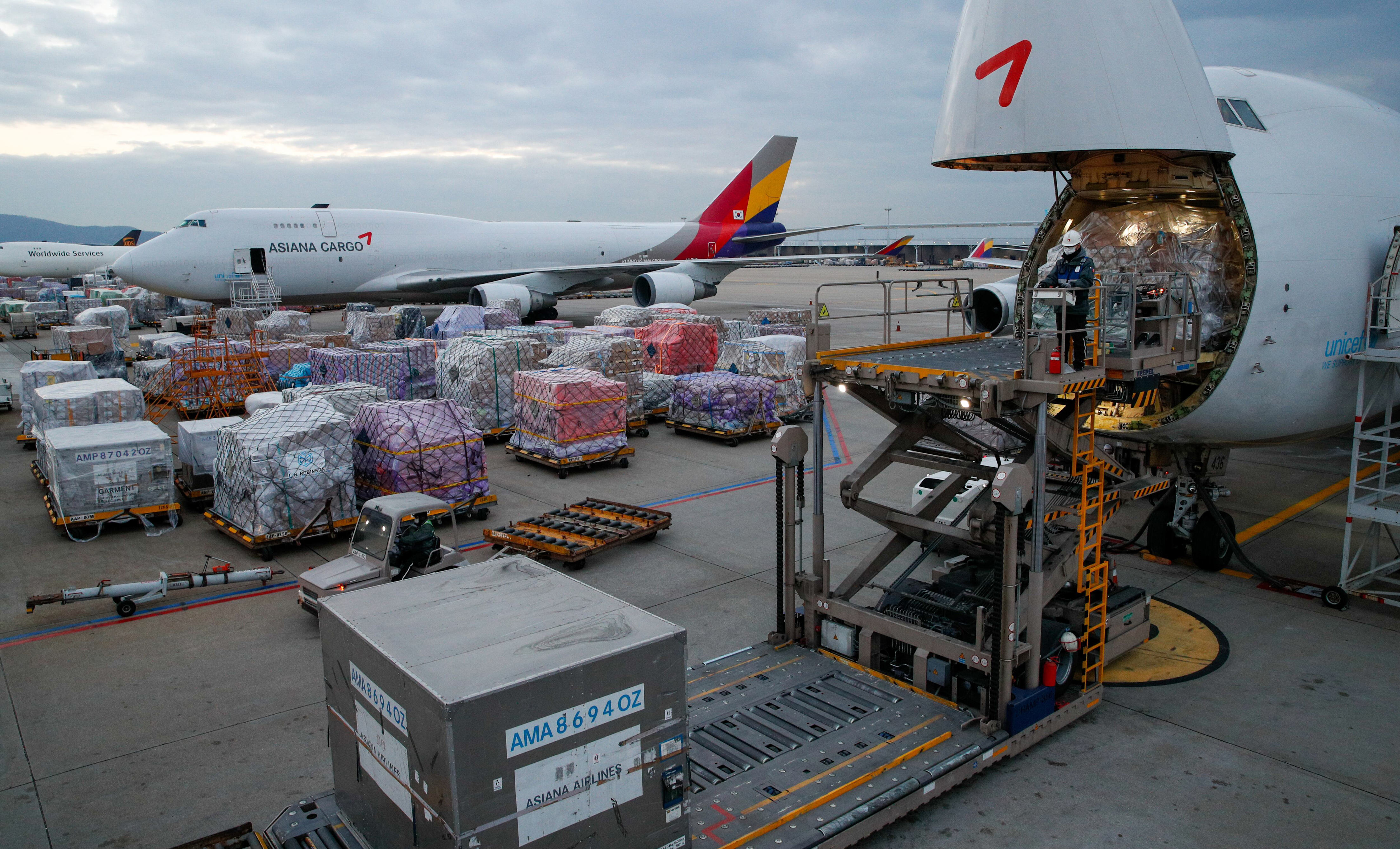
Meanwhile, companies facing surging import costs for raw materials are directly suffering from the high exchange rate. Domestic oil refiners purchase over 1 billion barrels of crude oil annually in dollars, while airlines spend about 30% of their operating costs on fuel, aircraft leases, and overseas expenses in dollars. Domestic food manufacturers heavily rely on imports of raw materials like wheat, soybeans, corn, and sugar.
Even export companies, struggling to predict exchange rate movements, are anxious. In the third quarter of this year, domestic companies’ average monthly foreign currency deposits reached a record high of 91.88 billion U.S. dollars (approximately 135 trillion Korean won). This suggests that companies receiving export proceeds in dollars are holding onto them instead of converting to won. Indeed, while domestic companies’ cumulative exports in the third quarter increased by 2.2% year-on-year, their foreign currency deposits grew by 8.8% during the same period.
Risks if Exchange Rate Reverses
Warnings are emerging that excessive ‘exchange rate investment’ (a portmanteau of exchange rate and financial investment) could backfire. As of the 18th, sales of dollar insurance products by the four major banks—KB Kookmin, Shinhan, Woori, and Hana Banks—hit a record 15.015 trillion Korean won. Individuals are subscribing to these products, which require premiums in dollars and pay out in dollars, anticipating further exchange rate rises. In response, the Financial Supervisory Service has warned, “Dollar insurance is not an exchange rate investment product.”
A Bank of Korea official said, “While individuals’ caution toward high exchange rates is weaker than in the past, if the exchange rate reverses, Seohak ants, Korean retail investors buying U.S. stocks, could see their assets shrink and ‘scream’ in pain.”


Comments
Post a Comment