KOSDAQ Surges as Biotech Hits 52-Week Highs
KOSDAQ Surpasses KOSPI in Gains
The KOSDAQ market, which had previously been seen as the "ugly duckling" of the Korean stock market due to its 33% gain through October — less than half of the KOSPI's rise — has made a significant comeback. As of 1:40 p.m. on the 12th, the KOSDAQ index was trading at the 902 level, up 2.1% from the previous day. This upward trend has been driven by buying activity from foreign investors and institutions.
One of the key factors contributing to this positive shift was the news that ABL Bio, a drug developer ranked fifth by market capitalization on the KOSDAQ, signed a technology transfer agreement with global pharmaceutical company Eli Lilly. This development boosted investor sentiment and contributed to the index’s rise.
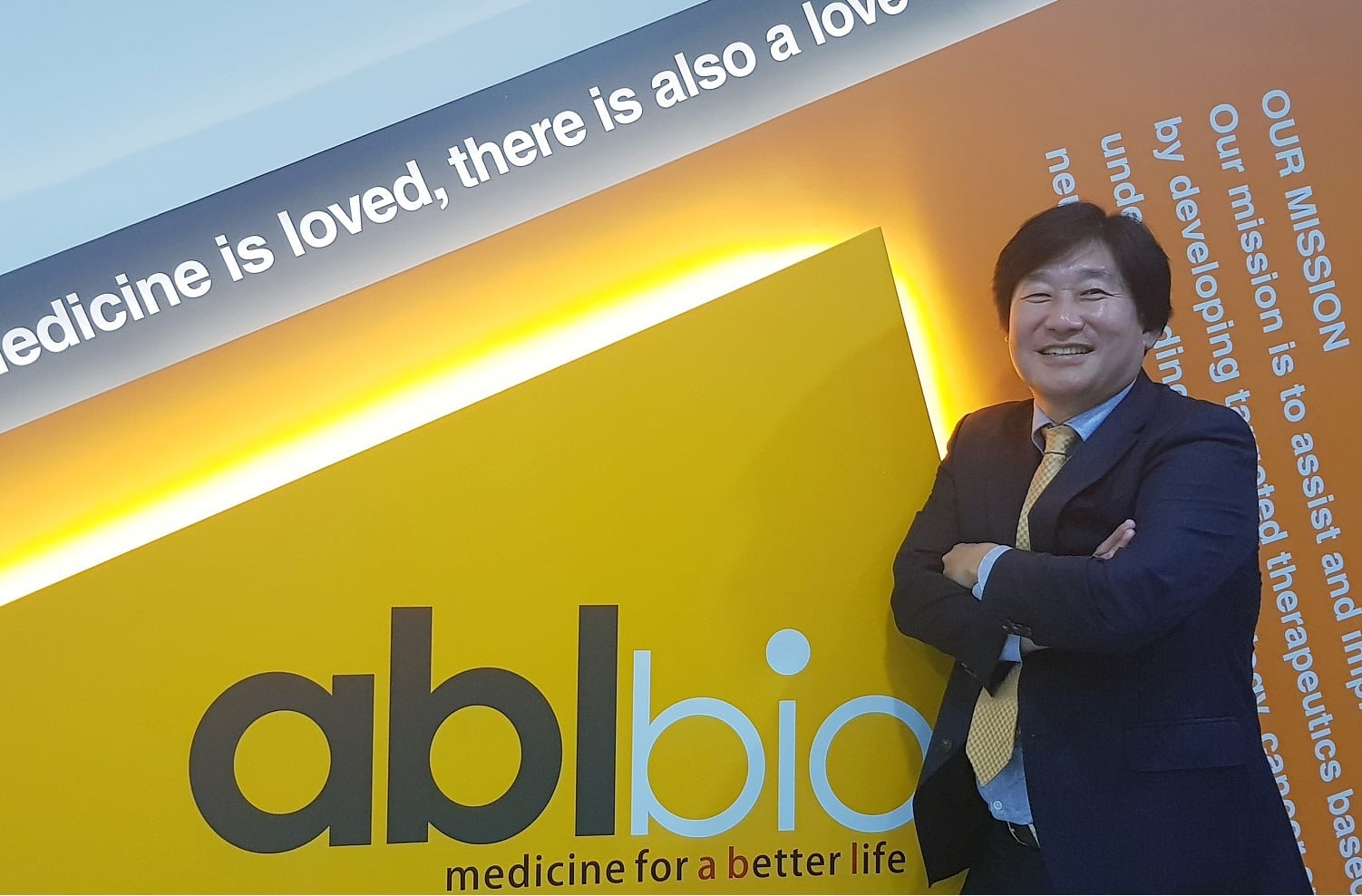
ABL Bio, founded in 2016 by CEO Lee Sang-hoon, a graduate of Seoul National University’s Department of Biological Education, is developing various new drug candidates based on its proprietary ‘Grabody’ dual antibody technology. The contract with Eli Lilly is worth approximately 3.8072 trillion Korean won, with the upfront payment alone reaching 58.528 billion Korean won.
Following the announcement of a U.S. export jackpot, ABL Bio surged to the upper price limit immediately after opening on the same day. It recorded its highest price since listing in 2018 (126,700 won), with its market capitalization nearing 7 trillion Korean won. This is larger than Hanwha, which has nine major subsidiaries including Hanwha Aerospace and Hanwha Life, and has a market capitalization of 6.7988 trillion Korean won.
Alteogen, the top market capitalization company on the KOSDAQ, also rose about 6% to surpass 540,000 won on the same day. Peptron (7%), LigaChem Biosciences (13%), and Sam Chun Dang Pharm (4%) also showed strong gains. Bio companies with expectations for technology exports, such as Inventage Lab, Y-Biologics, OliX, Seers Technology, Orum Therapeutics, U2Bio, and Voronoi, which hit 52-week highs, poured in. Bio-related exchange-traded funds (ETFs) such as Koact Bio Healthcare Active and Timefolio K-Bio Active also hit record highs.
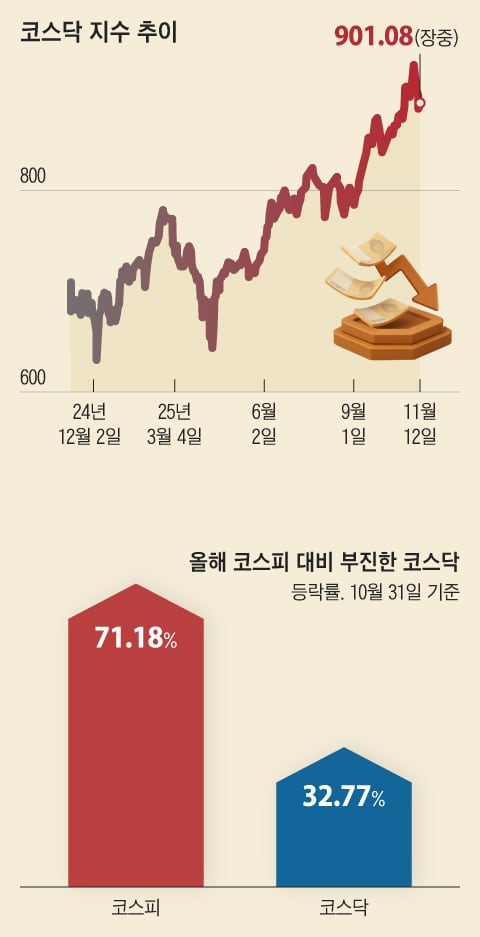
The KOSDAQ has seven pharmaceutical and biotech companies in its top market capitalization rankings, including leading stock Alteogen. It is called “BioSDAQ” (a combination of “bio” and “KOSDAQ”) in the sense that biotech stocks control the KOSDAQ market.
This year, as the KOSDAQ index gains strength when biotech stocks rise, the market has struggled due to capital inflows into KOSPI-centric sectors such as semiconductors, defense, and shipbuilding.
According to the Korea Exchange, as of the 3rd, the total market capitalization of the KOSPI was 3,477.461 trillion Korean won, while the KOSDAQ was 483.2354 trillion Korean won, with the KOSPI being 7.2 times larger than the KOSDAQ. This is the largest gap in the past decade. It also signifies that investors' interest has shifted from “growth stocks” to “value stocks.”
Byun Jun-ho, a researcher at IBK Securities, said, “It is highly likely that an environment favorable for stock-specific rallies, including the KOSDAQ market, will be formed from the end of the year,” adding, “In general, a pattern has been repeated where large-cap stocks rise first in a bullish market, followed by a spread to mid- and small-cap stocks.”
He further diagnosed, “The current market capitalization gap between the KOSPI and KOSDAQ is highly likely to return to the average,” and “Conditions for mid- and small-cap stocks, including economic, performance, policy, and supply-demand factors, are expected to improve from the end of the year.”


Comments
Post a Comment