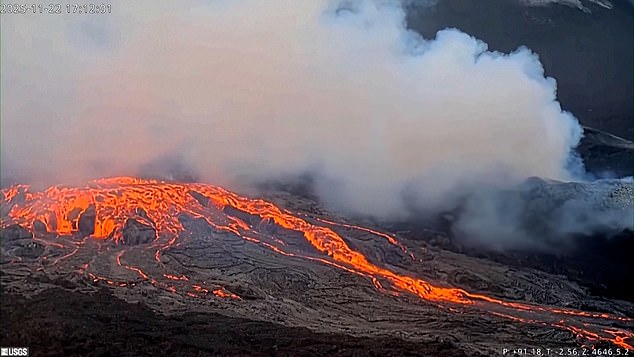
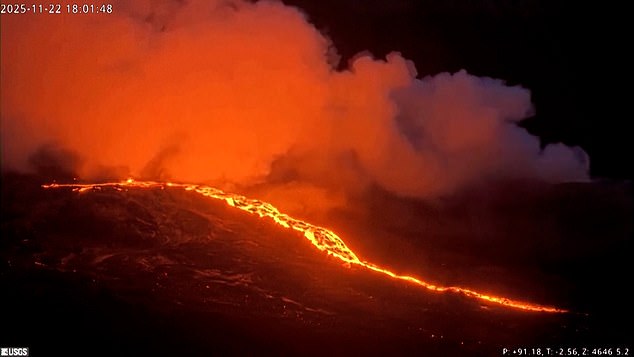
Lava Erupts from Volcano, Spewing Ash and Smoke into the Sky
The Eruption of Kilauea: A Fiery Display in Hawaii
The recent eruption of Mount Kilauea in Hawaii has captured the attention of scientists and the public alike. This shield volcano, located on the Big Island of Hawaii, is one of the most active volcanoes in the world. It has been erupting regularly since last year, with the United States Geological Survey reporting that this is the 37th eruption since December 2024.
Kilauea is part of a larger volcanic system that includes Mauna Loa, the largest active volcano in the world. Both volcanoes are situated within the Hawaiian archipelago, which is known for its unique geological activity. The Big Island, where Kilauea is located, is approximately 200 miles south of Honolulu, the state's largest city.
For around the past 40 years, Kilauea has erupted regularly. Its eruptions have played a significant role in shaping the landscape of the island. The volcano is also notable for being one of six active volcanoes in the Hawaiian Islands, making it a focal point for geological research.
Shared Magma Sources and Volcanic Activity
In January, researchers from the University of Hawaii at Manoa made an important discovery regarding the relationship between Kilauea and Mauna Loa. They found that these two volcanoes share a magma source within Hawaii's hotspot, also known as the mantle plume. This shared source allows magma to travel to either Kilauea or Mauna Loa, contributing to their ongoing activity.
Despite this shared origin, each volcano also has its own magma sources. This complex interplay of magma movement helps explain the frequency and intensity of eruptions in the region. Scientists continue to study these processes to better understand the behavior of these powerful natural forces.
Cultural Significance and Historical Context
Kilauea holds deep cultural significance for Native Hawaiians. According to tradition, the crater of the volcano is considered the home of Pele, the goddess of volcanoes. This spiritual connection has influenced the way local communities view and interact with the land.
Geologically, Kilauea is estimated to be between 210,000 and 280,000 years old. However, it did not grow above sea level until roughly 100,000 years ago. The longest and most destructive recorded eruption occurred from January 1983 to April 2018, causing extensive property damage, including the destruction of two towns in 1990 and a famous black sand beach.
Ongoing Concerns and Future Risks
Recent seismic activity has raised concerns about the potential for another major eruption. As lava continues to spill from the volcano, communities nearby remain on high alert. The question remains: is this the beginning of another massive eruption this year?
Scientists are closely monitoring the situation, analyzing data to predict future activity. While eruptions are a natural part of Kilauea's cycle, the unpredictable nature of volcanic activity means that risks cannot be entirely ruled out.
With every eruption, the world watches as Kilauea continues to shape the landscape and capture the imagination of people around the globe. Whether it is the spectacle of molten lava flowing down the mountain or the underlying dangers it poses, Kilauea remains a powerful symbol of nature's raw energy.


Comments
Post a Comment