Morocco's Exit from the African Unity on November 12, 1984
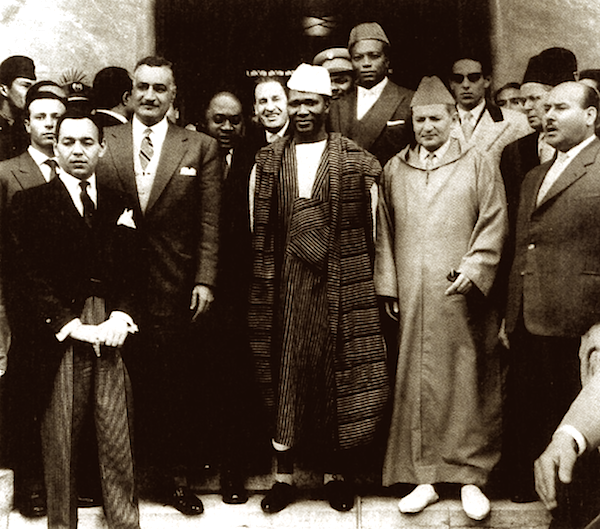
The Origins of the Organization of African Unity
On the 12th of November 1984, Morocco withdrew from the Organization of African Unity (OAU), during a summit held in Addis Ababa, Ethiopia. This decision was made in protest against the admission of the Polisario Front into the organization. Morocco remained outside the Panafrican body for 33 years, during which the OAU was renamed the African Union. This event marked a significant moment in the history of African political alliances.
Between the late nineteenth and mid-twentieth century, Africa was targeted by several European powers. In the early 1960s, many countries that were granted independence attempted to form a continental organization that would defend the interests of its state members. This movement was driven by a desire to create a unified front against the lingering effects of colonialism.
In 1961, King Hassan II urged African leaders from countries that had recently gained independence to attend a high-level meeting in Casablanca, Morocco. The purpose of this meeting was to discuss ways of fighting against the consequences of colonialism, promote African unity, and strengthen diplomatic ties among African nations. Egypt, Ghana, Guinea, Mali, Libya, and the Algerian interim government responded to the call, and the meeting took place on January 4th.
During his speech, the Moroccan king emphasized the importance of uniting African nations to address the challenges posed by new forms of colonialism. He stated:
"Africa has come a long way, achieving great progress in terms of liberation and emancipation. Victories followed one another over the years, until 1960, a date that marked the revival of the African continent. But, colonialism resurfaced taking a new form leading to an incomplete kind of freedom. As a result, the African people must remain cautious, focusing their attention on the new colonialism, to eradicate its dangers."
He also highlighted the significance of the meeting, saying:
"This meeting is considered determinant and crucial for the history of Africa. The continent has been divided for many years. Africa now has a series of independent states in the east, west and center, coming together to build a new Charter to serve the emancipation and happiness of its present and future generations."
Recommendations and the Formation of the OAU
A series of recommendations were put forward during the conference, held from the 4th to the 7th of January 1961. The attendees called for the establishment of an “effective cooperation between African countries in both the economic and social fields” and the formation of the African Advisory Council Committee. The latter included representatives from all African countries. Four other committees were also created: the African Economic Commission, the African Cultural Commission, the African Joint High Command, and the Liaison office.
Two years after the Casablanca Conference, the Organization of African Unity (OAU) was created on May 26, 1963 in Addis Ababa with 30 signatory governments. It was unanimously agreed to accept the membership of independent and sovereign African states, including African islands. Membership in the OAU was decided through an absolute majority of the Member states, and the organization allowed each member to withdraw by submitting a written withdrawal request, applied after one year.
Since then, the organization started holding each year a meeting attended by Heads of Member states. Every year, an African leader was supposed to chair the meeting. Thus, between the 12th and 15th of June 1972, Rabat hosted the ninth summit of the OAU. King Hassan II was elected President of the Union by the Mauritanian President Mokhtar Ould Dabbah.
Accepting the Polisario Front's Membership
In 1976, and after being pressured by Algeria and Libya, the Organization of African Unity Committee, based at the time in Maputo, Mozambique, recognized the Polisario Front calling it a “liberation movement in Africa.” The separatist movement had self-proclaimed the “Sahrawi Arab Democratic Republic.”
At the OAU conference held in Khartoum, Sudan, on the 17th of July 1978, leaders of the participating countries called for a cease-fire in Western Sahara urging the two parts to find a political solution for the conflict. The summit was concluded by the establishment of a committee of five African leaders, including Sudanese, Guinean, Malian, Nigerian, and Tanzanian presidents, to study the Western Sahara conflict in order to put forward a number of concrete proposals at the next African summit.
In 1979, during a summit organized in Monrovia, Liberia, the OAU called for holding a “referendum for the Western Sahara people to self-determination.” The summit held later on in Sierra Leone in 1980 also recommended a free referendum to determine the fate of the region.
In 1981, Hassan II visited Nairobi, the capital of Kenya, to attend the OAU summit. In his speech, he announced that Morocco accepts a referendum in the Sahara. In February 1982, at the thirty-eighth session of the Council of African Ministers of Foreign Affairs in Addis Ababa, Ethiopia, “SADR” was declared a member of the OAU with the approval of 26 Member States.
Morocco's Withdrawal
The summit held on November the 12th, 1984 in the Ethiopian capital, Addis Ababa was attended for the first time by a delegation representing “SADR” and led by Mohamed Abdelaziz. It was the reason why Morocco decided to withdraw from the OAU. A decision that was based on the violation of one of the most important principles set by the OAU board: “to be an independent and sovereign state.”
During the opening session, the head of the Moroccan delegation, the Royal Council Reda Guedira, delivered a speech on behalf of the King of Morocco:
“The Organization of African Unity is violating the fourth chapter of its charter, contributing to a serious misconduct that its consequences will remain unpredictable for a long time.”
King Hassan II added:
“Now, we can only wish you good luck with your new partner, who will essentially fill the void that Morocco will leave, in terms of originality, credibility and respect for African and the world.”
The king has expressed his belief that:
“There will come a day when history will help get things to normal. In the meantime, some of us - and this is a painful reality - can assume responsibilities far from any rationality.”
Morocco's Return to the African Union
On July the 9th, 2002, the African Union (AU) was created upon the ruins of the Organization of African Unity (OAU). The new members of the organization remained the same, including the separatist movement.
More than three decades after Morocco's withdrawal from the Organization of African Unity, the situation in Africa has dramatically changed. The Algerian and Libyan influence started to fade away and many African countries have stopped recognizing “SADR” as a state.
On the 18th July 2016, King Mohammed VI sent a letter to the 27th Summit of the Union, held in Kigali, capital of Rwanda:
“Surely the African Union is out of step with international law since this so-called state is not a member of the United Nations Organization, nor of the Organization of Islamic Cooperation, the Arab League or any other sub-regional, regional or international institution. In fact, I am more interested in our Continent’s stance. Will the AU remain out of step with its own Member States’ national stances, since at least 34 AU countries have never recognized or no longer recognize that entity?”
At the African Union summit held in Addis Ababa at the end of January 2017, Morocco's request to formally join the African Union was accepted, despite the opposition of the SADR delegation, Algeria, and South Africa.


Comments
Post a Comment