PM Kim to Boost '1,000 Won Breakfast' Program Next Year
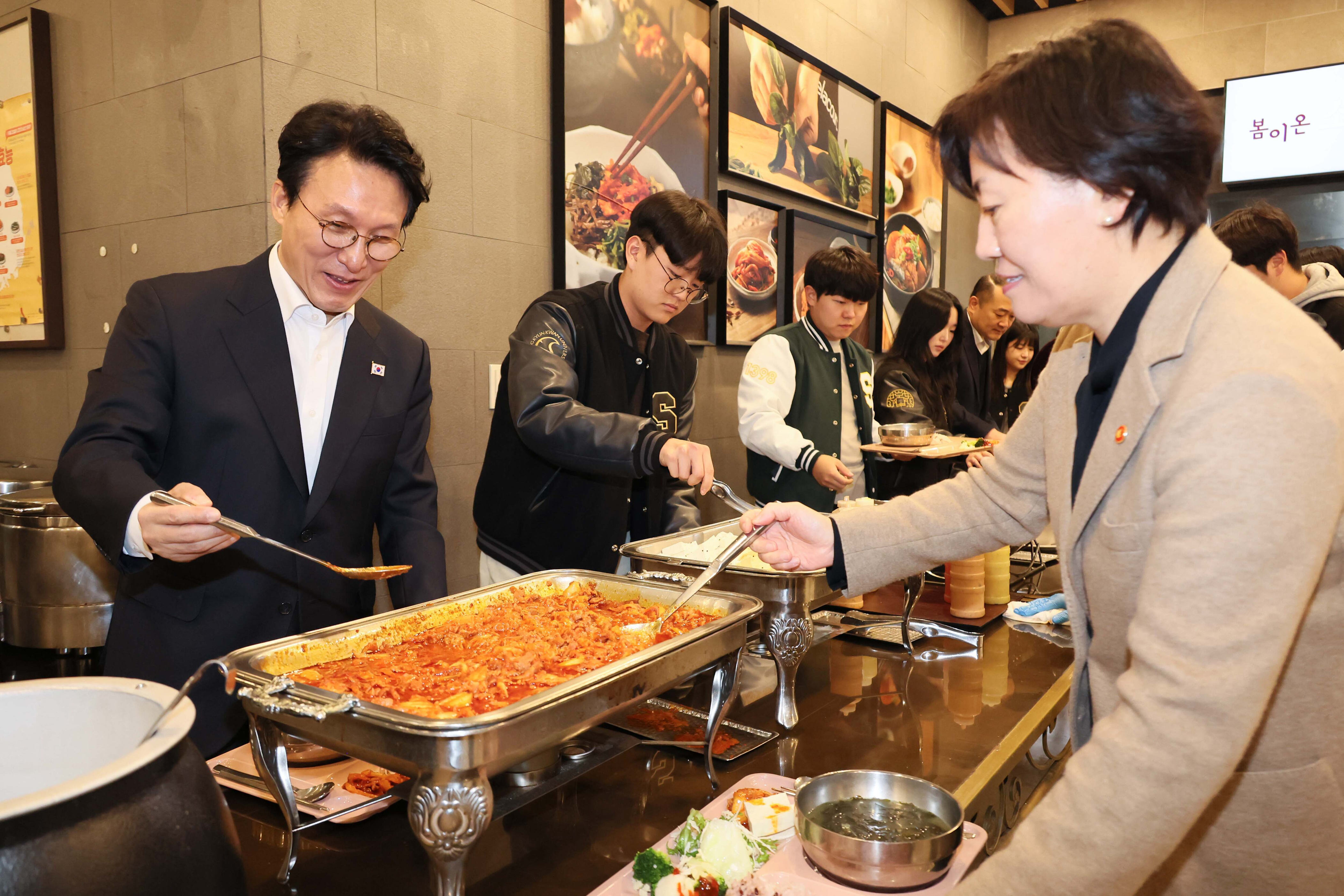
Prime Minister Kim Min-seok visited the site of the '1,000 Won Breakfast' project, which provides affordable breakfast meals to university students. The visit took place on the 17th, during which the Prime Minister emphasized that the initiative will be significantly expanded next year to support more students.
The Prime Minister's visit included a stop at the Eunhaenggol Restaurant located at Sungkyunkwan University in Jongno-gu, Seoul. On the morning of the same day, he had a 1,000 won breakfast and engaged with university students to hear their feedback. The event was attended by several government officials, including Song Mi-ryung, Minister of Agriculture, Food and Rural Affairs, Heo Eun-a, the Presidential Office's Social Integration Secretary, professors from Sungkyunkwan University, and students.
According to the Prime Minister's Office, the purpose of the visit was to assess the on-site response to the '1,000 Won Breakfast' project, a youth policy being promoted by the government. This initiative has been in place since 2017, aiming to encourage healthy eating habits among young people. Recent data indicates that 57.2% of university students skip breakfast as of 2023. The project also aims to boost rice consumption by offering meals made with rice or rice-based products, along with convenient options like kimbap and cup rice, all at a cost of 1,000 won per meal.
To support this initiative, the government covers 2,000 won per meal, local governments contribute between 1,000 to 3,000 won, and universities add 1,000 to 3,000 won. Last year, the government allocated 8.16 billion Korean won to support 3.93 million meals. This year, the budget increased to 9.727 billion won for 4.69 million meals, with plans to allocate 11.126 billion won next year to support 5.4 million meals.
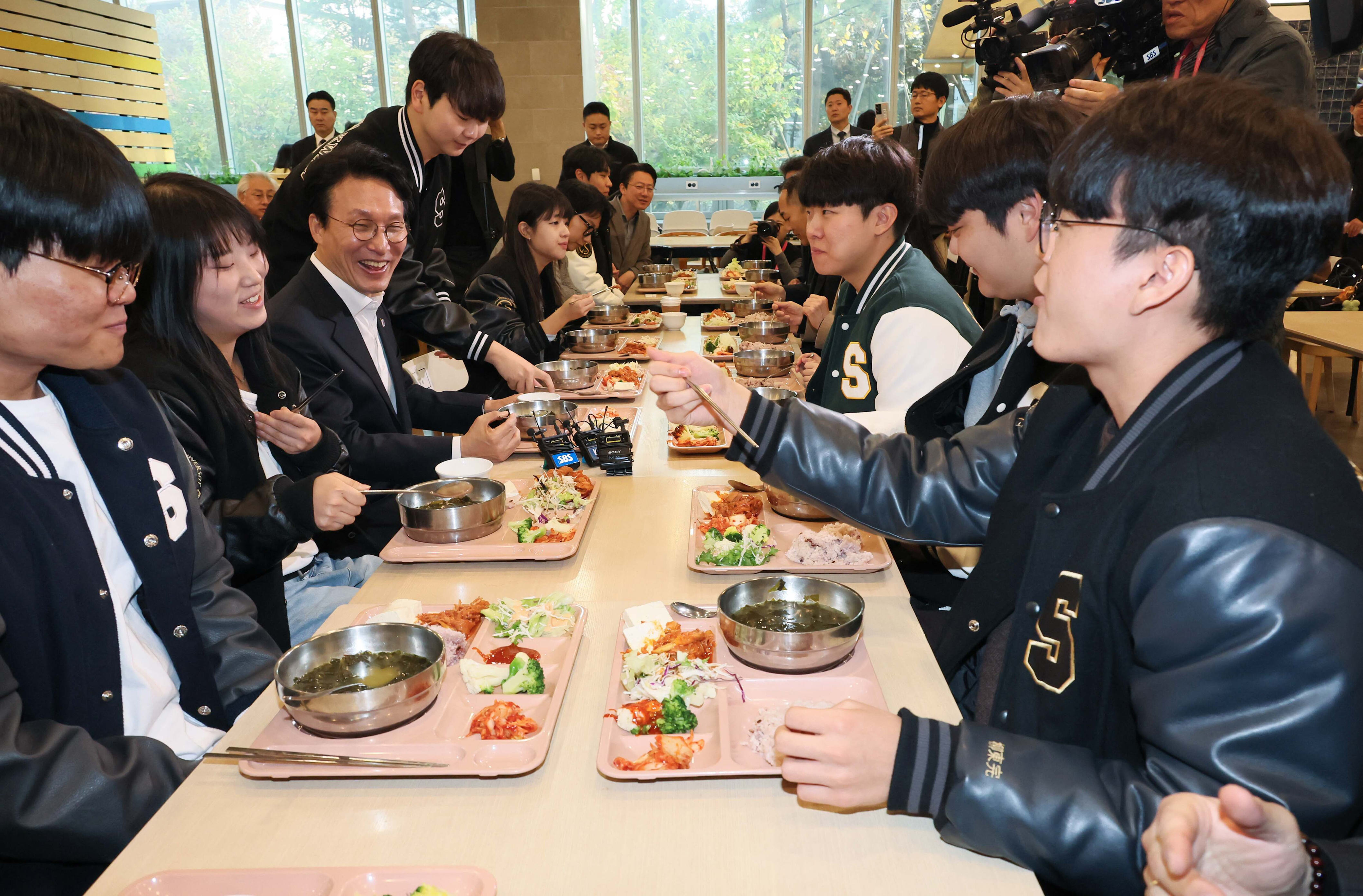
During the visit, Prime Minister Kim reflected on the evolution of the '1,000 Won Breakfast' project. He mentioned that the project existed before but was expanded during his tenure as chairman of the policy committee in the party. He added that junior colleges were included in the initiative, and bread was introduced to the menu. He also noted that he observed long lines for meals during the visit.
Minister Song Mi-ryung highlighted the success of the project, stating that it is one of the few initiatives with a 100% satisfaction rate. She explained that the project began in 2017 and gradually expanded as students embraced it. She also emphasized that breakfast habits formed in one's 20s tend to last a lifetime.
Students who had breakfast with the Prime Minister shared their views, expressing satisfaction with the affordability and quality of the meals. However, they also mentioned the disappointment when meals sold out, leaving some unable to eat. In response, the Prime Minister acknowledged the challenges posed by high inflation and stated that a nutritious breakfast is essential for students to endure the day. He added that the government plans to significantly increase the number of supported meals next year to prevent shortages.
The Prime Minister's Office also reported that the Prime Minister emphasized the importance of reviewing other youth policies based on student opinions. He expressed a commitment to supporting initiatives that enhance university life and address the needs of students effectively.


Comments
Post a Comment