PPP Calls for Assembly Approval of Tariff MOU
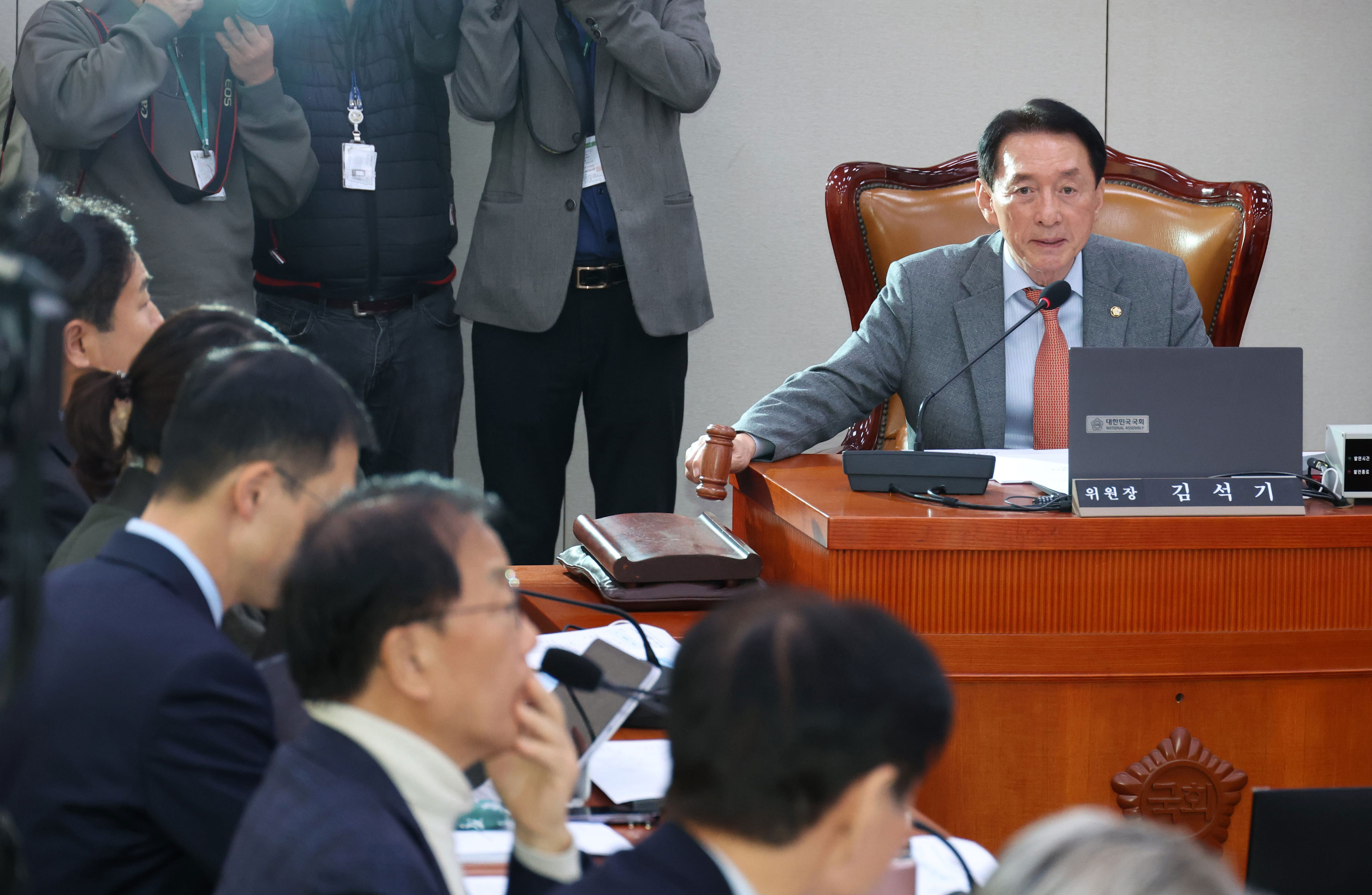
Concerns Over Korea-U.S. Tariff MOU
Lawmakers from the People Power Party, part of the National Assembly’s Foreign Affairs and Unification Committee, have raised significant concerns regarding the Korea-U.S. tariff negotiation memorandum of understanding (MOU). On the 19th, they expressed their deep concern over the government and ruling party's attempt to process the agreement through a special law without following the required National Assembly ratification consent procedure.
Press Conference and Demands for Transparency
Committee Chairman Kim Seok-ki, along with lawmakers Kim Gunn and Kim Ki-woong, held a press conference at the National Assembly in Yeouido, Seoul. During the event, they emphasized the need for transparency and public disclosure of the agreement’s contents. They also called for the National Assembly’s review and consent before proceeding further.
The lawmakers strongly refuted the government's claim that the MOU does not require National Assembly ratification. Kim Seok-ki pointed out that even the negotiation for the Korea-U.S. cost-sharing agreement, valued at 1.5 trillion Korean won, undergoes National Assembly ratification. He questioned how the public could accept the government’s stance of bypassing the National Assembly’s consent for a 500 trillion Korean won burden, which is approximately 330 times larger.
Legal and Constitutional Considerations
Kim Seok-ki argued that the Lee Jae-myung government's assertion that the MOU is not a treaty and thus does not require National Assembly consent is factually incorrect. The lawmakers cited a 1999 Constitutional Court ruling, which stated that whether a treaty requires National Assembly ratification should be determined by its substantive content and financial impact, not its form.
They emphasized that this agreement, imposing a massive 500 trillion Korean won financial burden, clearly requires National Assembly consent regardless of its form or title.
Budget Office Report and Government Responses
Earlier, the National Assembly Budget Office’s November report on the 2026 budget analysis highlighted the potential significant financial burden the U.S. investment scale may impose on the nation and its people. The report suggested that the government should consider following standard treaty procedures and seeking National Assembly ratification when concluding agreements or memoranda with the U.S.
The lawmakers also referenced responses from Prime Minister Kim Min-seok and Foreign Minister Cho Hyun during a September government question session. They stated that both officials had previously indicated that even if an agreement does not formally require consent, the government should seek National Assembly approval for provisions imposing financial burdens. They demanded clarification on why the government has reversed its position so abruptly.
Potential Legal Actions
After the press conference, the lawmakers hinted at possible legal actions. Regarding the Democratic Party of Korea’s plan to push for a special law to support the Korea-U.S. tariff negotiations, Kim Gunn, the People Power Party’s Foreign Affairs and Unification Committee secretary, stated that if the Democratic Party unilaterally enforces the special law, they may consider a constitutional dispute adjudication.
He added that if domestic investments suffer losses during the MOU’s implementation, affected businesses or individuals could file an unconstitutionality lawsuit, arguing the MOU lacked National Assembly ratification. Failing to secure consent may lead to prolonged legal issues.


Comments
Post a Comment