Protesters Condemn Austria's Honor to Antisemite at Parliament Event
Protests Erupt in Vienna Over Controversial Symposium Honoring Franz Dinghofer
About 200 protesters gathered in front of the parliament building in Vienna, Austria, on Tuesday evening to express their opposition to an event known as the Dinghofer Symposium. The protest was aimed at an event that critics claim promotes antisemitism and honors a figure with a troubling historical legacy.
The symposium, named after Franz Dinghofer, who served as Austria’s vice chancellor in the 1920s, has sparked significant controversy. Dinghofer was a self-proclaimed "radical antisemite" and a member of the Nazi party during World War II. Protesters argue that the event is inappropriate and disrespectful to the Jewish community.
Parliamentary speaker Walter Rosenkranz, who hosted the symposium, has faced widespread criticism for proceeding with the event despite calls to cancel it. Rosenkranz, a senior member of Austria’s far-right Freedom Party (FPÖ), has also drawn scrutiny for his association with Vienna's Libertas student fraternity, which is known for its pan-German nationalist views.
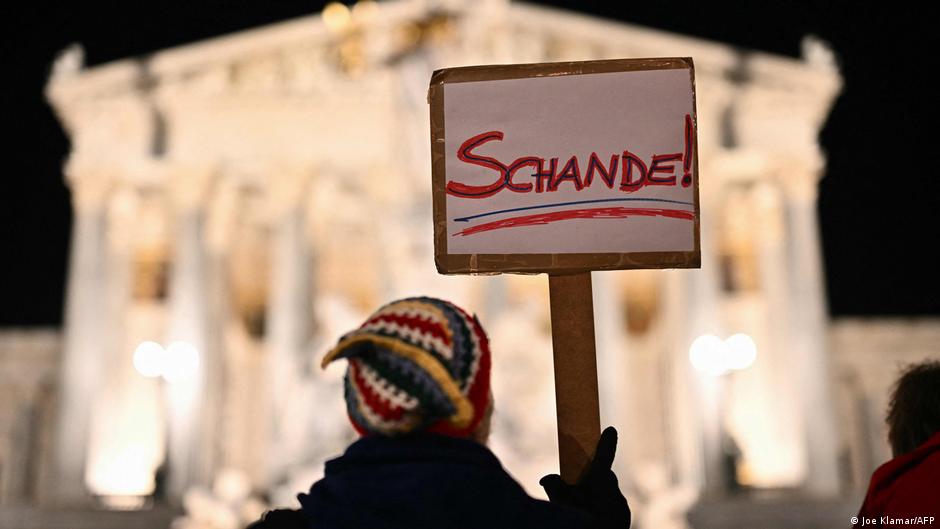
The Protests and Their Message
During the protest, demonstrators held up placards with messages such as "No place for antisemitism" and "Shame." Lia Guttmann, co-president of the Austrian Union of Jewish Students, emphasized that Dinghofer was an antisemite and a Nazi party member during World War II. She described the protest as a "counter-symposium" against what she called "historical amnesia."
Guttmann highlighted the importance of remembering the past and not allowing figures like Dinghofer to be celebrated. The Jewish community in Austria has strongly opposed the event, with some organizations ruling out any collaboration with Rosenkranz.
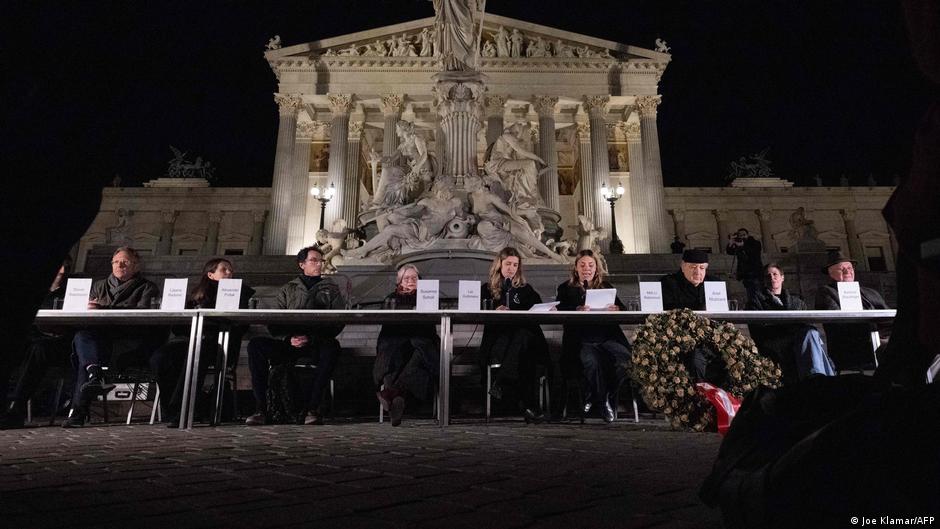
The Controversy Surrounding the Symposium
The Dinghofer Symposium has been criticized by various groups, including Austria's Jewish community and major political parties. The ruling three-party coalition has also expressed concerns about the event. Last week, over a dozen historians condemned the decision to hold the symposium in parliament, calling it "the place of honorable remembrance for a declared antisemite."
FPÖ representatives defend the event, stating that they remember Dinghofer as a statesman from the period between World War I and World War II. However, this perspective has not been widely accepted by the public or historians.
Context and Historical Significance
The symposium took place just days after Austria commemorated the November 9-10, 1938 pogroms, known as Kristallnacht. During these coordinated attacks, the Nazi regime targeted Jews in Germany and Austria, which had recently been annexed by Nazi Germany. Historians consider these events a precursor to the Holocaust.
While the term "Kristallnacht" is still used in some contexts, it has fallen out of favor in Germany due to concerns that it underplays the severity of the violence. The event serves as a reminder of the dangers of antisemitism and the importance of remembering history.
Walter Rosenkranz's Defense
In a statement to Austria’s national broadcaster ORF, Walter Rosenkranz defended the decision to host the symposium. He argued that even individuals with dark pasts can have positive aspects. This stance has further fueled criticism from those who believe that honoring figures like Dinghofer is inappropriate and harmful.
The debate surrounding the Dinghofer Symposium highlights the ongoing challenges of confronting historical figures and their legacies. It also underscores the importance of ensuring that events in public spaces do not promote ideologies that are antithetical to democratic values.


Comments
Post a Comment