Rich Singaporeans Worry Heirs Can't Keep Family Wealth
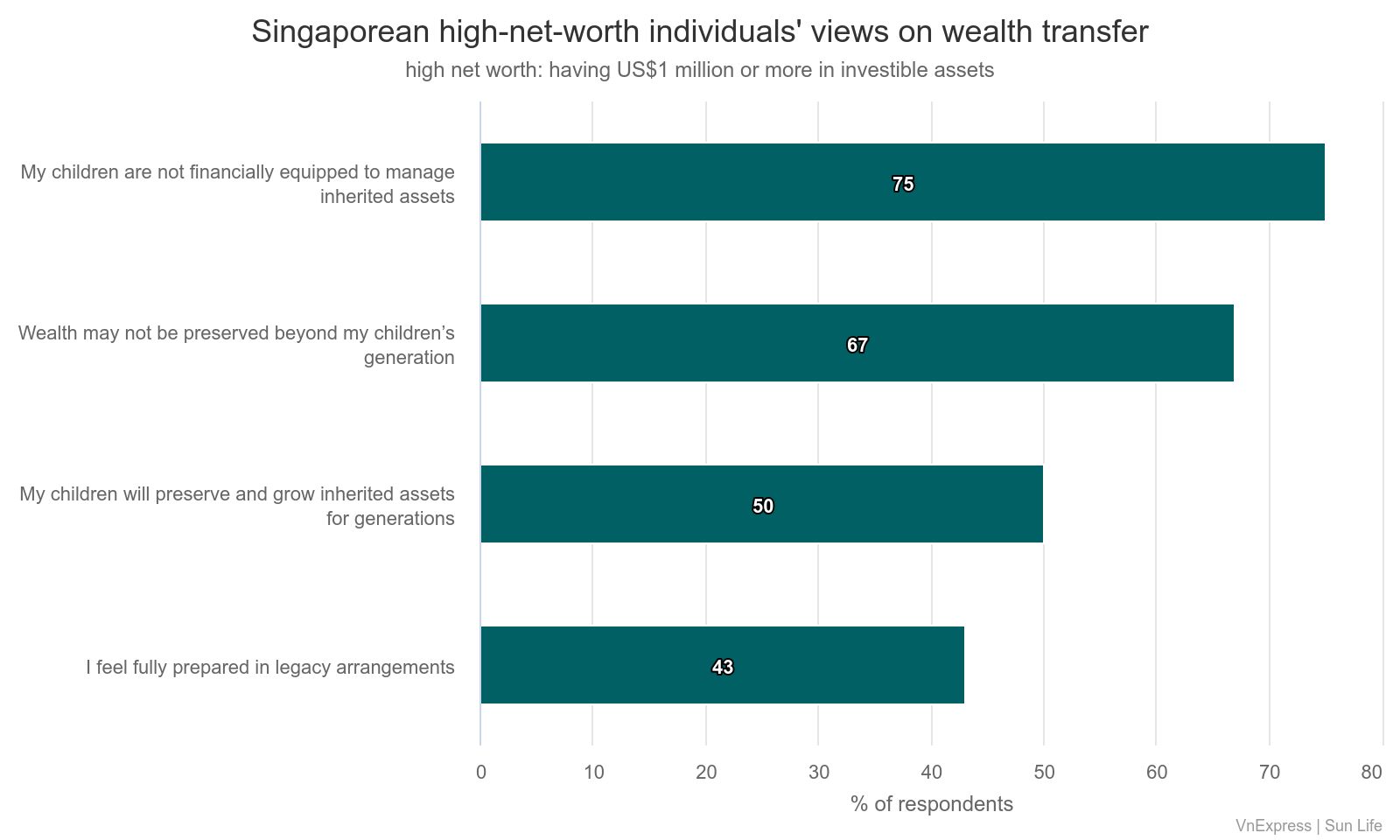
A recent survey has revealed that a significant majority of high-net-worth (HNW) individuals in Singapore are concerned about the long-term sustainability of their wealth. According to findings, 67% of these individuals fear that their wealth may not endure beyond their children’s generation due to shifting preferences among younger generations and the unpredictable nature of financial markets.
The survey, conducted by Sun Life, a financial services firm and insurer, also highlighted that 75% of HNW individuals in Singapore worry that their heirs are not adequately prepared to manage inherited assets. Despite having strong aspirations for legacy planning, many remain uncertain whether their legacies will withstand the test of time and generational change.
Other key concerns include disputes over assets, which were cited by 59% of respondents, and fears related to market volatility impacting asset valuations, noted by 53% of participants. The report emphasized that this uncertainty extends to personal and cultural legacies as well. Only half of the Singapore HNW respondents expressed confidence that their children would uphold their wishes regarding wealth transfer, asset preservation, and continued growth for future generations.
The survey included a sample of 316 HNW individuals in Singapore, defined as those with at least US$1 million in investible assets. Additionally, more than 3,000 respondents were surveyed across Asia, including Hong Kong, Indonesia, Malaysia, the Philippines, and Vietnam.

People take a photo in a rooftop swimming pool in Marina Bay Sands Hotel, Singapore, March 2015. Photo by Hemis via AFP
The report highlights that Asia is on the brink of the largest intergenerational wealth transfer in its history over the next decade. With an estimated $5.8 trillion expected to be passed from the first generation of wealth creators to the next by 2030, this trend raises critical questions about how families across the region should prepare for the future.
In Singapore, many family business owners have formal succession plans in place. However, they now face a new challenge: younger generations who may be reluctant to take over the family business. This reluctance is often driven by differing career aspirations or a desire for independence.
Legacy planning, according to the report, is not solely about the assets that are handed down but also about how wealth is expected to support future generations. A significant 61% of respondents in Singapore emphasized the importance of preserving and growing wealth for sustainable transfer.
Taken together, these expectations indicate that Singapore’s affluent families are looking to define what their legacy means and shape how it should function. They are increasingly focused on ensuring that their wealth serves as a foundation for future generations, rather than merely being a financial inheritance.
Key Concerns Among HNW Individuals in Singapore
- Wealth Sustainability: 67% of HNW individuals fear their wealth may not last beyond their children's generation.
- Financial Preparedness: 75% worry that their heirs are not financially ready to manage inherited assets.
- Asset Disputes: 59% of respondents are concerned about potential disputes over inherited assets.
- Market Volatility: 53% express fears that market fluctuations could impact the value of their assets.
- Cultural Legacy: Only half of the respondents are confident that their children will uphold their wishes regarding wealth transfer and asset management.
Preparing for the Future
As the intergenerational wealth transfer looms large, Singapore’s affluent families are re-evaluating their approach to legacy planning. This includes not only the legal and financial aspects of transferring wealth but also the values and principles that should accompany it.
Many HNW individuals are beginning to recognize that effective legacy planning involves more than just setting up trusts or wills. It requires open communication, education, and a shared understanding of financial responsibilities among family members.
The report suggests that families need to engage in ongoing discussions about their financial goals, risk tolerance, and long-term vision. By doing so, they can create a more cohesive and resilient legacy that aligns with their values and aspirations.
The Role of Education and Communication
One of the most critical steps in preparing for the transfer of wealth is educating younger generations about financial literacy and responsibility. This includes teaching them how to manage money, make informed investment decisions, and understand the implications of their choices.
Open communication between generations is equally important. Discussing financial matters openly can help build trust, reduce misunderstandings, and ensure that everyone is on the same page regarding the family’s financial future.
Conclusion
As Singapore moves toward a future marked by significant intergenerational wealth transfers, it is clear that the traditional approach to legacy planning must evolve. Families must adopt a more holistic and proactive strategy that addresses both the financial and emotional aspects of passing on wealth.
By focusing on education, communication, and long-term planning, HNW individuals in Singapore can better ensure that their legacies not only endure but also continue to thrive for generations to come.


Comments
Post a Comment