Rogue Elephants Spark Tension in Kanchanpur
Increasing Surveillance of Solitary Elephants in Nepal
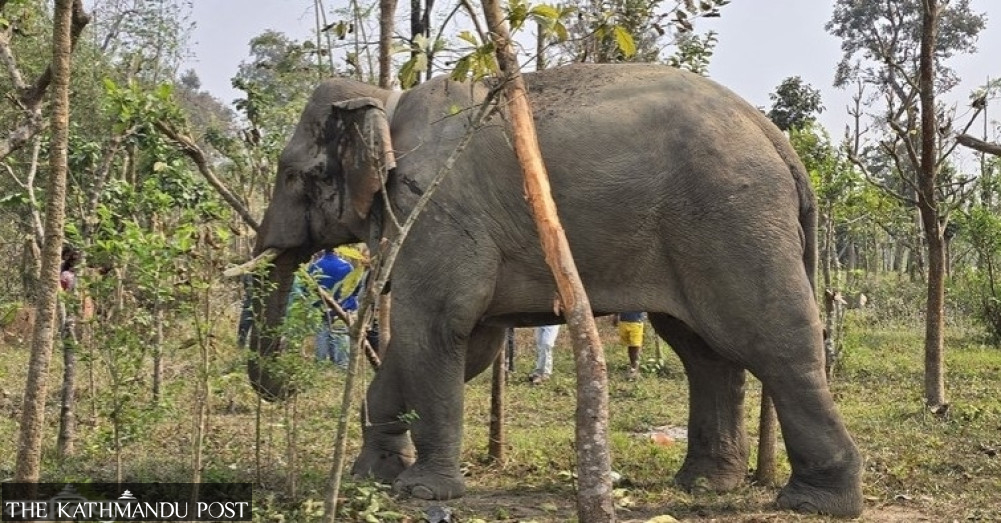
In the far-western region of Nepal, wildlife officials are working diligently to monitor two solitary male elephants that have been frequently moving between forest edges and nearby settlements near Shuklaphanta National Park. These elephants, separated from their herds, have exhibited increased aggression, prompting heightened concern among local authorities.
The two elephants include a tuskless male, known locally as a makuna, and another with a missing tail, which is easily recognized by the residents. They typically travel together but avoid larger herds. Locals report that these animals often stay in forest patches close to villages before entering settlements, especially before nightfall, in search of food. This behavior has led to numerous incidents of crop destruction, damage to homes, and close encounters with villagers.
On Tuesday evening, the tailless elephant entered Bankatti in ward 14 of Bhimdatta Municipality. According to local reports, it attacked the kitchen area of a mud house. When 45-year-old Dhana Bishta went outside to check the disturbance, she was attacked. Locals stated that the elephant dragged her toward a pile of straw, where she was later found lifeless. This incident marks one of several fatal encounters in the district in recent years.
Purushottam Wagle, a conservation officer at Shuklaphanta, explained that both elephants now pose a high risk because they no longer move with a herd. Elephants usually travel in family groups, with older females at the center, which helps keep younger or lone males from acting unpredictably. Once an elephant is expelled due to undisciplined behavior or becomes detached, the likelihood of conflict increases significantly.
Wagle mentioned that the park has established multiple tracking teams and is collaborating with the Department of National Parks and Wildlife Conservation to install radio collars on the two elephants. A formal request has been submitted, and technical teams are currently following the animals manually.
Authorities have advised residents not to store food grains in bedrooms and to remain indoors after dark. Elephants are attracted to food stored inside homes, and conservation staff emphasize that this increases the risk of encounters.
Shuklaphanta National Park is estimated to be home to more than 40 resident elephants, although an official census has not yet been conducted. The park also experiences a seasonal influx of elephants from India's Dudhwa National Park. These cross-border herds typically travel in large groups and occasionally enter Nepali settlements, causing damage to paddy, wheat, and sugarcane fields, and in some seasons, destroying dozens of houses. Fatalities from elephant encounters are reported almost every year along the Nepal-India border.
Local governments and the park authority have attempted various measures, including electric fencing and trenches, around the park's perimeter. Despite these efforts, many residents living near the boundary still express fear as the animals continue to breach settlements.
Strategies for Coexistence
To address the growing concerns, officials are focusing on long-term strategies for coexistence between humans and elephants. These include:
- Community Education: Educating locals about how to respond during encounters and what steps to take if an elephant approaches.
- Improved Infrastructure: Enhancing barriers and creating safer zones around settlements to minimize direct contact.
- Monitoring and Research: Continuing to track the movements of the two elephants and studying their behavior to develop better management practices.
Ongoing Challenges
Despite these efforts, challenges remain. The elephants' unpredictable behavior and the difficulty in managing their movements present ongoing risks. Additionally, the lack of a comprehensive census makes it harder to assess the full scope of the problem.
As the situation continues to evolve, the focus remains on finding sustainable solutions that protect both human lives and the well-being of the elephants. The collaboration between local authorities, conservationists, and communities is crucial in addressing these complex issues.


Comments
Post a Comment