Scientists Uncover Unusual Method to Halt Gulf Stream Collapse
The Unexpected Role of the West Antarctic Ice Sheet in Preserving the Gulf Stream
A groundbreaking study has revealed a surprising twist in the ongoing climate crisis: the melting of the West Antarctic Ice Sheet could, under certain conditions, help preserve the Gulf Stream. This critical ocean current plays a vital role in regulating the climate of Europe and parts of North America, and its potential collapse has long been a concern for scientists.
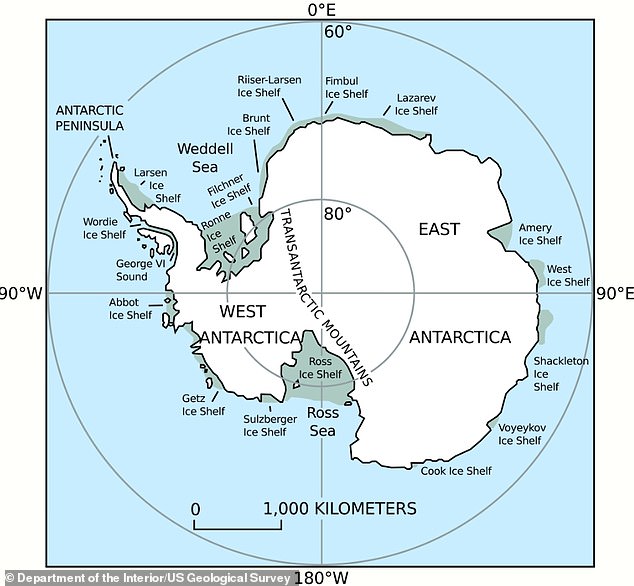
The West Antarctic Ice Sheet is an immense body of ice, containing around 750,000 cubic miles of ice—enough to fill Wembley Stadium nearly three billion times. As it melts, it releases salty water into the North Atlantic, which helps maintain the density of ocean currents that drive the Gulf Stream. This process is essential for keeping the ocean's "conveyor belt" system, known as the Atlantic Meridional Overturning Circulation (AMOC), functioning properly.
However, the researchers emphasize that this potential benefit comes with significant risks. If the West Antarctic Ice Sheet were to fully melt, it could raise global sea levels by up to 14 feet (4.3 meters). Such a rise would lead to catastrophic flooding, loss of life, and widespread infrastructure damage. The study highlights a difficult dilemma: whether to prioritize saving the Gulf Stream or preventing the massive flooding that would result from the ice sheet’s complete meltdown.
According to Dr. Sacha Sinet, a climate scientist at Utrecht University and one of the study's authors, it is hard to determine which scenario is more devastating. He stresses that reducing greenhouse gas emissions may be the only viable solution to avoid both outcomes.
Understanding the AMOC and Its Importance
The Gulf Stream is just one part of the broader AMOC system, often referred to as the "conveyor belt of the ocean." This system transports warm surface water from the tropics toward the northern hemisphere, where it releases heat before freezing. As the water freezes, salt is left behind, increasing its density and causing it to sink. This dense water then flows back southward through the ocean depths, eventually rising again in a process called upwelling.
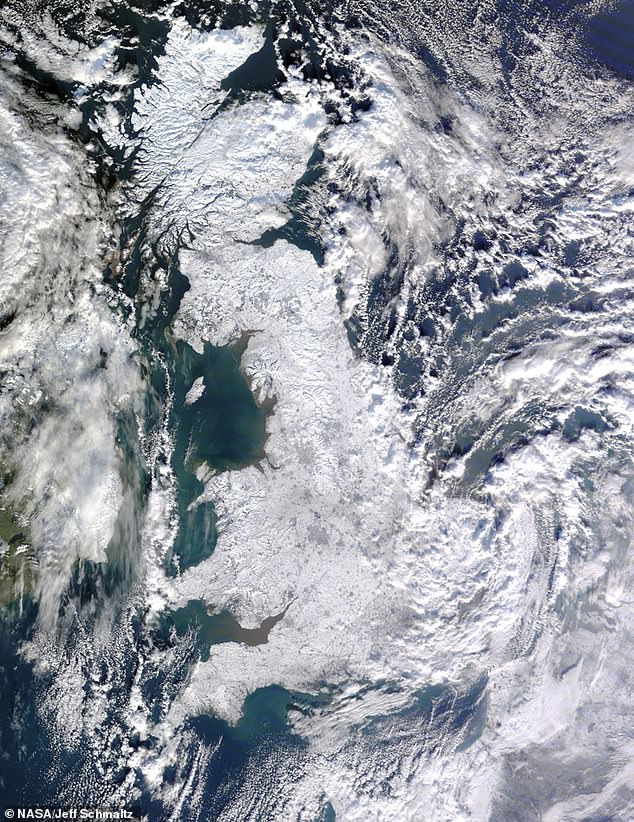
This cycle is crucial for maintaining relatively mild temperatures in the northern hemisphere. If the AMOC were to slow down or collapse entirely, large parts of Europe and the United States could face a deep freeze. However, the new study suggests that the West Antarctic Ice Sheet might play a key role in stabilizing the AMOC under certain conditions.
The Global Impact of Melting Ice Sheets
Ice sheets are vast masses of glacial ice covering more than 19,000 square miles (50,000 square kilometers). There are two major ice sheets on Earth: the Greenland Ice Sheet and the Antarctic Ice Sheet. Together, they hold about 99% of the planet’s freshwater. The West Antarctic Ice Sheet, in particular, is more vulnerable to climate change due to its location on the sea bed.
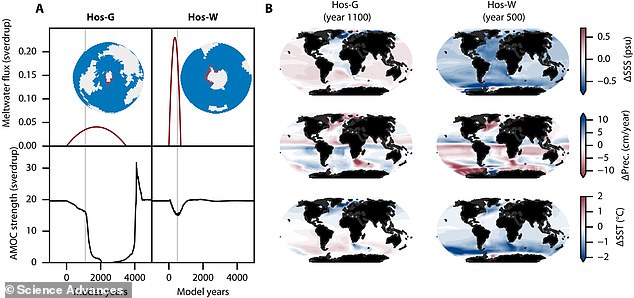
As global temperatures rise, the water beneath the ice sheet is becoming warmer, accelerating its melting. Scientists used a computer model called CLIMBER-X to simulate the effects of rapid melting in both Greenland and Antarctica. The results were unexpected: under certain conditions, the melting of the West Antarctic Ice Sheet could actually help stabilize the AMOC.
This happens because the meltwater alters the behavior of water layers in the Southern Ocean, sending slightly saltier water toward the North Atlantic. This increased salinity helps maintain the density of ocean currents, allowing the AMOC to continue functioning.
A Complex Relationship Between Ice Melt and Ocean Currents
Previous studies have shown that the melting of the Greenland Ice Sheet destabilizes the AMOC. Its meltwater adds freshwater to the North Atlantic, slowing down the sinking of dense water that drives the current. However, the new study suggests that the West Antarctic Ice Sheet behaves differently. Under specific conditions, its meltwater can help maintain the stability of the AMOC.
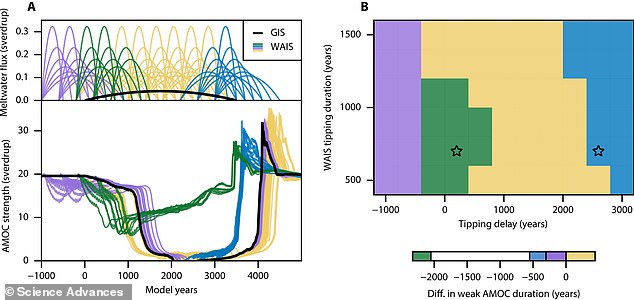
Dr. Sinet explained, “Greenland melt generally destabilises the AMOC, whereas, as we have shown, West Antarctic Ice Sheet's melt may, under certain conditions, stabilise it.” However, the timing of the melt is crucial. If the West Antarctic Ice Sheet melts too slowly or too late, its stabilising effect disappears. In some cases, it could even accelerate the AMOC's tipping point.
The researchers stress that curbing greenhouse gas emissions is the only way to prevent both the collapse of the AMOC and the catastrophic melting of the West Antarctic Ice Sheet. While the findings offer new insights into the complex interactions between ice sheets and ocean currents, they also highlight the need for urgent action to mitigate climate change.
How Global Warming Affects Ocean Currents
Global warming is having a profound impact on ocean currents like the AMOC. Scientists believe that melting glaciers could trigger the collapse of this critical system. The AMOC acts as a conveyor belt, transporting warm water from the tropics to the northern hemisphere. When this water reaches the North Atlantic, it releases heat and freezes, leaving behind salt that increases the water’s density.
This denser water sinks and flows back southward, eventually rising again in a process called upwelling. Without this cycle, the northern hemisphere could experience much colder temperatures. Studies have already shown that the AMOC is weakening due to climate change, with the engine of this system located off the coast of Greenland.
As more ice melts, more freshwater enters the North Atlantic, disrupting the balance of the ocean currents. This disruption could lead to a slowdown or even a collapse of the AMOC, with potentially severe consequences for global climate patterns.


Comments
Post a Comment