Seoul's 30s Homeownership Plummets to 20% Low

Rising Trend of Non-Homeowning Households in Seoul
Last year, the number of non-homeowning households in their 30s residing in Seoul reached a record high since data collection began. This trend highlights a significant shift in housing patterns and economic conditions for young adults in the city. According to the Ministry of Data and Statistics' housing ownership statistics released on the 24th, the number of non-homeowning households in their 30s in Seoul was recorded at 527,729, an increase of 17,215 households compared to the previous year.
This figure marks the highest level since 2015, indicating a growing challenge for young adults in securing homeownership. The number of non-homeowning households in this age group decreased from 475,606 in 2015 to 456,461 in 2018 before rebounding. The rate of increase has been steadily rising, with the number of such households growing by around 3,000 in 2021, 15,000 in 2022, and reaching 17,000 in both 2023 and last year.
Declining Homeownership Rates Among Young Adults
In contrast, the number of homeowning households in their 30s has been on a downward trajectory. Last year, the number of homeowning households in this age group in Seoul stood at 183,456, a decrease of 7,893 households compared to the previous year. From around 237,000 in 2015, the number saw a slight increase in 2021 but then declined again to 191,349 in 2023.
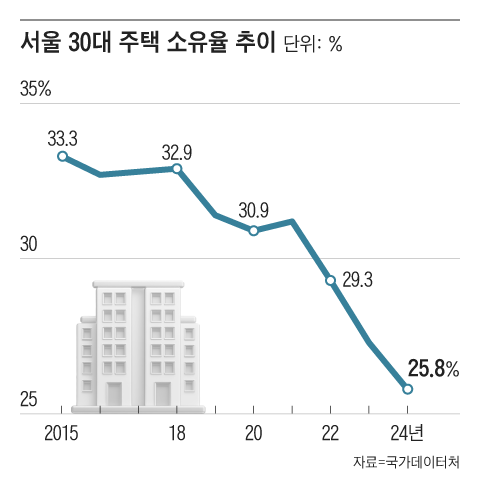
The homeownership rate among those in their 30s has also shown a consistent decline. In 2015, the rate was 33.3%, which fell to 30.9% in 2020. It rebounded slightly to 31.2% in 2021 but dropped again to 29.3% in 2022. By last year, the rate had fallen into the mid-20% range, signaling a troubling trend for young adults in Seoul.
Factors Contributing to the Trend
This trend appears to be driven by several factors, including the increasing delay in employment and marriage, which has also postponed the timing of home purchases. Seoul, in particular, has a high proportion of single-person households, which is affecting the homeownership rate. Additionally, there are observations that the government's successive real estate regulations this year have further raised barriers to entering the housing market.
- The delayed entry into the workforce means many young adults are not earning enough to afford a home.
- Marriage delays contribute to the postponement of major life events, including purchasing a house.
- High levels of single-person households mean fewer people are forming families that typically require housing.
- Government policies aimed at cooling the real estate market may be making it harder for first-time buyers to enter.


Comments
Post a Comment