South Korean Self-Driving Truck: U.S. Trial, 2027 Highways
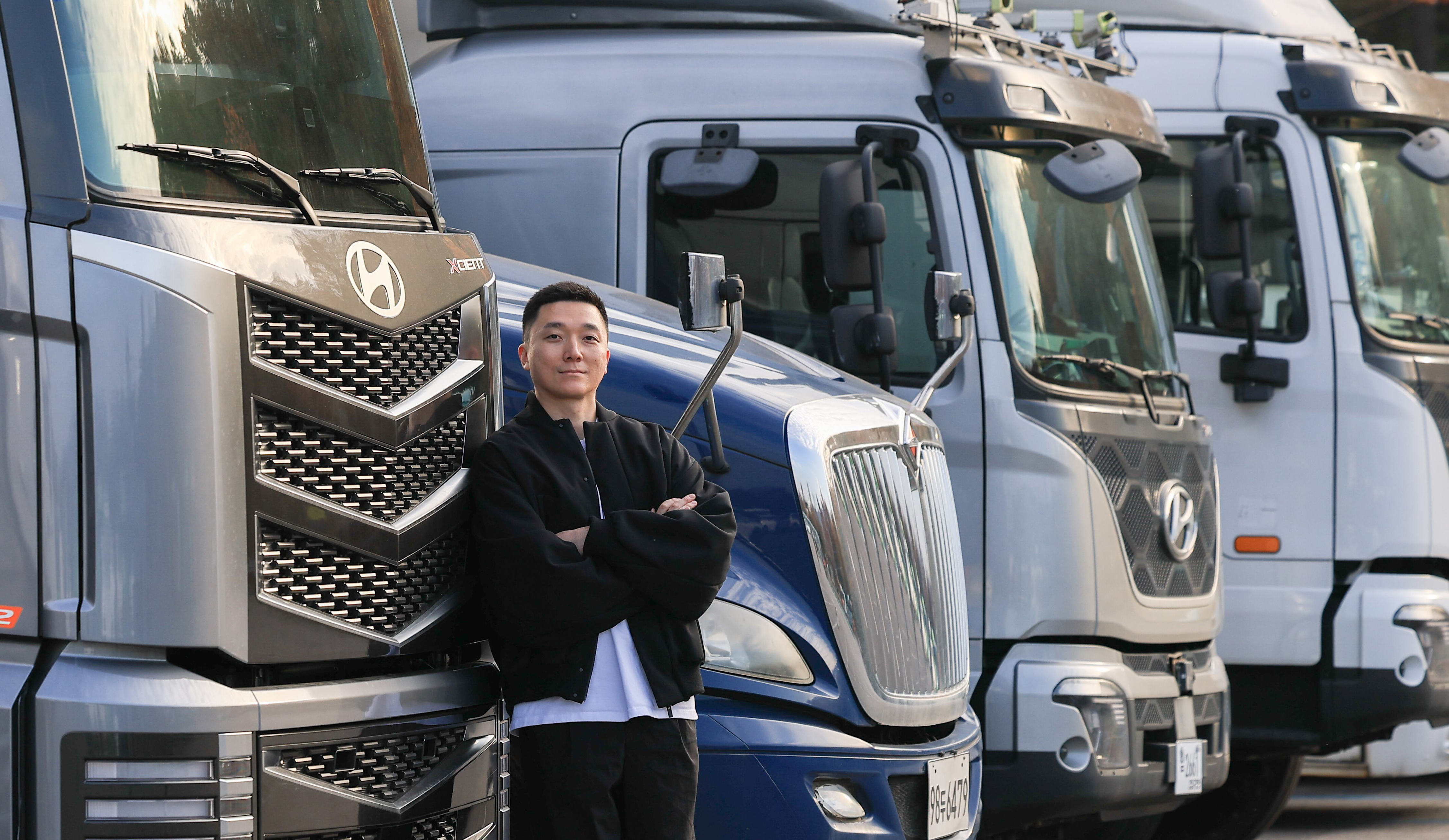
A South Korean autonomous truck is currently making a 2,000 km journey from Texas to Florida in the United States. This feat marks the culmination of a challenge that began in June of last year when three developers from the autonomous truck startup Mars Auto traveled to the U.S. They purchased and modified used trucks, rented accommodations with empty lots to work, and despite complaints from neighbors, they adapted their technology to the U.S. environment. Through persistent efforts, they visited transportation companies one by one to explain their product, securing a contract within six months in a market dominated by American firms. President Park Il-su of Mars Auto described this period as the most difficult since the company’s founding.
Mars Auto has been selected as the project manager for the Ministry of Trade, Industry and Resources’ 18.2 billion won-scale “Large Truck Autonomous Driving Commercialization Technology Development” project. The goal is to enable unmanned freight vehicles to operate on highways by 2027.
AI-Driven Autonomous Trucks
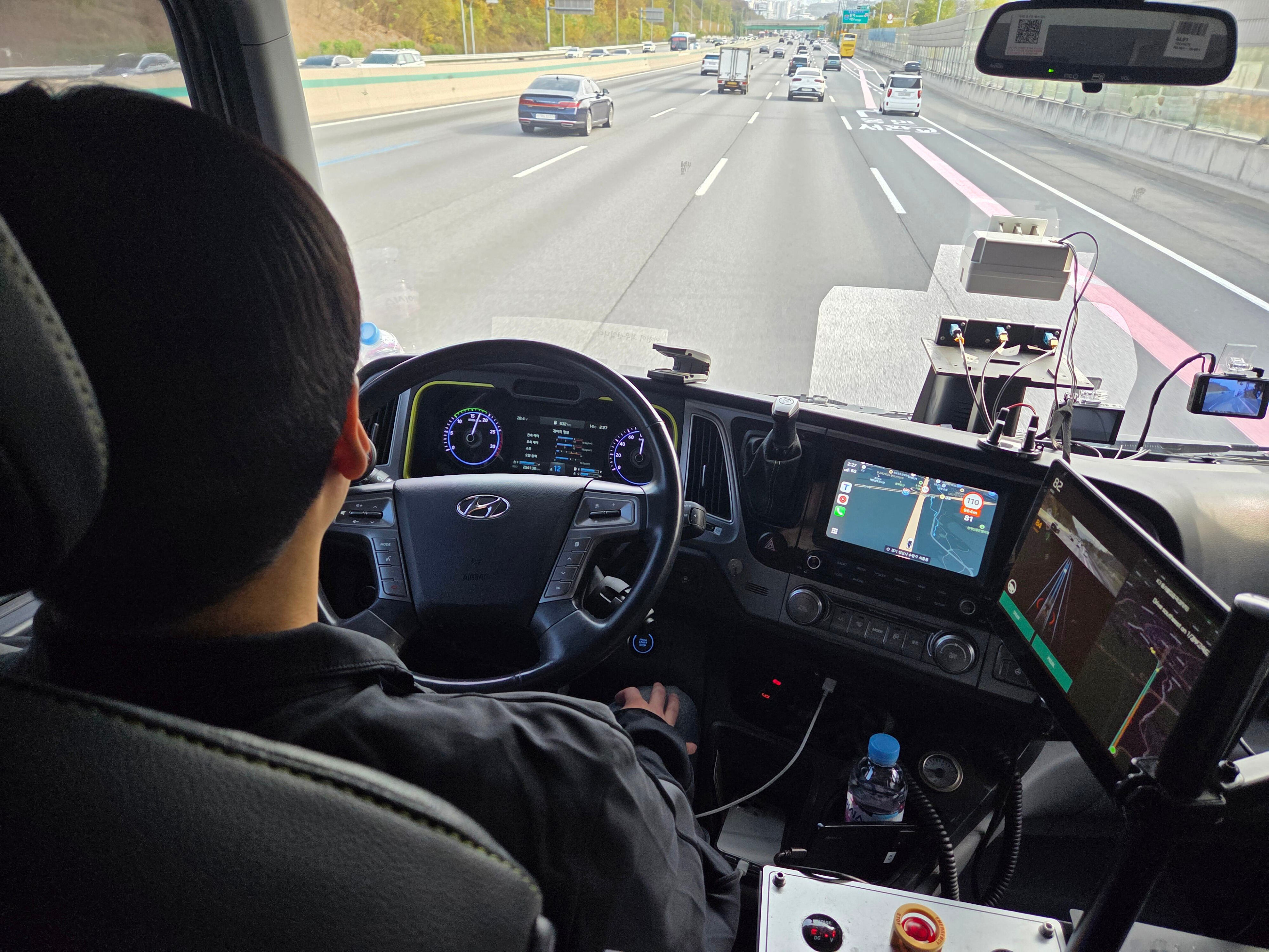
On the 11th, as Mars Auto’s 15-ton autonomous truck entered the Yangjae IC on the Gyeongbu Expressway, the driver pressed a button on the monitor next to the instrument panel. After a short alert sound, the driver released their hands from the steering wheel. The truck autonomously adjusted the distance between vehicles in congested sections and smoothly reduced speed. Without the alert, it was so natural that one might not notice the difference between manual and autonomous driving.
Mars Auto’s autonomous trucks are equipped with devices on regular freight vehicles. The manufacturing cost is 10 million Korean won, and installation takes just one day. The system reconstructs 3D images from footage captured by seven cameras to recognize road conditions.
Autonomous driving technology has evolved into two main approaches: one using LiDAR sensors (which analyze reflected laser signals to build 3D maps) on precise maps, and the other using cameras to recognize the surrounding environment, where AI judges and drives autonomously (End-to-End, or E2E). The LiDAR method is expensive and limited to pre-built maps. E2E, which relies on AI learning, offers high versatility. This is why global companies like Tesla are shifting to vision-based E2E. President Park explained, “Trucks carrying dozens of tons of cargo and driving at high speeds require the E2E approach due to frequent exceptional situations.”
Revenue Through Paid Transportation
Mars Auto also operates paid transportation services. In 2023, it established a subsidiary, “Mars Logistics,” and hired five truck drivers to transport cargo for major logistics companies like CJ Logistics, Hyundai Glovis, and Lotte Global Logistics on specific routes, generating revenue. Analysis of driving records showed that AI reduced unnecessary sudden acceleration and maintained consistent speeds, improving fuel efficiency by an average of 12–15 percent. This cuts overall transportation costs by about 5 percent. Once fully unmanned, labor cost savings are also expected.
In Texas, where regulations are more lenient, Mars Auto established “Mars Operations” and runs a transportation business with five trucks. This allows the company to collect vast real-driving data—essentially making the AI smarter. Mars Auto aims to accumulate 100 million km of driving data by 2027. To this end, 150 data collection devices called “Mars Box” have been installed on regular freight vehicles of partner companies.
Autonomous Driving as ‘Sovereign AI’
Currently, there are about 15 major autonomous truck companies worldwide, with the U.S. and China accounting for more than half. The industry leader in cumulative learning data is Aurora in the U.S. with 5 million km. Mars Auto, with 2 million km of data, is at a level where it can catch up. President Park said, “To reach the goal of ‘full unmanned operation,’ we are focusing costs and manpower on technology development,” adding, “If the U.S. and China dominate the autonomous truck market, there is a risk of technological dependence.”


Comments
Post a Comment