Supreme Court Rules Repeated Banners After Removal as Separate Offenses
Supreme Court Rules on Repeated Defamation Against HiteJinro
The Supreme Court has made a significant ruling regarding the legal consequences of repeated acts of defamation against a major liquor company, HiteJinro. The court determined that if an individual is convicted for defaming the company by hanging banners and later posts similar banners with altered expressions, this constitutes a separate new crime. As a result, the individual can be punished again for the subsequent actions.
This decision clarifies that when a new criminal intent is formed after the initial offense and a similar crime is committed, the multiple acts cannot be considered a single "inclusive offense" (포괄일죄). This ruling has important implications for how courts handle cases involving repeated violations of similar nature.
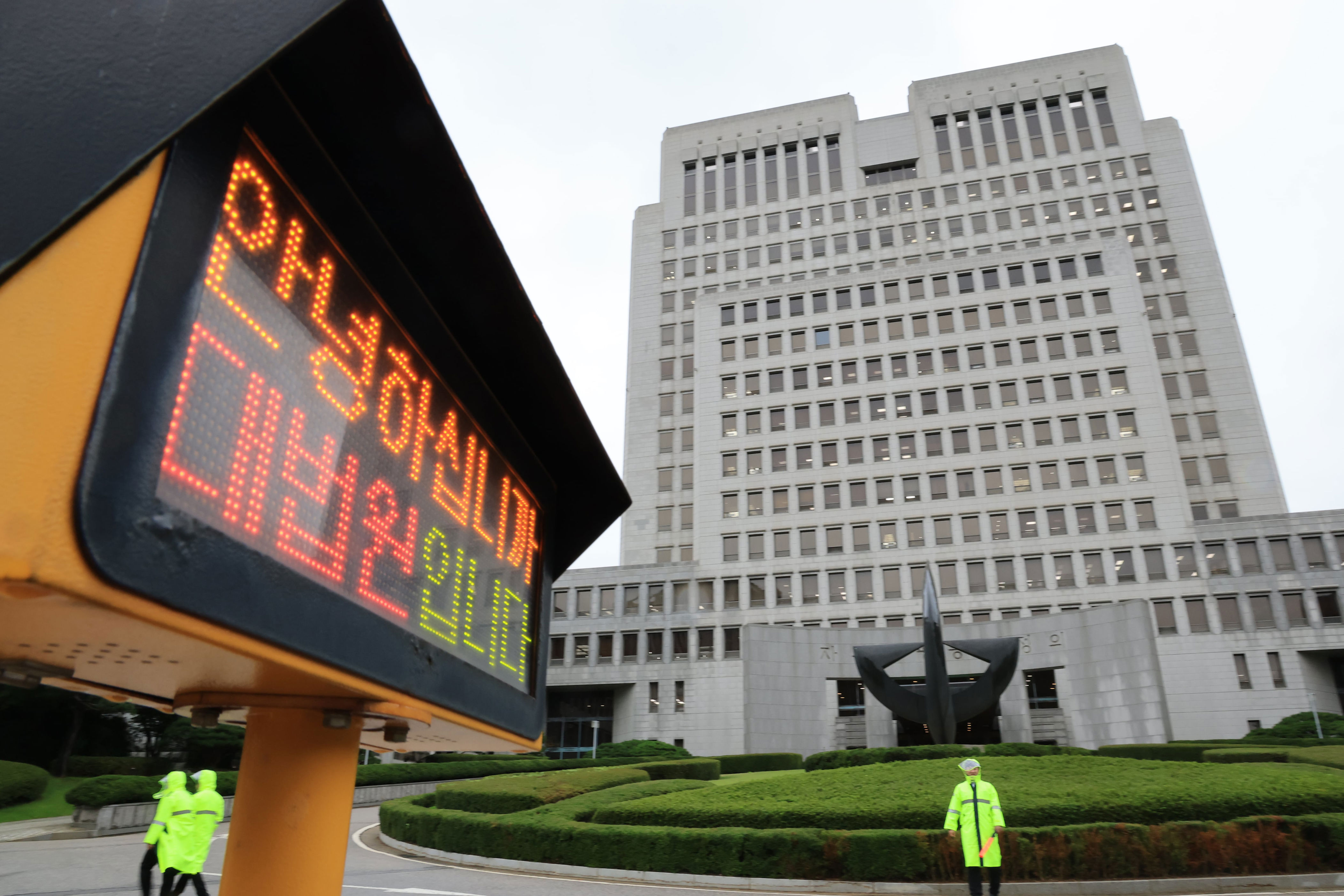
According to legal experts, the Supreme Court’s Third Division, led by Presiding Justice Lee Heung-koo, recently overturned the lower courts’ dismissal of the prosecution’s indictment against Mr. Kim. The case was remanded to the Seoul Central District Court for further proceedings. Mr. Kim was initially indicted in December 2017 and January 2018 for hanging banners that defamed HiteJinro in front of its headquarters in Seocho-gu, Seoul. He received a finalized fine of 5 million won from the Supreme Court in October 2021.
During the trial, Mr. Kim posted similar banners between April 2018 and June 2019, leading to a second indictment in November 2019 on the same charges. The key issue in the case was whether these two sets of actions should be treated as a single crime or as separate offenses.
The first trial ruled that the two incidents constituted one crime and dismissed the indictment, arguing that the prosecution had engaged in "double indictment." It stated that the acts of posting false statements about HiteJinro in the same location and method under a "single and continuous criminal intent" should not be separately prosecuted. The first trial’s verdict was issued in August 2020, and the prosecution was expected to request an amendment to the indictment to include the additional acts in the prior case. However, the second trial upheld the first trial’s decision, dismissing the prosecution’s appeal.
The Supreme Court, however, overturned the dismissal, stating, "The prior case and the current indictment cannot be considered an inclusive offense." The court emphasized that when determining the unity and continuity of criminal intent in prolonged similar offenses, several factors must be carefully examined. These include the method, motive of each individual crime, the time interval between crimes, and whether there was an interruption or renewal of intent.
The court determined that a provisional disposition issued in March 2018, before the second set of crimes, had renewed Mr. Kim’s criminal intent. Following HiteJinro’s request for a provisional disposition, the court ordered Mr. Kim to remove the banners in April 2018. Although Mr. Kim complied, he later posted new banners with revised expressions. Based on this, the Supreme Court judged the two incidents as separate crimes.
The court explained, "The defendant temporarily halted the crime by removing the prior banners due to the provisional disposition," and "the current banners, which differ slightly in expression from the prior ones, were posted to evade sanctions from the provisional disposition." It added, "It is necessary to clarify the scope of the indictment, request explanations from the prosecution for ambiguities, and deliberate and judge within the indicted scope."
This ruling highlights the importance of distinguishing between repeated acts of misconduct and the intent behind them. It also underscores the need for prosecutors to clearly define the scope of their indictments and address any ambiguities in their cases.


Comments
Post a Comment