Top Scientist Faces Death Threats Over Beach Ban Proposal
Professor flees country over death threats
Stands by calls for 4WD ban on beaches
A leading ecologist has been forced to flee his home country following a wave of death threats after calling for restrictions on four-wheel-drive (4WD) access to popular beaches.
Professor Thomas Schlacher, from the University of the Sunshine Coast in Queensland, has long argued that heavy vehicle traffic is causing irreversible damage to fragile marine habitats. His concerns sparked a national debate earlier this year when he proposed limiting 4WDs on stretches of sand that support vulnerable bird species and other coastal wildlife.
Professor Schlacher expected opposition from motorists, but was not prepared for the hostile backlash that followed. The abuse began online, with one comment asking: "How many college professors can we bury on a beach?" The threats escalated, culminating in an anonymous note left in his letterbox that read "we know where you live," accompanied by a photo of his car.
The Austrian-born academic had no choice but to temporarily relocate his family to the US—a move he described as unsettling but necessary for their safety. "It is very scary. It actually goes beyond just being a keyboard warrior," he told Nine News.
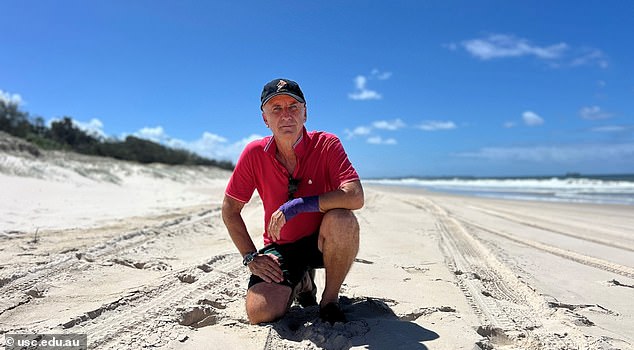
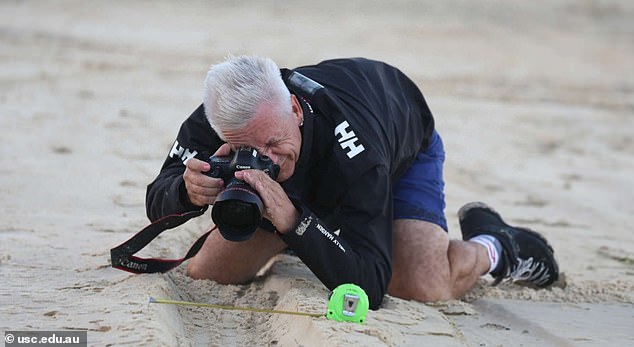
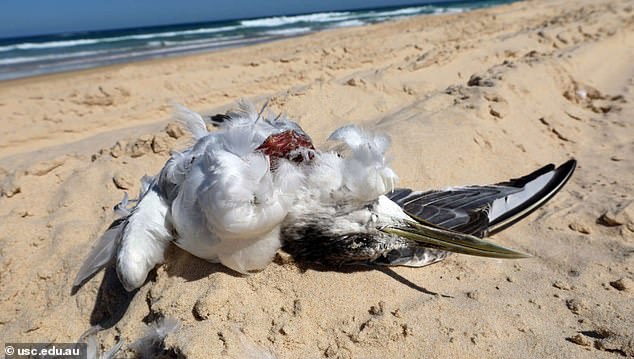
Professor Schlacher has spent three decades studying beach ecosystems across Australia. His research shows that even minimal 4WD activity causes "unequivocal" and long-lasting damage to dune vegetation, which can destabilise entire coastal ecosystems. He also found that vehicle disturbance drastically reduces bird diversity, abundance, and breeding success—nests destroyed, chicks killed, or entire populations displaced.
Some of the behavior from 4WD enthusiasts he witnessed went far beyond careless driving. "People actually going directly at birds, driving straight at them, trying to hit them," he said.
The debate has been most heated on Bribie Island, off Queensland's south-east coast, where up to 1000 4WDs converge every weekend. A 23km stretch of Ocean Beach is open to 4WDs, making it a major drawcard for off-road enthusiasts.
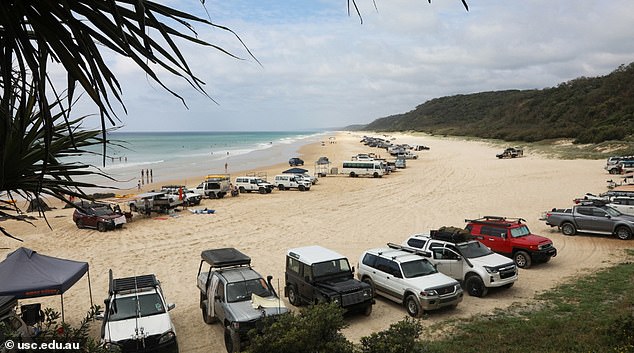
Richard Ogden, president of the Bribie Island Environmental Protection Association, agreed with Professor Schlacher, claiming: "Without changes, Bribie’s nature will continue to suffer at the hands of unfettered 4WD vehicle access."
He added: "The park’s dunes suffered significantly last summer when TC Alfred stripped away the protective first and second dunes. High-tide 4WDrivers continue to hamper the beach’s natural ability to respond."
Ogden also highlighted the need for balanced management, noting: "We believe a balanced management plan should allow all visitors—not just 4WD owners—to experience a protected national park safely and sustainably."
4WD enthusiasts claim that any restrictions would unfairly punish those who follow the rules, while an outright ban would do more harm than good. "We have a code of conduct that we use to train our members on ways to reduce the impact when they're driving on beaches," Bundaberg 4WD Club president Brett Lynch told Nine's Today program earlier this year.
"A total ban would have devastating effects, especially on tourism and the local mindset, cost of living and everything these days to get out and get away from your house and from work to relax and unwind and reset."
Professor Schlacher insists he's not calling for a total ban on 4WD beach driving, contrary to claims from critics. Instead, he has proposed reserving half the beach at popular sites across Queensland, NSW, and Victoria for vehicles and preserving the rest for wildlife conservation.
He also argued there is a conflict within the Queensland government, pointing to the dual environment and tourism responsibilities held by minister Andrew Powell. "The government only listens to the 4WD lobby," Professor Schlacher claimed.
"Because they're powerful and as you have seen, they're violent."
Powell has rejected calls for 4WD restrictions, saying Queensland's tourism economy depends on maintaining access to iconic beaches. The minister argued that conservation and tourism can coexist under the state's current strategy, supported by rangers and police officers who enforce environmental protections.
Revenue from camping and vehicle permits is reinvested into beach management programs.
But Professor Schlacher believes that approach falls short. "The evidence is massive and it's solid and it's unambiguous. It's worldwide," he said. "And you can just basically say it is the worst thing you can do in terms of how to use a beach."
Daily Mail contacted Professor Schlacher and Minister Powell for comment.


Comments
Post a Comment