USFK Commander: Key Hub for Korean Peninsula Strategy Against China and Russia
Strategic Shift in U.S. Forces Korea
U.S. Forces Korea Commander Gen. Xavier Brunson recently emphasized the strategic significance of the Korean Peninsula, stating that U.S. forces stationed there possess “cost-imposition” capabilities against both China and Russia. He highlighted that South Korea’s geographic location offers a unique advantage in influencing three key competitive axes involving North Korea, China, and Russia.
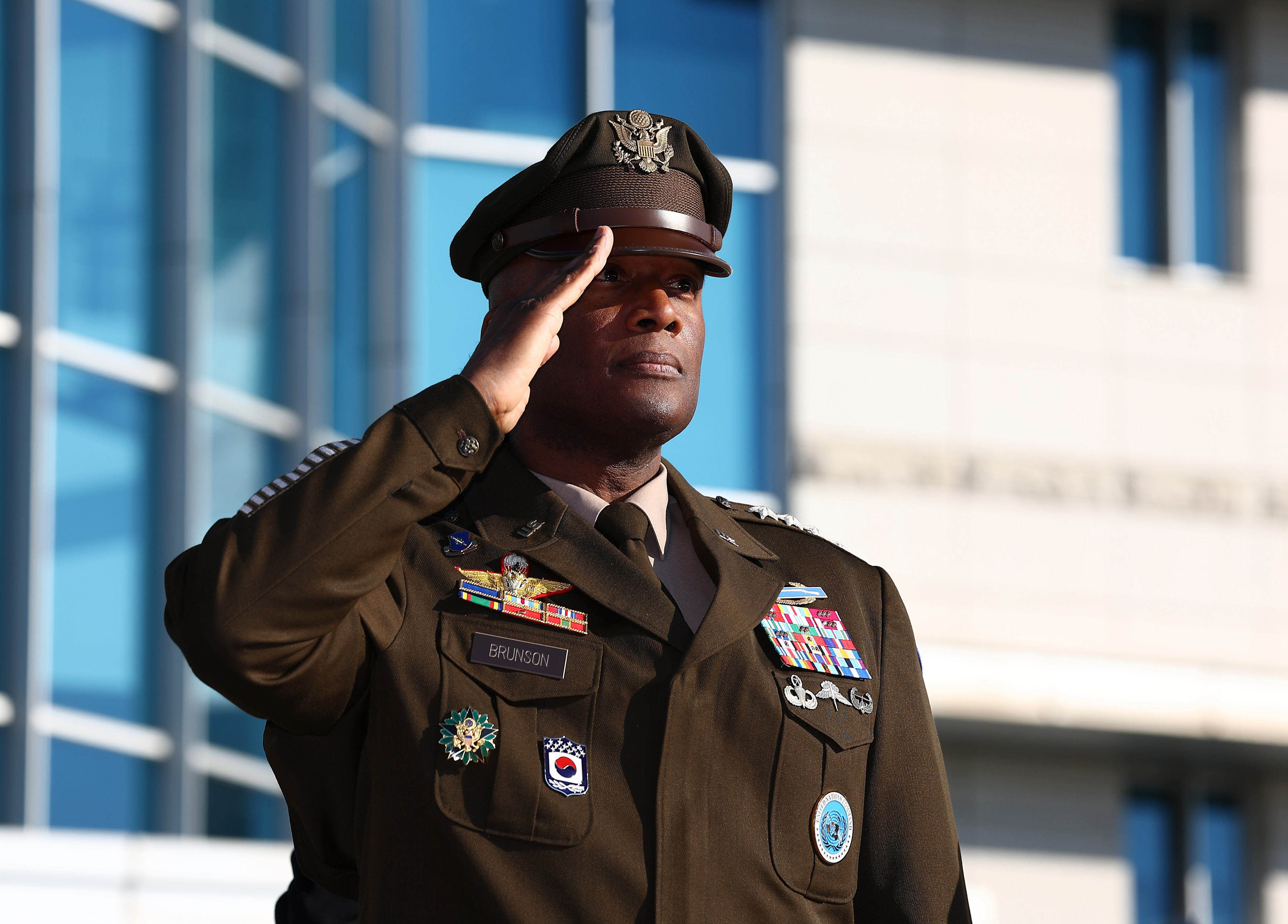
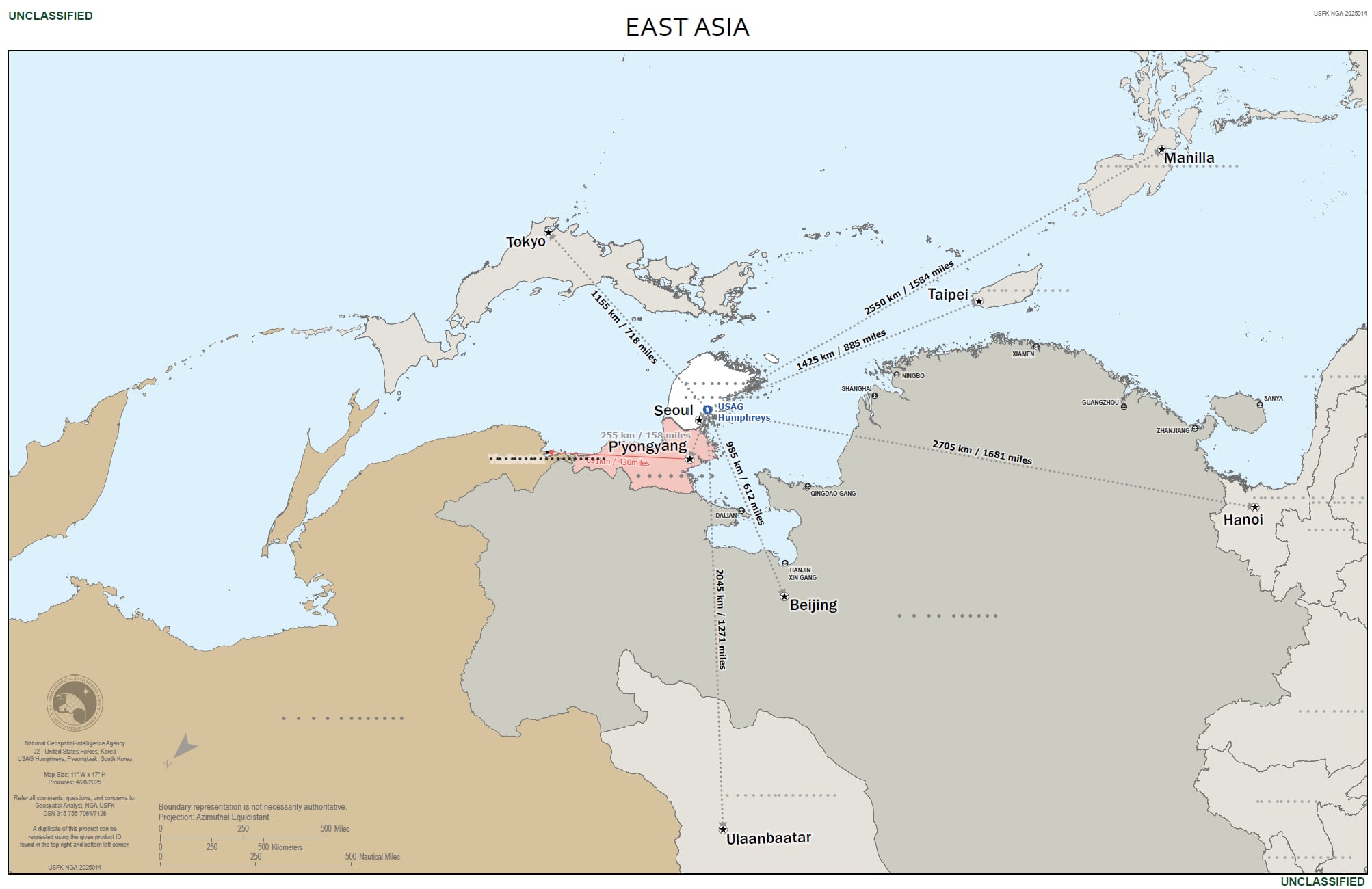
In a published article titled ‘East-Up Map,’ Commander Brunson outlined his perspective on how the region should be viewed with an east orientation toward the top. This approach transforms the strategic picture, giving new meaning to the first island chain, a critical element of Indo-Pacific strategy. According to him, forces already positioned on the Korean Peninsula are not distant assets requiring reinforcement but rather troops already inside the bubble perimeter that the U.S. would need to penetrate in the event of a crisis or contingency.
He added, “This shift in perspective highlights Korea’s role as a natural strategic pivot. Distance analysis shows Camp Humphreys’ proximity to potential threats: approximately 158 miles from Pyongyang, 612 miles from Beijing, and around 500 miles from Vladivostok. Korea is positioned to address northern threats from Russia while simultaneously providing western reach against Chinese activities in the waters between Korea and China.”
The implications of this stance suggest that the Korean Peninsula can impose costs by preventing the Russian fleet from entering the eastern waters of South Korea, making those waters a more defensible space. In the West Sea, specifically the Yellow Sea, the Korean Peninsula’s forces can impose costs on the Chinese Communist Party’s Northern Theater Army and the Northern Fleet, showcasing significant potential to deter enemy operations in both seas.
USFK has been using the ‘East-Up Map’ for internal education since Commander Brunson’s directive. When viewed this way, Taiwan and the Philippines become more prominent than North Korea, and distances from Pyeongtaek Base, where USFK headquarters is located, to Beijing, Tokyo, Taipei, and Manila are also marked. This map emphasizes the strategic importance of these regions, aligning with the U.S. military’s focus on ‘strategic flexibility.’
It is understood that this approach is intended to consider how USFK should move if China invades Taiwan or conflicts arise in the South China Sea. The commander’s remarks have focused primarily on the geopolitical value of the Korean Peninsula without emphasizing readiness against North Korea, which is considered highly unusual.
In the ‘East-Up Map’ article, Commander Brunson did not mention North Korea even once. This omission is interpreted as a move to expand the strategic flexibility of USFK in line with the Trump administration’s policy focus on countering China and to entrust greater security responsibilities to allies.
Former Commander Paul LaCamera, during a media interview, was asked if USFK could focus solely on the Korean Peninsula. His response was, “I never divert my attention. The mission of USFK is to support the ROK-U.S. alliance under the Mutual Defense Treaty. USFK focuses on the Republic of Korea.”
Commander Brunson’s emphasis on enhancing strategic flexibility has continued since his inauguration last year. At the U.S. Army Association Symposium on May 15, he stated, “USFK does not focus solely on repelling North Korea but is part of a larger Indo-Pacific strategy,” and “South Korea is the U.S. ally closest to Beijing and resembles an island or a ‘fixed aircraft carrier’ floating between Japan and the Chinese mainland.” On May 27, he reiterated the aircraft carrier theory, saying, “No U.S. forces are deployed on the Asian continent except for USFK.”
During his first press conference after taking office last August, he said, “Strategic flexibility is the ability to deploy forces and equipment where needed when needed,” and “It is not militarily appropriate to tie down the capabilities of USFK when we need to maintain peace throughout Northeast Asia and the Indo-Pacific.”


Comments
Post a Comment