Warship Approaches Latin America as Tensions Rise
U.S. Aircraft Carrier Enters Caribbean Amid Escalating Tensions with Venezuela
A United States aircraft carrier strike group has arrived in waters near Latin America, heightening tensions with Venezuela. The deployment of the USS Gerald R. Ford, the world's largest warship, marks a significant escalation in the Trump administration’s approach to its so-called "drug war" in the region. The move has drawn sharp criticism from Venezuela, which accuses the U.S. of using the drug issue as a pretext for regime change.
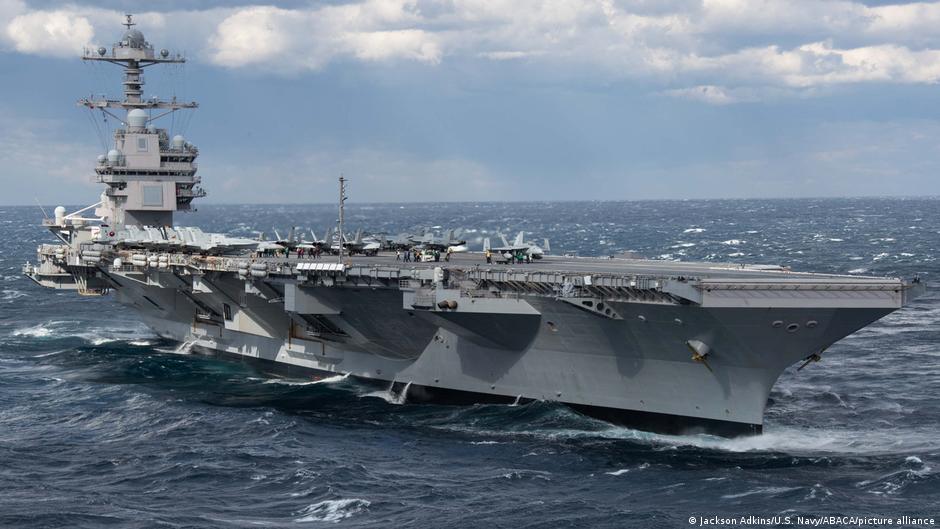
The U.S. Navy announced that the USS Gerald R. Ford and three destroyers will join several other ships in the Caribbean, including three vessels carrying mobile Marine forces with thousands of troops. This military buildup follows a series of strikes against Venezuelan vessels, which the U.S. claims are involved in drug trafficking. However, international concerns over the legality of these operations have been growing.
The UK has reportedly stopped sharing some intelligence with the U.S., citing concerns that the deadly strikes against the vessels may be in breach of international law. This development highlights the increasing scrutiny of U.S. actions in the region and raises questions about the legal and ethical implications of such operations.
Maduro Accuses the U.S. of Fabricating a War
Venezuelan President Nicolas Maduro has strongly criticized the U.S. actions, accusing the Trump administration of "fabricating a war." He claims that the U.S. is using the drug issue as a cover to destabilize his government. In response, Venezuela has announced a nationwide military mobilization, including land, sea, and missile forces, to counter what it calls "imperial threats."
On November 2, Trump downplayed the prospect of war with Venezuela but warned that Maduro’s days were numbered. His comments reflect the administration’s continued focus on Venezuela, where it has accused Maduro of sending violent criminals and drugs to the United States.
The "War on Drugs" Intensifies
In a note to Congress, the Trump administration described its efforts as being in an "armed conflict" with Latin American drug cartels, labeling them as terrorist groups. The deployment of the carrier group signals an intent to expand the scope of its lethal military campaign.
Since early September, U.S. forces have conducted strikes on at least 20 vessels in international waters in the region, resulting in the deaths of at least 76 people, according to U.S. figures. These operations have drawn condemnation from Russia, which has called the strikes illegal, and human rights groups, which have questioned their legality.
International Reactions and Concerns
The situation has sparked widespread concern among international observers. The U.S. justification for its actions centers on disrupting drug and criminal networks, but many see the military buildup as a direct challenge to Venezuela’s sovereignty. The involvement of the USS Gerald R. Ford, one of the most advanced warships in the world, underscores the scale of the U.S. commitment to this effort.
The deployment also raises questions about the broader implications for regional stability. As tensions continue to rise, the risk of unintended escalation grows. The international community is watching closely, with many calling for transparency and adherence to international law in all military and diplomatic actions.
Conclusion
The arrival of the USS Gerald R. Ford in the Caribbean represents a major shift in U.S. strategy toward Venezuela. While the administration frames its actions as part of a broader effort to combat drug trafficking, critics argue that the real goal is to undermine Maduro’s government. As the situation unfolds, the balance between national security, international law, and geopolitical interests remains a delicate and complex issue.


Comments
Post a Comment