Weak Dollar Falls to 1,472 Amid Stock Gains and Trade Surplus
The Won-to-Dollar Exchange Rate Reaches New Heights
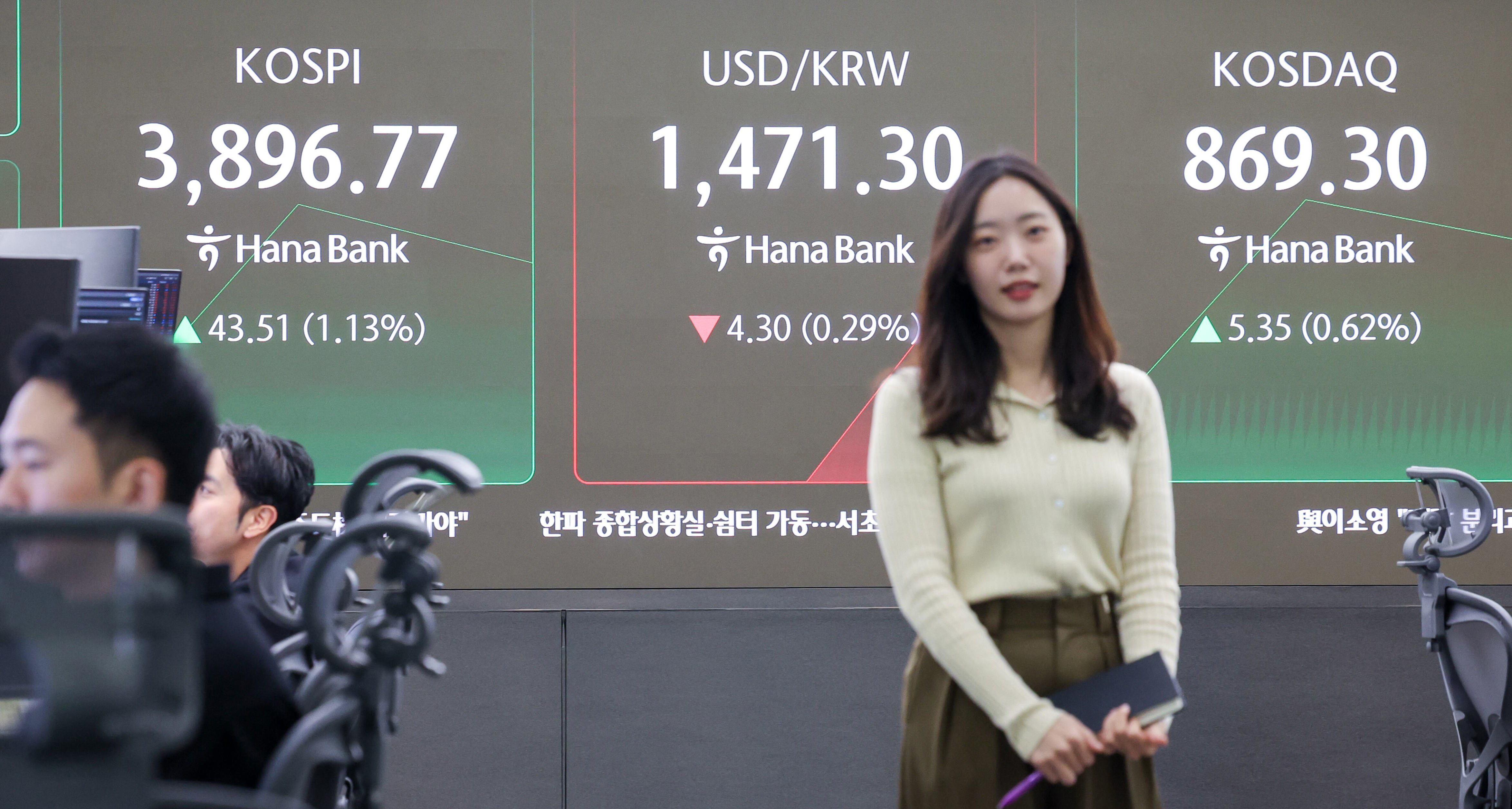
On the 24th, the won-to-dollar exchange rate opened at 1,472 Korean won in the Seoul foreign exchange market. This is a higher level than the opening rate on the 14th (1,471.9 Korean won), when Deputy Prime Minister and Minister of Economy and Finance Koo Yun-cheol made a verbal intervention, stating, “We will actively utilize available measures.” This indicates that the central bank is closely monitoring the situation as the exchange rate continues to rise.
Experts note that the recent high exchange rate is showing a different pattern compared to previous instances. This is because the correlation between stock prices and the current account balance has collapsed. So far this year, the KOSPI has risen by 60%. The current account balance has been in surplus for 29 consecutive months. Typically, when the KOSPI rises, the exchange rate falls. This is because converting won into foreign currency to invest in the Korean stock market increases demand for the won. Even when the current account surplus persists, leading to a large influx of dollars, the exchange rate faces downward pressure. However, recently, this formula has broken down.
This Year, KOSPI and Exchange Rate Rise in Tandem
According to the Bank of Korea and the Korea Exchange on the 20th, the KOSPI closed at 4,004.85, up 1.92% from the previous trading day. Concerns over an artificial intelligence (AI) bubble temporarily subsided, allowing the index to recover the 4,000-point mark after three trading days. However, on that day, the won-to-dollar exchange rate rose by 2.3 won from the previous trading day, closing the weekly trading session at 1,467.9 won, the highest level in seven months.
During the 11th to the 13th of last month as well, the KOSPI rose by 0.81%, 1.07%, and 0.49% over three trading days. However, during this period, the won-to-dollar exchange rate (based on 3:30 p.m.) jumped from 1,463.3 won to 1,465.7 won and then to 1,467.7 won.
Typically, a rise in the KOSPI, accompanied by foreign buying, leads to a stronger won (lower exchange rate). However, recently, this correlation has ceased to function. Even though the KOSPI has shown one of the highest growth rates among major countries this year, the exchange rate has reached its highest level in 16 years, highlighting a decoupling phenomenon between stock prices and exchange rates.
Current Account Surplus Fails to Anchor Exchange Rate
The current account surplus, which typically increases foreign currency inflows and puts downward pressure on the exchange rate, is also failing to help the won appreciate. According to the Bank of Korea, South Korea’s current account balance has been in surplus for 29 consecutive months, marking the second-longest surplus streak since the 2000s. This year, exports, led by semiconductors and ships, have significantly increased, with the average daily export amount in October reaching nearly $3 billion, setting a record high.
From the beginning of this year until September, the current account balance recorded a surplus of $83.4 billion. However, during the same period, there was a deficit of nearly $81 billion in direct investment ($20.6 billion) and portfolio investment ($60.39 billion). This indicates that most of the dollars earned from the current account surplus flowed overseas through financial accounts.
In a recent report, Bank of America (BoA) stated, “The weakness of the won is not a simple cycle but a structural capital outflow phenomenon.” The analysis suggests that overseas investments by the National Pension Service and individual investors (retail investors) are key factors behind the won’s weakness, and the won’s exchange rate is now being driven more by capital markets rather than traditional trade balances.
Additionally, companies are not converting the dollars they earn overseas, further contributing to the won’s weakness. A source from an export company said, “In the past, we converted most of the dollar payments we received into won, but now we convert less than half.” This means that since dollars are not entering the market as before, the exchange rate does not fall.
Kim Jeong-sik, an emeritus professor at Yonsei University, said, “The current exchange rate is at a significantly dangerous level,” adding, “If it rises further from the current level, there are concerns that market instability could grow uncontrollably.”
Some analysts diagnose that the current exchange rate level, which combines external uncertainties and supply-demand factors, is different from exchange rates during financial crises. Kwon Amin, a researcher at NH Investment & Securities, said, “Dollar supply is low because companies are not releasing dollars, while overseas investments are proceeding on a large scale, leading to high dollar demand.” He added, “In the past, the formula ‘high exchange rate = foreign exchange crisis’ held true, but considering South Korea’s current external soundness indicators, it is difficult to say that the current high exchange rate level signifies a crisis.”


Comments
Post a Comment