When Mud Lingers
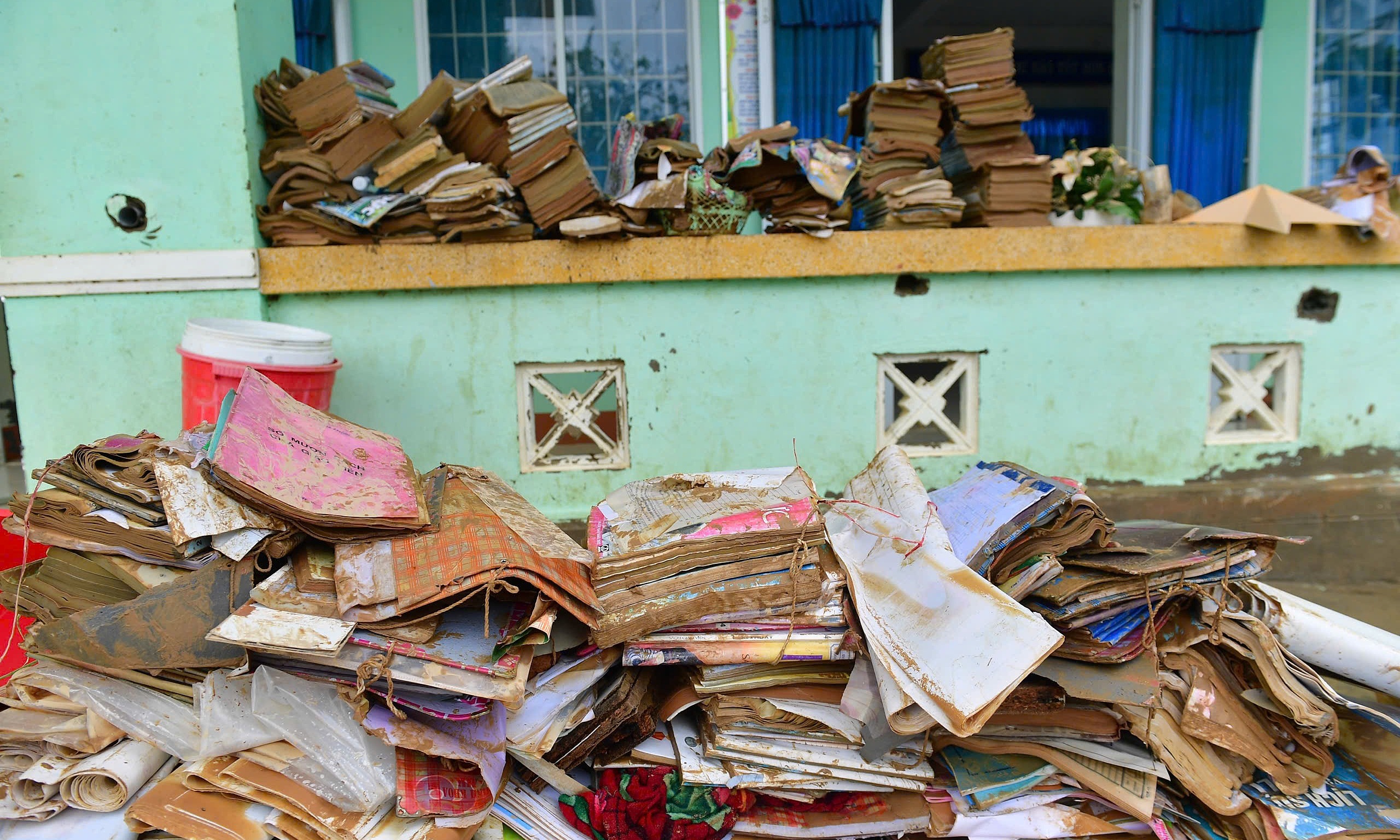
Throughout my time with UNICEF, I have encountered countless children and families whose lives have been profoundly affected by natural disasters. In Vietnam, during my recent visits, I witnessed the aftermath of powerful typhoons that left entire communities in ruins. In many areas, all that remained were long trails of mud—soft silt hardened into pale streaks—marking where homes and livelihoods once stood.
Everything had been swept away. Clean water disappeared, along with food, health, education, and protection services, which were disrupted for days or even weeks. On fences and bare branches left behind by the storms, parents carefully laid out their children’s schoolbooks to dry—pages soaked, torn, and caked with mud. In the eyes of the children, there was a blankness filled with confusion, a reflection of the bewilderment and fear that disasters leave behind.
In recent months, northern and central Vietnam has experienced heavy flooding. Mountain passes have collapsed, and entire hillsides have turned into mud. Houses and vehicles are reduced to floating rooftops. Children, as always, are among those most affected, yet they remain insufficiently recognized and supported. When homes are destroyed, schools damaged, and hospitals paralyzed, the foundation on which children depend to live, learn, and grow is swept away. Recovery may take years, and the pace of climate impacts is now outstripping the ability of social systems to adapt.
This year alone, 13 storms have struck, more than 200,000 houses have been flooded, damaged, or destroyed, and around 1.2 million people have lost access to clean water and sanitation. Schools, healthcare, nutrition, and protection services have been disrupted for hundreds of thousands, undermining the foundations children rely on to survive and thrive.
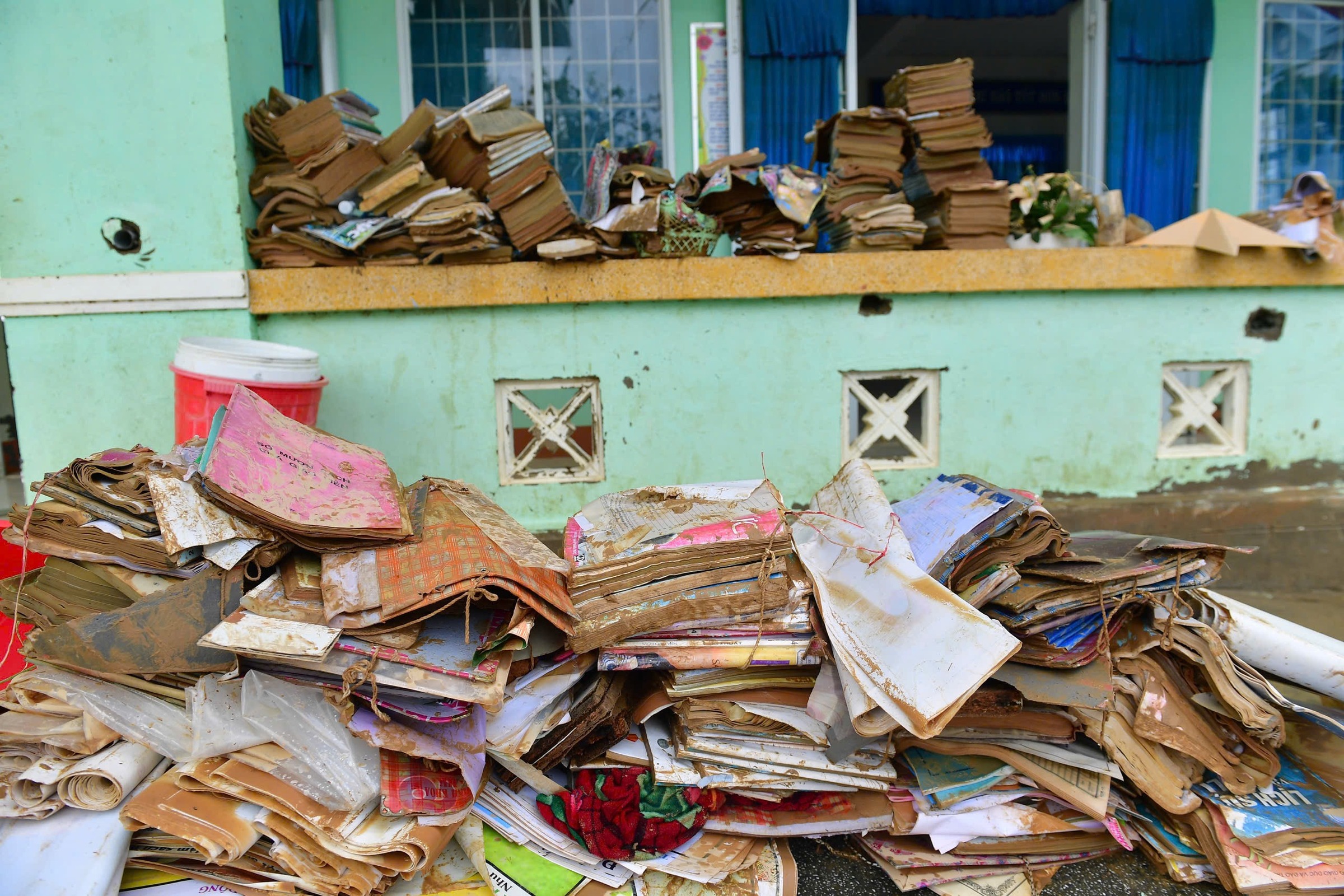
Books and other materials are left covered in mud at a primary school in Dak Lak Province after flooding receded, Nov. 23, 2025. Photo by VnExpress/Thanh Tung
These are not just numbers—they are girls, boys, and families. And this is not only Vietnam’s story.
UNICEF's Children's Climate Risk Index shows that nearly one billion children worldwide live in countries facing very high climate risk. The United Nations has identified climate change as one of the most direct threats to child health, from safe water and sanitation to primary healthcare.
International experience shows that countries recover most quickly when they treat climate change as a systems challenge, not a weather event. The Philippines, Mozambique, Nepal—these are clear examples. They rebuild schools to typhoon-resilient standards, allowing children to return to class rapidly. They invest in community-based health services and early-warning systems, reducing the risks of disease outbreaks and losses. These examples reaffirm a clear truth: only strong systems can protect children. Rapid relief alone is not enough.
Building systems strong enough to ensure that children no longer grow up among the remnants of storms and floods requires a holistic approach. Essential services must be designed not to collapse under climate shocks: schools that can withstand storms and extreme heat; health stations with backup power, independent clean water supplies, and access routes that remain open; and water systems elevated above flood levels, equipped with backflow prevention and decentralized models to maintain safe water supplies. But infrastructure alone is not enough. Teachers, health workers, and social workers must be equipped with psychosocial support skills, because the wounds children carry are not only in the mud left behind—they are in their memories and emotions. And yet much remains to be done.
This is not the next generation’s problem—it is already ours. Today’s children face a more unpredictable and hazardous environment than any generation before. And child rights are upheld through the resilience of the essential services that surround them every day. Their voices matter. This is about the planet—the home they will inherit—and they are ready to contribute to the solutions.
At the UN Climate Change Conference COP30, held in Brazil this month, the voices of world leaders, experts, children, and young people rang out—including those from Vietnam. They called for climate solutions that empower young people and reflect their diversity.
The climate is changing faster than our systems can adapt. Floods sweep through and leave nothing but fresh mud behind. And children—those who contribute least to climate change—are the ones who bear the greatest burden. Every child has the right to grow up on a liveable planet. Protecting that right means building schools that stand firm, health stations that remain operational, water systems that endure, and communities empowered to withstand the storms. Mud should not be the legacy of childhood. Resilience must be.


Comments
Post a Comment