AI Strategy Aims for Global Top Three Position
Government's Strategic Moves to Establish AI Leadership
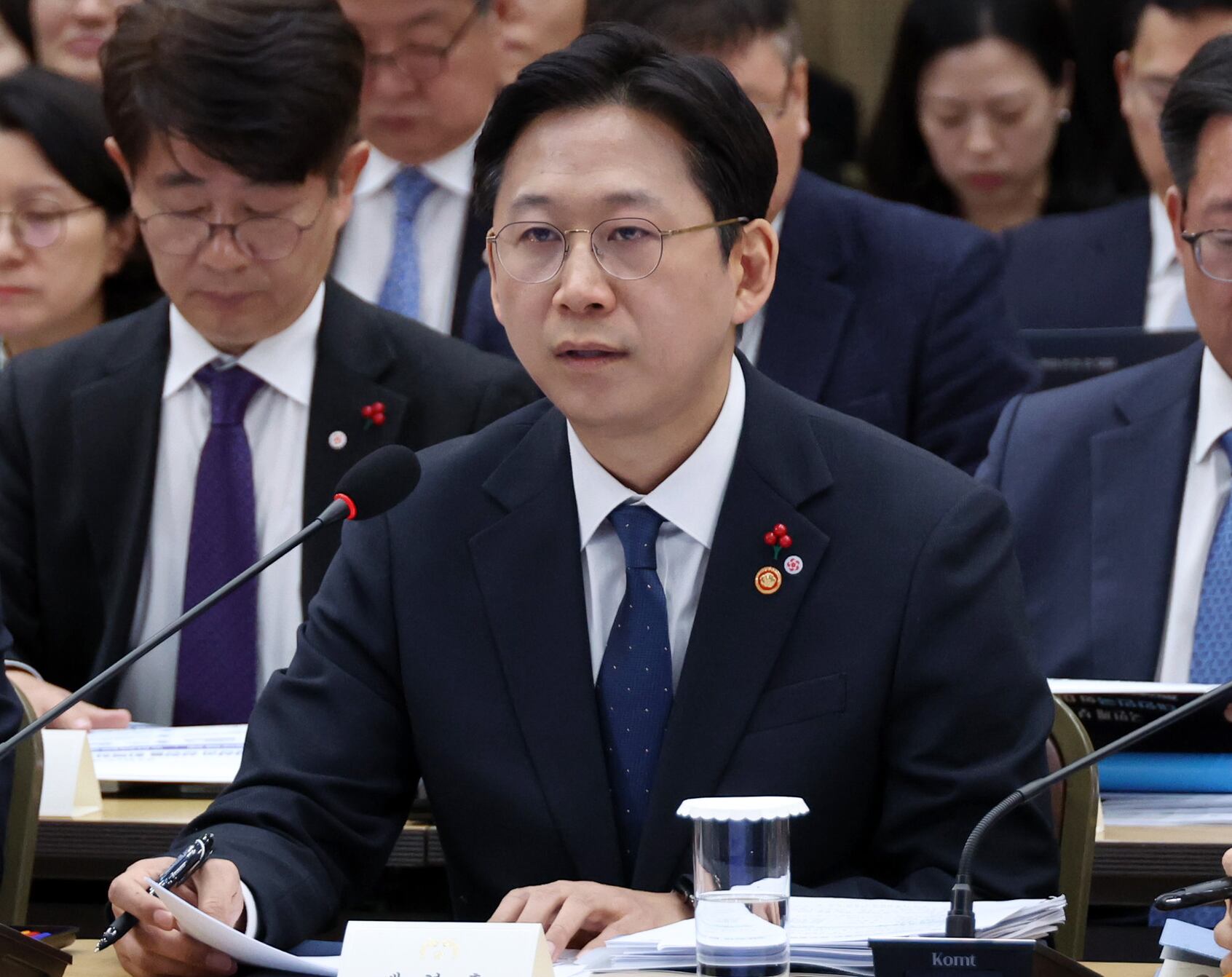
The government is making significant strides toward achieving its national objective of becoming a top-three global artificial intelligence (AI) power. This initiative involves concrete plans for developing proprietary AI models and expanding large-scale infrastructure. Recently, the Ministry of Science and ICT unveiled the "2026 Science, Technology, and AI Business Plan" during a presidential work report at the Sejong Convention Center on the 12th.
Key Initiatives for AI Development
The Ministry outlined several key initiatives aimed at driving AI development to become a top-three global power. These include:
- Creating a proprietary AI foundation model
- Fostering innovative growth based on science and technology
- Ensuring public safety by establishing a new security paradigm
One of the primary goals is to complete the first phase of developing the proprietary AI foundation model by January of next year. The model will be open-sourced in the first half of the year, with an aim to enter the global top 10 by the end of the year. This model will be applied to specialized services in defense, manufacturing, culture, and civil AI projects.
Expansion of AI Infrastructure
The government plans to significantly expand AI infrastructure. By 2026, it will secure a cumulative 37,000 GPUs, including 15,000 government-purchased GPUs and 9,000 units from the sixth supercomputer. These resources will be strategically allocated to national projects, public AI services, startups, and regional AI transformation (AX). Additionally, the government will pursue the development of general-purpose AI (1 trillion Korean won scale) and the K-NPU project to foster domestic AI semiconductors.
Regional Industry and Global Expansion Strategies
From 2026 to 2030, the government will invest a total of 3.1 trillion Korean won to promote four regional AX projects starting with the Southwest Region (mobility and energy), Southeast Region (precision manufacturing), Daegu-Gyeongbuk Region (bio and robotics), and Jeonbuk (AI factories). A strategy to spread "physical AI" centered on strong industries like manufacturing, shipbuilding, and logistics will be prepared in the first half of next year. Cooperation with overseas projects such as the UAE data center and port logistics AX business, as well as global companies like BlackRock, OpenAI, and NVIDIA, will also be expanded.
Strengthening Security Policies
Security policies will become stricter as the government establishes a legal framework to recognize security as a core value. This includes stipulating the CEO’s security responsibilities in law and strengthening the authority of the Chief Information Security Officer (CISO). The government will also push for punitive fines of up to 3% of sales for companies that repeatedly experience security incidents. Measures to strengthen the government’s security capabilities, including mandatory user notification in case of hacking and establishing an AI-based threat detection and sharing system (AI-ISAC), are also included.
Conclusion
Through these strategic moves, the government is positioning itself to lead in the global AI landscape. By focusing on infrastructure development, regional expansion, and enhanced security measures, it aims to not only meet its national objectives but also contribute to the global AI ecosystem. The upcoming steps will be crucial in determining the success of these ambitious plans.


Comments
Post a Comment