Decoding Scotland's Enigmatic Giant Scar
Unveiling the Secrets of the Great Glen Fault
A priceless rock core extracted from Scotland's legendary Great Glen Fault could provide answers to fundamental questions about the history of the Earth. Experts at the British Geological Survey (BGS) have highlighted the significance of this unique sample, which offers a rare glimpse into one of the most dramatic geological formations in the UK.
The core sample, measuring approximately 5,000 feet in length, was pulled from more than 2,000 feet below ground level along the Great Glen Fault. This fault stretches from Norway through Scotland to Ireland and is known for its immense size—over 620 miles long and 25 miles deep. From space, it appears as a giant "scar" cutting diagonally across the Scottish Highlands, passing through famous lochs such as Loch Ness, Loch Lochy, and Loch Linnhe, before extending into northwestern Ireland.
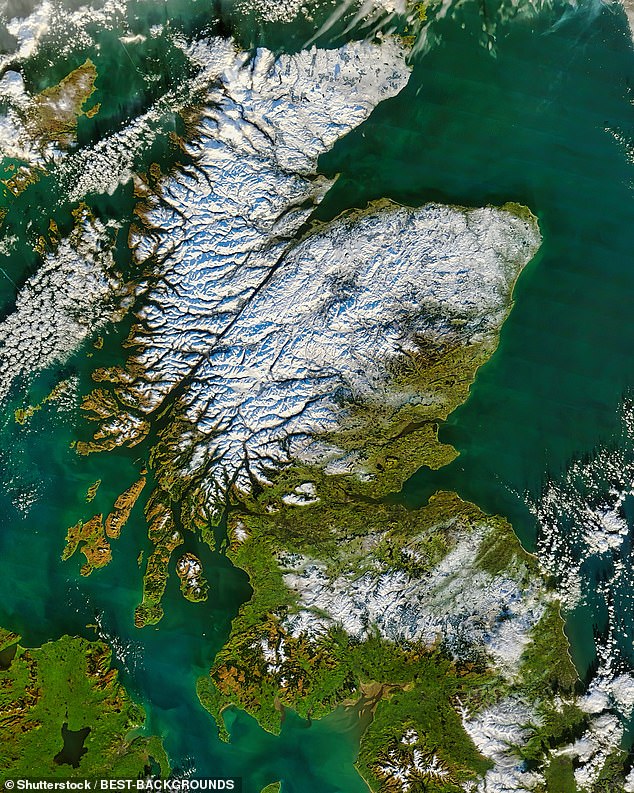
The Great Glen Fault formed around 400 million years ago during a massive mountain-building event when the ancient continental plates of Laurentia (which includes North America and Scotland) and Baltica (covering Scandinavia, England, Wales, and Europe) collided. The core was drilled from Coire Glas on the shore of Loch Lochy, a location along the Great Glen Fault, in 2023 as part of investigations for a proposed hydropower system. Drilling such cores is expensive and typically only justified for such depths as part of major energy or infrastructure projects.
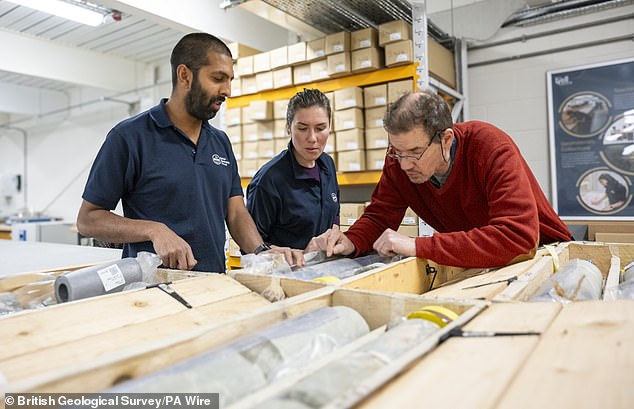
Following extraction, the precious core was delivered to BGS premises in Edinburgh at the end of 2024, where geologists have been studying it with microscopes. After analysis, the core will be stored and made available for future research at the BGS National Geological Repository, a publicly funded facility in Nottinghamshire.
Dr Romesh Palamakumbura, a BGS geologist, described the core as "incredible," emphasizing its value in studying fundamental geological processes within the UK’s largest fault zone. He noted that the newly drilled core from the Coire Glas site has provided a unique opportunity to understand these processes.
What is the Great Glen Fault?
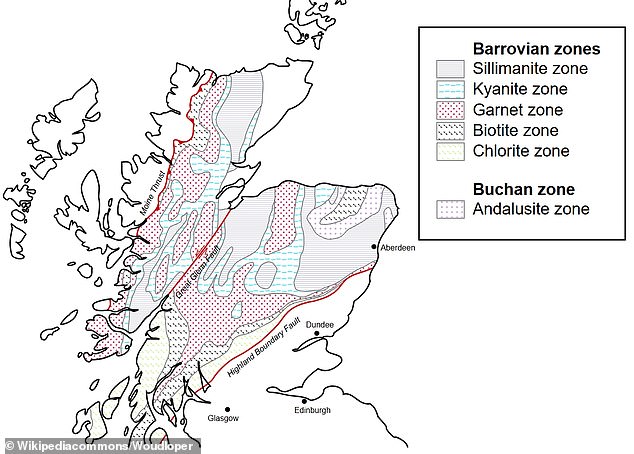
The Great Glen Fault is an approximately 620-mile-long strike-slip fault line that cuts through Scotland, Ireland, and Norway. In geology, a strike-slip fault refers to a fracture in the Earth's crust where rock masses slip past one another, often causing earthquakes. The Great Glen Fault, like many others, formed during a significant mountain-building event, highlighting its importance in understanding tectonic activity.
According to BGS experts, the new samples could reveal profound geological processes happening deep in the Earth’s crust—the top layer of the planet's surface. These processes could be relevant for understanding other major crustal faults, such as the San Andreas and Anatolian faults, known for their seismic activity.
Scientists are particularly interested in the source of fluids in crustal fault zones and how hot fluids interact and change the mechanical properties of rocks in these zones. Core samples can also reveal how many times the fault has moved over its long geological history and how the hundreds of earthquakes that likely shaped the fault zone have altered the properties of the rock.
Another key question is whether this fault connects all the way to the Earth’s mantle, the layer beneath the crust that extends to more than 18 miles (30 km) in depth.
Dr Palamakumbura shared that initial microstructural and geochemical analysis on one sample from the core has already yielded exciting results. The findings suggest that hot fluids, potentially sourced deep from within the Earth's crust, have played a major role in the formation of these fault rocks. These results will help scientists understand how rocks are deformed and the important role played by hot fluids in major fault zones.
Professor Bob Holdsworth, a geologist at Durham University, emphasized that much remains to be discovered not only regarding Scotland's geological history but possibly the world. He stated that the cores have the potential to elevate the Great Glen Fault to one of the great natural laboratories for fault zone studies globally.
Rocks associated with the Great Glen Fault Zone remain largely hidden by the waters of Loch Ness, Loch Oich, and Loch Lochy, along with ice age deposits. Additionally, the fault's remote location and the weak nature of the rock present technical challenges for drilling. Tremors and minor earthquakes are occasionally reported in the area, though many go unnoticed by locals.
Each year, between 200 and 300 earthquakes are detected and located in the UK by BGS. Between 20 to 30 of these are felt, while a few hundred smaller ones are only recorded by seismographs.
Future Research and Discoveries
The study of the Great Glen Fault continues to offer intriguing possibilities for scientific exploration. As researchers delve deeper into the core samples, they may uncover new insights into the Earth's geological past and the forces that have shaped our planet. The preservation of these cores ensures that future generations of scientists will have access to this invaluable resource, enabling further discoveries and advancements in our understanding of the Earth's complex systems.


Comments
Post a Comment